Baghdad's Green Zone sealed off as Iraqi security forces launch overnight arrest campaign
Baghdad's Green Zone is sealed and Iraqi security forces are running an overnight arrest campaign after gunfire in Khadra and a drone over the US embassy compound. The record rests on four Telegram channels and an Iranian-state report; no Iraqi ministry has spoken.
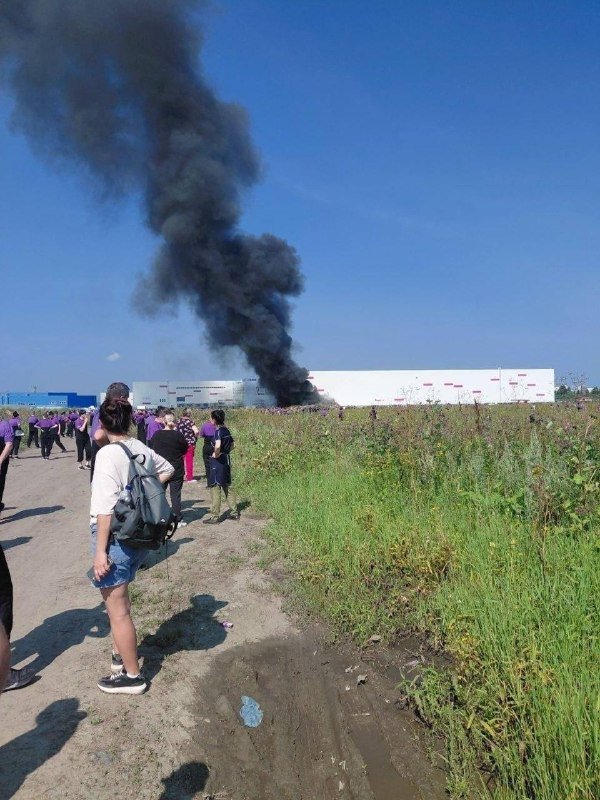
Gunfire echoed through central Baghdad in the early hours of 28 June 2026, with local outlets reporting shooting in the Khadra district and the deployment of a drone over the fortified Green Zone that houses Iraq's parliament, prime minister's office and the US embassy. Videos circulated on Telegram channels wfwitness and Middle East Spectator showed individuals firing small arms at an unmanned aircraft overhead, while Tasnim, Iran's English-language outlet, said the sound of shooting was audible in al-Khadra at the heart of the capital. By morning the Green Zone had been sealed, and Iraqi security forces were conducting an overnight arrest campaign whose targets, exact numbers and legal basis remained unconfirmed by any official Iraqi communiqué.
The convergence of four independent Telegram channels on a single operational picture, before any on-record statement from Baghdad, defines the evidentiary ceiling for this story. None of the named actors has been publicly confirmed; the arrest tallies circulating in chat threads remain provisional. What is verifiable is the geographical cluster: Khadra, the Green Zone, the Iranian consulate complex, and a drone incident directed at the US embassy compound reported the same night. The story has to be told with that epistemic caution visible to the reader.
What actually happened, on the available record
Three distinct incidents, all timed within a roughly two-hour window, make up the spine of the night. First, Tasnim and Middle East Spectator both logged audible gunfire in al-Khadra, a mixed residential district that abuts the Green Zone and hosts several of Baghdad's main ministerial compounds. Second, wfwitness published footage of people firing at an "alleged unidentified unmanned aircraft" over the Green Zone, suggesting the air-defence reflex was improvised rather than coordinated by any visible military formation. Third, Press TV, the English service of Iranian state broadcasting, claimed a drone had "repeatedly targeted" the US embassy compound in Baghdad, an assertion that aligns with the visually documented firing but which, given Press TV's provenance, cannot stand alone as a factual basis.
The arrest campaign itself is described in the originating channels as "overnight" and directed at unspecified individuals inside or adjacent to the Green Zone. No Iraqi ministry, no prime ministerial spokesperson, and no major wire service had issued a public account at the time of writing. This matters: an operation of this sensitivity, inside the capital's most heavily surveilled kilometre, would normally generate a Ministry of Interior statement within hours. The silence is itself a data point.
The structural question underneath the headlines
Two interpretations have to be weighed, and on the public record neither can be settled. The first reads the operation as a consolidating central executive using the cover of a drone scare to move against figures inside or around the Green Zone who had become liabilities. Iraq's post-2024 political landscape has been marked by recurring attempts to centralise command over armed factions nominally under state authority; a sealed perimeter and pre-dawn arrests would be consistent with that pattern, even if the formal justification is still missing.
The second reading sees a faction-on-faction move: a Shi'a coalition actor using a security incident as pretext to settle scores with rivals in the Popular Mobilisation Forces orbit, in the paramilitary constellation, or in parties close to Tehran. The drone reported over the US embassy, and the firing at an aircraft over the Green Zone, would fit a script in which external threats are invoked to legitimise internal repression, a pattern documented elsewhere in the region. Tasnim's prompt reporting on the Khadra gunfire, and Press TV's near-simultaneous framing of a US-targeted drone, point to communications channels already in motion before any Iraqi confirmation.
Which reading carries the day will not be known until Baghdad either publishes an arrest list or stays silent long enough that the absence becomes its own signal.
Why the wire is thin, and why that matters
Telegram channels tracking Iraq at this granularity tend to fall into three categories: independent field reporters with mobile-phone cameras, partisan outlets aligned with one faction or another, and aggregators pulling from both. The four channels cited here span that mix. The footage itself is useful as real-time signal, because it documents the firing at a drone, the audible report of gunfire, and the visible sealing of the Green Zone in a way that text alone could not. But footage without a sourced chain of custody cannot confirm who was firing, who was being arrested, or under whose authority the operation was nominally conducted.
Until Reuters, AFP, AP, the BBC, the Guardian, Al Jazeera English, or an official Iraqi outlet publishes an on-the-record account, every name and every number attached to this story is provisional. That is not a hedge; it is the operative condition of reporting from a capital where state communications are often factionalised and where competing power centres have institutional incentives to either claim or disown an operation in real time.
A drone, a perimeter, and the legitimacy arithmetic
A drone incident over the Green Zone is not novel. Suspected militia drones have approached the US embassy compound and the perimeter on multiple occasions in recent years, generating brief spikes in tension that have become part of the capital's background noise. What is different on this occasion is the reaction: improvised firing at an aircraft, a sealed zone, and an overnight arrest sweep whose targets the public is not being told. Each element, on its own, is unremarkable. Together, they form a pattern that political actors in Baghdad will read as a test of whether the central executive can still project a security monopoly inside the kilometre that houses the country's sovereign institutions.
That test has been open for some time. The Green Zone's perimeter security has been disputed between the Iraqi federal police, paramilitary-linked units, and foreign-embassy private contractors. A sealed perimeter in June 2026 does not resolve the underlying contest, but it does reveal which actor has the operational capacity to act first.
What to watch in the next 48 hours
Three signals will determine whether the operation consolidates or unravels. First, an official Iraqi statement: from the prime minister's office, the Ministry of Interior, or the Joint Operations Command, naming the operation, its targets, and its legal authority. Second, a statement, formal or informal, from the US embassy on the drone incident; the embassy's account will be the only one capable of corroborating or contradicting Press TV's framing. Third, the public reaction of the political blocs whose armed wings might view the arrests as a provocation: any demonstration, sit-in, or counter-mobilisation would shift the story from a security operation to a factional confrontation.
Until one of those signals lands, the headline rests on the convergence of four Telegram channels and on a Press TV report that, by itself, would not clear a basic editorial bar. The story is real. The details are not yet solid.