Bad Bunny at Tottenham Hotspur Stadium: a stadium-scale case study in the new economics of Latin pop
Bad Bunny's sold-out Tottenham Hotspur Stadium date is the clearest data point yet that Latin pop has moved from diaspora arenas to stadium-scale global touring, with the economics catching up fast.
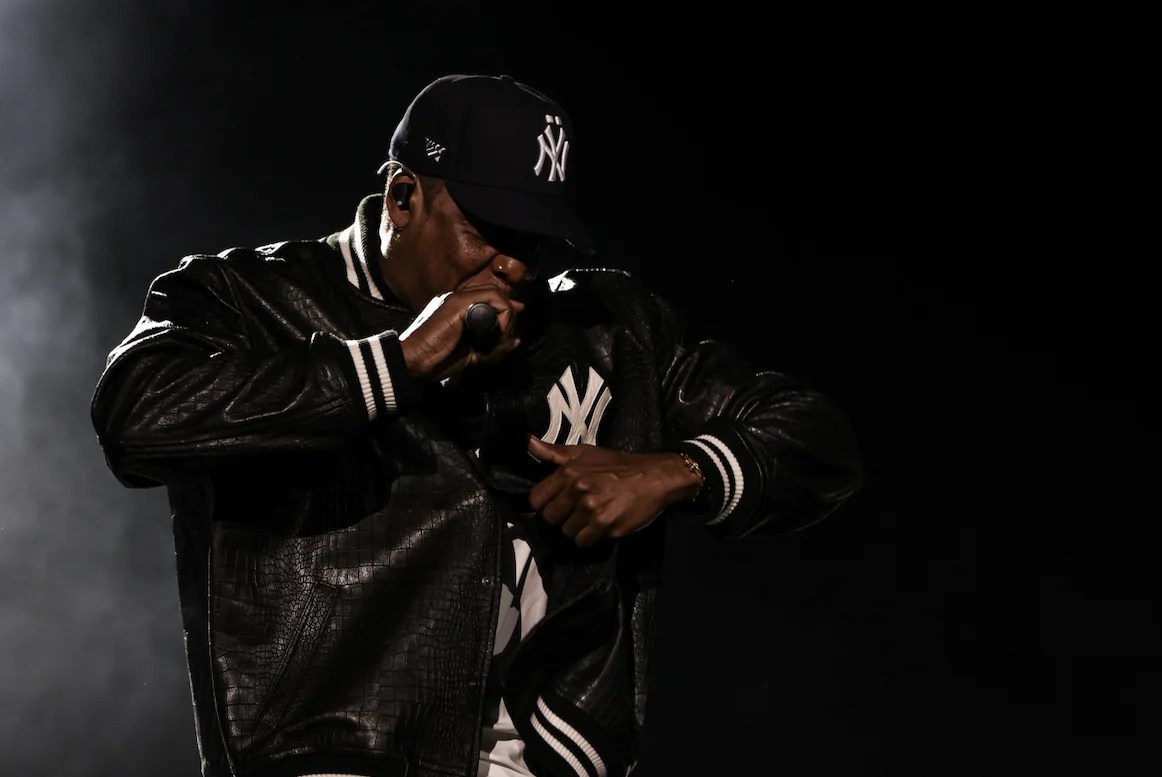
On 28 June 2026, Puerto Rican superstar Bad Bunny closed the European leg of his record-breaking Debí Tirar Más Fotos world tour with a sold-out night at Tottenham Hotspur Stadium in north London. The venue, listed by Tottenham Hotspur Football Club at 62,850 capacity, has hosted Premier League football since 2019 and music events through a partnership with the Anschutz Entertainment Group, the live-entertainment arm of US billionaire Philip Anschutz's empire. A single Latin pop artist commanding that room for a single night is no longer a curiosity. It is a market signal.
Latin music has, over the past five years, moved from a regional genre with US crossover appeal to the centre of gravity of global pop. The shift was visible in streaming tallies, in the nomination slates at the Grammys, and now, more concretely, in the way touring infrastructure is being priced and built. A stadium date in London is not just a concert; it is a logistics exercise, a foreign-exchange hedge, and a proof of demand that concert promoters can take to insurers and sponsors. Bad Bunny is the most legible example, but he is not the only one. The economics under his feet are reorganising how Latin pop travels.
The Tottenham price tag
Tottenham Hotspur Stadium sits in a tier of European venues that can absorb a Latin pop headliner without the cultural friction of older rooms. The stadium's bowl is steep and acoustically shaped for speech as well as music, a feature that matters when half the audience is following lyrics in a second language. Its operators, AEG, run a global stable of arenas and stadiums and have spent the past decade pitching those rooms as tour-ready for non-English-language artists. A Latin act drawing 60,000 in north London is, for AEG and for the artist's touring company, the cleanest possible data point: the genre travels, and it travels at stadium scale in a city where Spanish is not the majority tongue.
The economics of stadium Latin pop are notably different from those of the dominant English-language touring circuit. Touring income has, for years, been the single largest line on Latin artists' balance sheets, in part because royalty collection in the region remains uneven and because streaming payouts for non-English-language repertoire have lagged behind English-language equivalents. A sold-out stadium at Tottenham pricing, even after promoter cuts, insurance, and the venue's own share, generates revenue that no number of festival slots can match. The Debí Tirar Más Fotos run is being staged by Rimas Entertainment, the Puerto Rico-based independent label and management company that has handled Bad Bunny's career since his breakout. Rimas has been careful not to over-monetise early in the cycle, a discipline that allows stadium pricing now.
A genre outgrows its diaspora model
Until the early 2020s, the working assumption in the live-music industry was that Latin pop outside the Americas depended on diaspora audiences: Miami exiles, Mexican communities in California, Colombian communities in Madrid and London. That model produced reliable mid-size arena business but rarely produced stadium business in cities without a deep Spanish-speaking base. The Debí Tirar Más Fotos run is the clearest demonstration that the assumption has collapsed. A stadium in London in 2026 is filled by a coalition: Puerto Rican and Latin American communities in the UK, Spanish-speaking tourists flown in for the run, and a substantial English-speaking audience that has learned the songs through TikTok and through Spotify's editorial Latin playlists. The tour's promoters are no longer selling to a diaspora. They are selling to a market.
This change has consequences that run beyond any single artist. Insurance and touring loan pricing for Latin acts in European stadiums has tightened as the data has accumulated. Sponsorship categories that once appeared only on Spanish-language broadcast deals, particularly beer and spirits, are now writing English-language stadium inventory. Streaming services, which for years treated Latin as a curated vertical rather than a flagship release calendar, have moved major new releases by Latin artists onto global Friday slots rather than regional ones. The infrastructure is following the audience.
Where the margins actually live
The risk in this story is treating a stadium show as a windfall. It is closer to a margin event. Stadiums cost more to stage than arenas in almost every line item: rigging, security per cap, transport, hospitality, and the credit risk of cancellations. For Latin pop, the additional cost is partly offset by a pricing structure that, in London and other tier-one European cities, can approach major English-language headliner rates. Where the additional revenue is most clearly visible is in adjacent inventory: official tour merchandise, which for Bad Bunny has been a notable earner through drops timed to the tour; in-app livestreaming packages sold through partners; and brand integrations with companies that want a Latin audience at scale rather than as a niche.
The secondary market is also a margin lever. Resale prices for Tottenham Hotspur Stadium dates on this tour have, according to ticketing platforms, traded well above face value, with the usual caveat that resale data is not a clean read on demand. What the resale prices do indicate is that primary pricing is leaving money on the table, which is the kind of finding that promoters and the artist's team will absorb when they price the next run.
The structural read
What we are watching is a genre that has migrated from radio format to infrastructure. The shift is the same one US hip-hop completed in the 2000s, when rappers moved from mid-size theatres to co-headline arena runs to stadium headlining on their own cycle. Latin pop has compressed that timeline, in part because streaming has done the work that radio used to do, and in part because the audience for the genre in Europe is younger and more digitally native than its English-language equivalents. The Tottenham date is, in that sense, less a moment than a milestone.
Three things are worth watching over the rest of 2026 and into the next cycle. First, whether Latin acts begin to anchor European festival headline slots in the way that English-language US acts have. Second, whether the major European stadium operators, AEG and Live Nation's international arm, begin to programme multi-night Latin residencies rather than one-offs, which would change the economics for everyone. Third, and most quietly, whether the UK's independent promoter circuit, which has long treated Latin acts as a specialism, begins to see new entrants as the margin economics improve. None of that is certain. All of it is now plausible in a way it was not five years ago.
Stakes
For artists, the stakes are obvious. A stadium run at Tottenham pricing resets what is possible on the next cycle. For the UK live-music economy, the stakes are subtler. The country's arena and stadium operators have built their programming around a small roster of English-language headliners. Latin pop at stadium scale adds a parallel circuit, with its own touring crews, its own merchandise supply chains, and its own insurance relationships. Whether that parallel circuit becomes a structural feature or a recurring special event depends on what promoters, venues, and labels do over the next two touring cycles. The Debí Tirar Más Fotos tour has provided the data. The Tottenham night is the cleanest single observation in that dataset so far.