Three group-stage fixtures that will shape the next ten days of the World Cup
Friday's slate offers a heavyweight European-South American clash, an African side chasing knockout-stage momentum, and a politically charged Middle East meeting — the kind of day that quietly redraws a bracket.
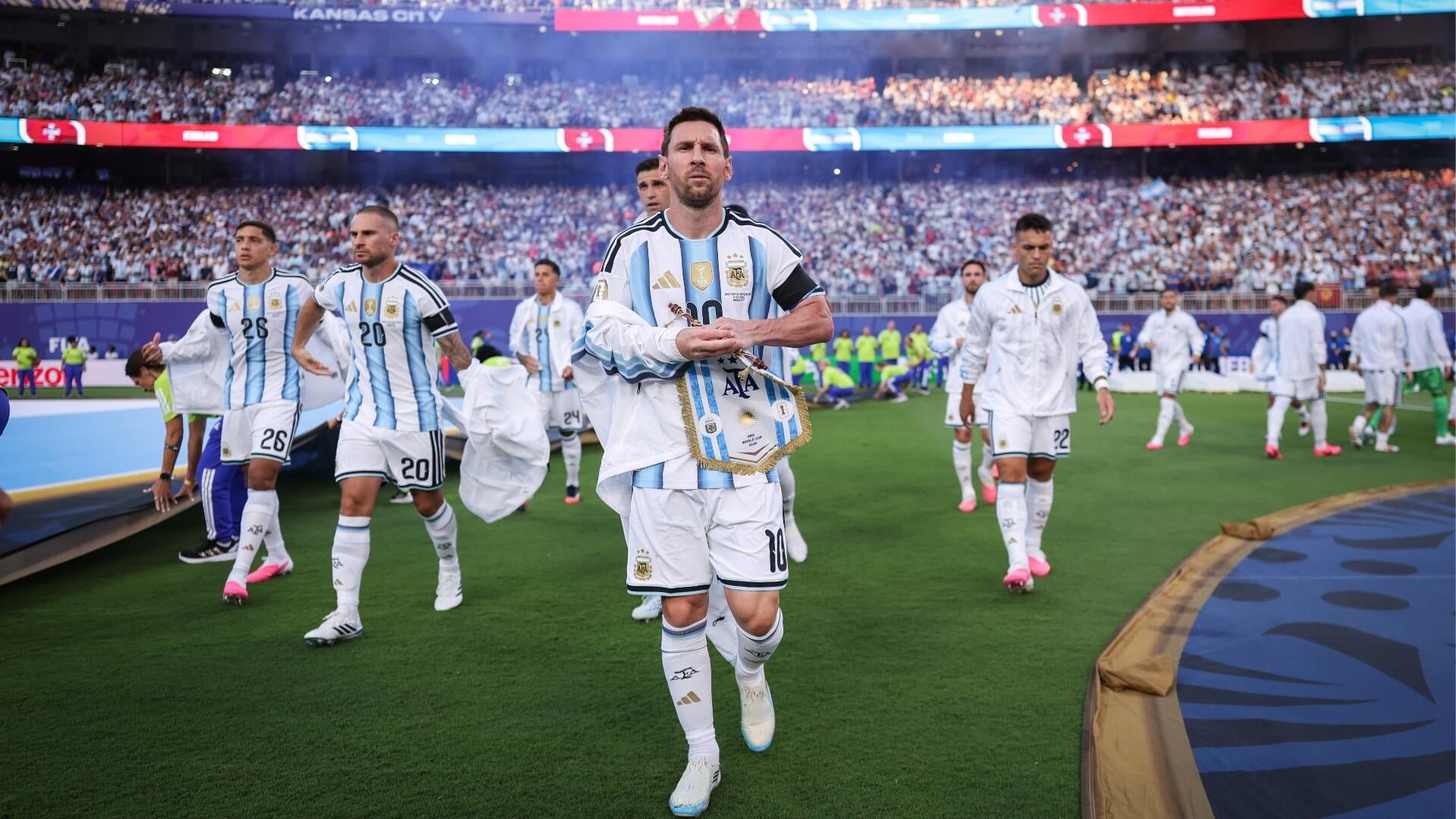
Friday's group-stage programme at the 2026 World Cup offers a useful early test of how this tournament is actually going to read once the noise settles. Three fixtures — Spain versus Uruguay, Senegal against Iraq, and Egypt versus Iran — give the bracket three different kinds of story: a heavyweight European-versus-South-American collision, an African side working to convert a generation of talent into knockout-stage minutes, and a Middle East meeting carrying a political charge that the sporting pages will politely ignore.
Each match carries a betting line, a tactical subplot and a knock-on consequence for the wider group. The through-line is that Friday is the first day where the bracket's middle starts to take shape.
Spain–Uruguay: the marquee game, and what it actually tells us
Spain and Uruguay meet in a fixture that the public-facing odds treat as a coin-flip on form. La Roja arrive with the deeper squad and the more varied attacking options; Uruguay, organised and physical, retain the profile that has carried them through recent tournaments. The market has priced Spain narrowly as favourites, with SportsLine's Jon Eimer publishing his card for the game on Thursday.
The more interesting question is what a result actually does. A Spain win tightens the bracket and makes the second matchday genuinely consequential; a draw or a Uruguay win re-opens the section and turns Spain's final group game into a pressure fixture. There is no obvious dead-rubber scenario here regardless of Friday's outcome.
Senegal–Iraq: an African side with knockout-stage ambitions
Senegal come into the tournament with a squad designed for the second round — physical in midfield, quick on the break, and built around Sadio Mané as the reference point. Iraq are the harder opponent to read: organised, technically tidy, but with limited recent experience of this stage of a World Cup. The published lines give Senegal the edge, but not heavily.
For Senegal the arithmetic is straightforward. They are expected to advance from the group, and a win on Friday is the cleanest route to making that expectation look justified from day one. A draw leaves them dependent on goal difference and the third fixture. Iraq's incentive is the inverse: an opening-day result against a ranked African side is the kind of outcome that reframes a tournament for a federation that does not often get to write that sentence.
Egypt–Iran: a fixture with subplots the sporting pages won't print
Egypt and Iran meet in the third Friday fixture, and the betting card is published alongside the other two by SportsLine. The market read of Egypt versus Iran is closer than the bare FIFA ranking gap suggests. Egypt bring Mohamed Salah as a single decisive talent and a settled defensive shape; Iran are physical, direct, and capable of the kind of set-piece result that decides tournament football.
What the betting lines will not capture is the political temperature around an Egypt-Iran fixture at any moment when regional alignments are in flux. Monexus notes the subplot; the football itself will be settled on the pitch, but the framing around it is not.
What Friday actually decides
Group-stage days at a World Cup do two things at once. They produce results, and they rewrite expectations. By the end of Friday the bracket will have moved from "anything is possible" to "these three results are now the working assumption," and the next ten days of group play will be played against that assumption.
The fixtures to watch are the obvious one — Spain-Uruguay — and the less obvious one — Senegal-Iraq. Egypt-Iran is the fixture the sporting press will treat as a tactical question and the foreign-affairs press will treat as something else. All three matter; only one will get the column inches on Saturday morning.
Desk note: Monexus framed Friday's slate around the bracket implications and the subplot each fixture carries, rather than reproducing the betting cards — the wire versions are published on SportsLine and CBS Sports, and the sources below point back to them.