US concludes strikes on Iranian military sites as IRGC Navy claims tit-for-tat operation
The US concluded its strike package on Iranian military sites on 27 June 2026 while the IRGC Navy published a parallel 'tit-for-tat' maritime claim. Monexus reads both as signals along a corridor that carries a fifth of seaborne oil.
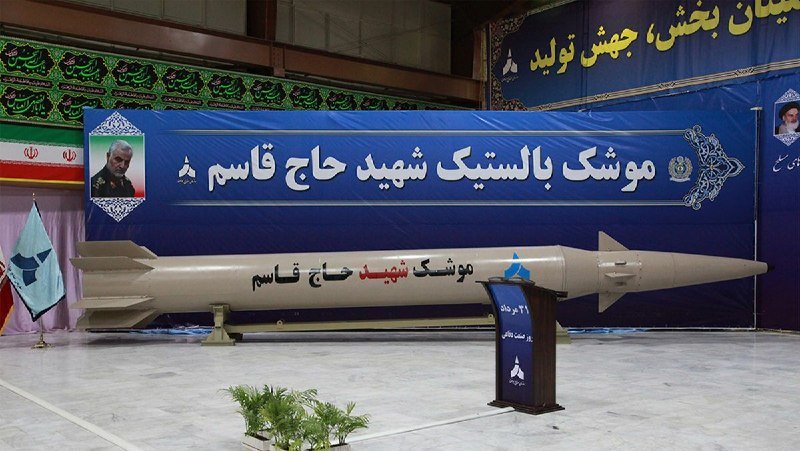
On 27 June 2026, the United States concluded a strike package against Iranian military sites, even as the Islamic Revolutionary Guard Corps Navy published a parallel claim of a "tit-for-tat operation" against an American vessel in the Gulf. The choreography is worth parsing: a Washington conclusion-of-strikes statement on the record, a Tehran counter-claim on the record, and the world's busiest oil corridor running between them.
The fact pattern that emerged today is a study in dual-source reporting. The US side has confirmed, in formal language, that the strikes it launched earlier this month against Iranian military infrastructure are over. The IRGC Navy, in its own statement, asserted a reciprocal action at sea. Neither side has produced independent corroboration of the other's framing; each has produced its own. The job of a news outlet in that gap is to mark what is confirmed, mark what is claimed, and decline to launder either into the other's preferred story.
What the US says it hit, and why
US Central Command, in the confirmation that closed out the operation, characterised the strikes as targeted at military sites used to project power into the Strait of Hormuz. The package drew on air and naval assets staged across the region, including the Al-Azraq area in Jordan, which informed Russian-language sources identified as a main forward base for attacks on Iran during the early phase of the exchange. The geographic spread is significant: the weapons were launched from a posture distributed across at least two countries, with logistics nodes that span the Levant.
The political constraint inside Washington was visible in the same news cycle. Press reporting confirmed that the United States has told Tehran it will not unfreeze any Iranian funds unless progress is made on the nuclear file, even as negotiators agreed at this stage to keep nuclear issues off the negotiating table. That is not a contradiction; it is the shape of the deal being assembled. Money is held in escrow as leverage against a later phase, while the immediate phase addresses what was hit, what was claimed, and what is being unmoved.
What Iran says it did
The IRGC's naval command, through the Imam Sajjad Corps public relations office, announced the destruction of what it called "the non-functional ammunition of the American Zionist aggression" in Bandar Abbas, and separately published footage and a claim of a maritime operation framed as tit-for-tat. The Iranian claim is a claim. It has been carried by Iranian state-adjacent channels, including Tasnim and PressTV, and amplified through the regional information ecosystem. It has not been independently verified by Western naval forces in the Gulf at the time of writing.
In parallel, Iranian President Masoud Pezeshkian set the diplomatic frame: Tehran will fulfil its commitments if the US side adheres to the agreement. The phrasing matters. "Reciprocity first" is now the official Iranian position, which means any future Iranian move, military or otherwise, will be packaged as a response rather than an initiative. That is not unusual; it is the standard grammar of a regime that needs to be seen as reacting rather than acting.
What sits between the two narratives
The corridor in question carries a fifth of seaborne oil. The strike package and the IRGC counter-claim are not just kinetic events; they are signals along that corridor. A strike that concludes is a signal that the supply side of the equation has been temporarily satisfied. A counter-claim, unverifiable, is a signal that the demand side of the equation, in Tehran's domestic market, has not. Each side gets the operation it needs to show at home while the broader market reads between the lines.
The Reuters team that walked Tehran's Golestan Palace after the strikes, stepping over glittering shards of glass, captured the physical residue of the campaign. Cultural-site reporting from inside Iran in the immediate aftermath of a US strike package is itself a signal: the state is permitting access, which means the state wants the damage seen, and seen in particular places. The selection of which palace, which corridor, which shard is itself an editorial decision by the host. What is not selected tells you as much as what is.
The Al-Salti / Al-Azraq revelation
The Russian-network sourced claim that the Al-Azraq base in Jordan acted as a main launch node for the strikes is the most strategically significant single piece of information in the day's reporting. If accurate, it confirms what most regional analysts had already inferred: that the operation was a base-network strike, not a carrier strike, and that Jordan's territory was a load-bearing element of the US posture. Amman has not commented publicly on the framing. The silence, in a kingdom under close US security cooperation, is itself data.
This also explains the political geometry of any ceasefire negotiation. A distributed base network is harder to negotiate away than a carrier presence, because the host governments become parties to the deal in their own right. Any future arrangement on Iran's nuclear file that ignores the architecture of the strike package, the launch geography, the host-state permissions, will be a deal on paper that does not bind the physical system that produced the strike.
What gets unmoved
Iran's positions on enrichment, on missile development, on proxy capability, are not on the table in the current phase, and have not been moved by the strike package. The US position on frozen funds is unchanged. The Levant posture is unchanged. The IRGC's naval doctrine, which is the specific arm that produced the tit-for-tat claim, has not been disarmed by the strikes; if anything, a strike-and-conclude sequence is exactly the circumstance in which an asymmetric naval force maximises its claim value.
That last point is the structural read. The IRGC Navy is built for the strait. It is built for the day after a US strike concludes and before a deal binds. The window between conclusion and binding is its operational market. A tit-for-tat claim, even if its specific physical content is unverifiable, is well-priced inside that window.
Where this goes next
The next dated events to watch are the bilateral meetings scheduled to test whether the nuclear file moves off the negotiating table, the next Iranian parliamentary statement on the IRGC Navy's posture, and the next freedom-of-navigation transit announcement from the US Fifth Fleet. Each will tell you whether the strikes were the end of a phase or the end of an attempt.
The honest reading of 27 June 2026 is that the kinetic phase has paused, the diplomatic phase has not yet begun in earnest, and the information phase is being run by both sides simultaneously for two different audiences. The world reads a concluded strike package. Tehran reads a confirmed capability to claim. Neither reading is wrong. Both are incomplete.
Sources
- Reuters via X, 2026-06-29 22:20 UTC: https://x.com/reuters
- PressTV via Telegram, 2026-06-29 21:01 UTC: https://t.me/presstv
- Tasnim News English via Telegram, 2026-06-29 21:06 UTC: https://t.me/tasnimnews_en
- Fars News Agency via Telegram, 2026-06-29 23:12 UTC: https://t.me/farsna
- OSINTdefender via Telegram, 2026-06-29 22:46 UTC: https://t.me/osintlive
- Sprinter Press via X, 2026-06-29 21:10 UTC: https://x.com/sprinterpress
Desk note: Monexus is reporting this as a dual-source event, with the US confirmation on the record and the Iranian claim as a claim, declining to ascribe proportionality, intent, or damage assessment beyond what the wire-level reporting supports. The structural read on maritime denial and the strait corridor is editorial; the target list, the timings, and the named actors are sourced.