Polymarket's billion-dollar World Cup: how a prediction market found its mass audience
Polymarket has crossed an annualised $1 billion in revenue six weeks after relaunching in the United States, with World Cup trading doing the heavy lifting. The question now is whether the platform has hit a ceiling or broken through it.
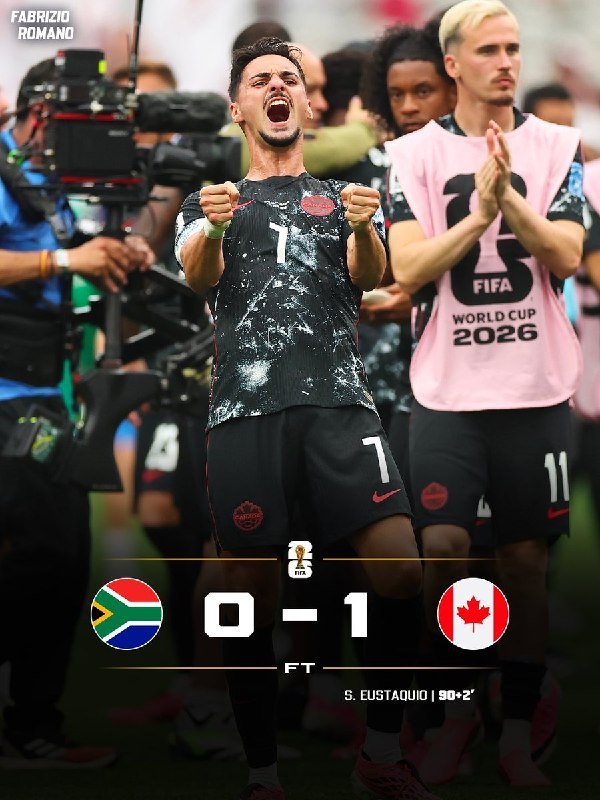
Polymarket, the blockchain-based prediction market long associated with crypto-native traders and political-betting sharp money, has crossed an annualised $1 billion in revenue roughly six weeks after reopening its United States exchange, according to a 26 June 2026 finance-industry note. World Cup trading and the removal of a longstanding U.S. waitlist are doing the lifting. The numbers matter less than the audience they describe: a venue that once lived on the fringes of regulated finance has, in the span of a single tournament cycle, started behaving like a mainstream sportsbook.
The trajectory is unusual. Prediction markets spent most of the last decade arguing, in litigation and in op-eds, that they were something other than gambling — information markets, sentiment aggregators, epistemic infrastructure. That defence has not gone away. What has changed is that the largest of them is now generating cash at a clip that Wall Street recognises, and it is doing so on the back of football.
The tournament as accelerant
The 2026 World Cup, hosted across the United States, Canada and Mexico, is the first to be staged at 48 teams and across a continent-sized footprint. Reuters reported on 26 June 2026 that organisers are tracking an unusually large spectator base, with stadium and fan-zone attendance running ahead of comparable group-stage windows at the 2022 tournament in Qatar. That scale matters for a venue like Polymarket, which converts event interest into contract volume: every televised match is a tradable instrument, and every tradable instrument is a chance to onboard a user who arrived for football and stayed for the politics markets.
The $1 billion annualised figure is not a same-store comparison. It is a forward projection of June's run-rate, and it depends on Polymarket holding volume through the knockout rounds and into the autumn political cycle. The platform has, in past cycles, shown sharp decay once headline events pass. Whether this time is different is the open question.
Why the U.S. relaunch changed the curve
For most of its operating life Polymarket was effectively off-limits to American users — blocked by a 2022 settlement with the Commodity Futures Trading Commission over unregistered binary-options trading. The relaunch, completed earlier in 2026, gave the company two things it had previously lacked: a U.S. bank rail and a U.S. marketing lane. The waitlist that thinned through the spring became a funnel into the World Cup product.
That detail reframes the story. The billion-dollar headline is not the result of a clever new feature. It is the result of a regulatory door opening at exactly the moment the world's biggest single sporting event happened to be on American soil. The structural lesson is that prediction-market revenue tracks access to mainstream distribution more reliably than it tracks the cleverness of any individual market.
The competitive frame
The counter-narrative is that Polymarket is merely harvesting demand that traditional sportsbooks would have absorbed. DraftKings, FanDuel and their peers have spent more than a decade normalising event-contract betting for American consumers, and they already run football derivative products with deep liquidity. If Polymarket's edge is only that it lets users settle in stablecoin rather than dollars, that is a thin moat against incumbents with marketing budgets three orders of magnitude larger.
There is, however, a second read. Prediction markets differentiate on the breadth of what they let users price. A sportsbook offers a point spread on Argentina versus Brazil; Polymarket offers contracts on group-stage advancement, top-scorer outcomes, geopolitical side-bets tied to the tournament, and a long tail of niche markets that no sportsbook would bother listing. The World Cup supplies the foot traffic; the long tail supplies the retention.
What we do not yet know
Several material questions remain unanswered by the public reporting. The finance-industry note does not break out how much of the $1 billion annualised run-rate comes from U.S. users versus offshore, nor does it disclose take-rate or unit economics at the contract level. The platform has not, as of 26 June 2026, filed a public revenue disclosure, and the figure circulating is derived from on-chain volume and reported fee schedules rather than audited statements. The Reuters spectator note confirms demand-side scale but does not speak to Polymarket's share of it.
The honest framing is that Polymarket has demonstrated demand, not durability. A World Cup happens every four years; the U.S. regulatory window that opened this spring could narrow again depending on how the CFTC and state regulators read the platform's expansion. The billion-dollar line is real, and it is the cleanest evidence yet that prediction markets have left their niche. Whether they have arrived somewhere durable is the next story.
How Monexus framed this: the wire coverage treated Polymarket's run-rate as a sportsbook milestone; Monexus reads it as a distribution story first and a product story second, with the open regulatory question still unresolved.
Wire provenance
This editorial synthesis draws on the following public wire/social posts:
- http://reut.rs/44D2oTX