Two crises, one White House: how Trump's twin Latin America and Iran tests expose the limits of 'Donroe'
Two simultaneous tests of the 'Donroe Doctrine' in Caracas and Tehran are exposing the limits of a coercive posture that promises maximum pressure everywhere, all at once.
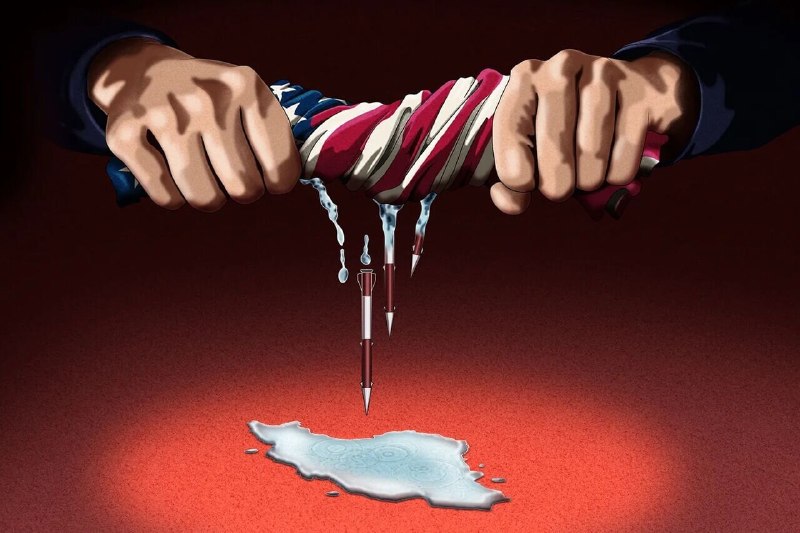
On the night of 28 June 2026, US Central Command released footage of strikes it said had hit Iranian military targets in response to an Iranian drone attack on the tanker M/T Kiku, the second round of US-Iranian blows inside days and the clearest sign yet that the 'Donroe Doctrine' of maximum pressure is producing escalation, not de-escalation, on both of its southern fronts. By the same evening, Iran's foreign minister Abbas Araghchi was in Baghdad telling President Abdul Latif Rashid that Tehran would 'act decisively against America and Israel's breach of promise', even as Axios reported that the two sides had quietly agreed to stop mutual strikes and meet in Doha to defuse a crisis over the Strait of Hormuz. Two hemispheric tests, one White House, one doctrine under strain.
The doctrine and its contradictions
What is being marketed from Washington as a 'Donroe Doctrine' is, in practice, a coercive diplomacy posture that runs simultaneously at Caracas and at Tehran: regime pressure, sanctions leverage, naval posturing, and the implicit threat of force if the target state miscalculates. The bet is that enough pain produces enough bargaining. What the last 72 hours reveal is that the bet is asymmetric. Iran can absorb a strike and answer with drones aimed at Bahrain, Kuwait and shipping in the Gulf, then pivot to diplomacy the next morning. It can also refuse to show up: Iranian state outlets reported on 28 June that a technical round of talks had been skipped, citing the US retaliatory strikes, even as US officials insisted the meeting was still on. The doctrine assumes the target has fewer options than the hegemon. Tehran is showing it has more.
Caracas is not Tehran
The Latin American leg of the doctrine has its own logic and its own limits. There, the pressure is financial and political: sanctions architecture, secondary sanctions enforcement, and an aggressive rhetorical line about restoring what the administration calls democratic normality. The model is the Trump-era Cuba posture updated for an era of dollar weaponisation and frozen central-bank reserves. That approach grinds. It does not explode. Caracas can absorb pressure through informal oil markets, Russian and Iranian backchannels, and the simple arithmetic of an economy that has already collapsed twice. There is no tanker war in the Caribbean, no CENTCOM video, no Hormuz-style chokepoint. The pressure works slowly, if at all, and the administration can claim motion without risking soldiers.
The Middle Eastern leg, by contrast, is kinetic on day one. The CENTCOM video of the 28 June strikes, the Iranian drone attacks on Bahrain and Kuwait that same day, and the strike footage on what Russian milblogger channel @intelslava identified as a launcher for Iran's Talaiyeh anti-ship cruise missile system together describe a tit-for-tat that the Pentagon did not plan for. According to the Russian-language Telegram channel @rybar, project manager Mikhail Zvinchuk summed up the dynamic in his 28 June video for @SolovievLive: 'Peace in the Middle East turned out to be an illusion.' The phrase captures what coercive diplomacy gets wrong when it meets a regime that has built its survival doctrine around escalation management.
The Tehran read on Washington
Iranian messaging makes clear how the regime is framing the confrontation to domestic and regional audiences. Foreign ministry spokesperson Esmaeil Baqaei framed the Iraq visit in Karbala-coded language, telling reporters that 'Karbala is the center of sympathy and affection between the two nations of Iraq and Iran' and that 'Karbala' is also the operational code name for 'Iranians' perseverance and dignity'.
A day earlier, on 28 June, Iranian academic and frequent English-language surrogate Seyed Marandi posted on X that 'Iran is preparing for round two in the war' and warned that the US had 'brought in extra forces and logistical equipment', a message designed for an Iranian and Global South audience that already reads Washington through the lens of broken promises. The post is a signal of how Tehran wants the negotiation narrative framed: not as two states haggling over Hormuz transit, but as a nation refusing to 'cede the Strait of Hormuz' and 'tolerate Zionist occupation and genocide in Lebanon'. That framing is contested in Western capitals, but inside Iran it is the operating reality.
Two clocks, one White House
The structural problem for the administration is that the two crises run on different clocks and require different tools. The Latin American track rewards patience and punishment. The Middle Eastern track punishes patience and rewards off-ramps. A doctrine that says 'maximum pressure everywhere, all at once' cannot optimise for both. It can, however, manufacture the appearance of motion: an Axios scoop about a Doha meeting, a CENTCOM video, a sanctions designation, a Marco Rubio press conference. Each item is real; together they form a posture, not a strategy.
What to watch in the next seven days is whether the Doha meeting actually convenes and whether the Iranian technical delegation, having skipped the prior round, shows up. If it does, the 'Donroe Doctrine' will claim a win on the diplomatic track while the kinetic track continues. If it does not, the administration will have to choose between doubling down on strikes and accepting that its coercive template, however effective in Caracas, does not transfer cleanly to a regional power with anti-ship missiles, allied militias, and a doctrine of managed escalation. The illusion of peace that Zvinchuk called out on 28 June is not an aberration. It is the predictable output of a doctrine trying to do two jobs at once.
Sources: France 24, Tasnim News, Euronews via Telegram, Axios via Al-Alam, OSINTdefender via Telegram, intelslava, Marandi on X, Disclose TV, Rybar.
Desk note: Monexus treats this as a structural stress test of coercive diplomacy, not a foreign-policy opinion column on either country. Wire reporting on the strikes and the Doha track is foregrounded; the Tasnim read is included to show how Tehran chooses to frame Washington's posture, with sourcing caveats attached.