Lebanon–Israel talks extended into a second day as Washington signals a signing window at the State Department
Lebanon and Israel entered a second day of State Department talks on 26 June, with Washington signalling a signing window even as the published text remains thin and a Hezbollah ceasefire-violation ledger circulates in parallel.
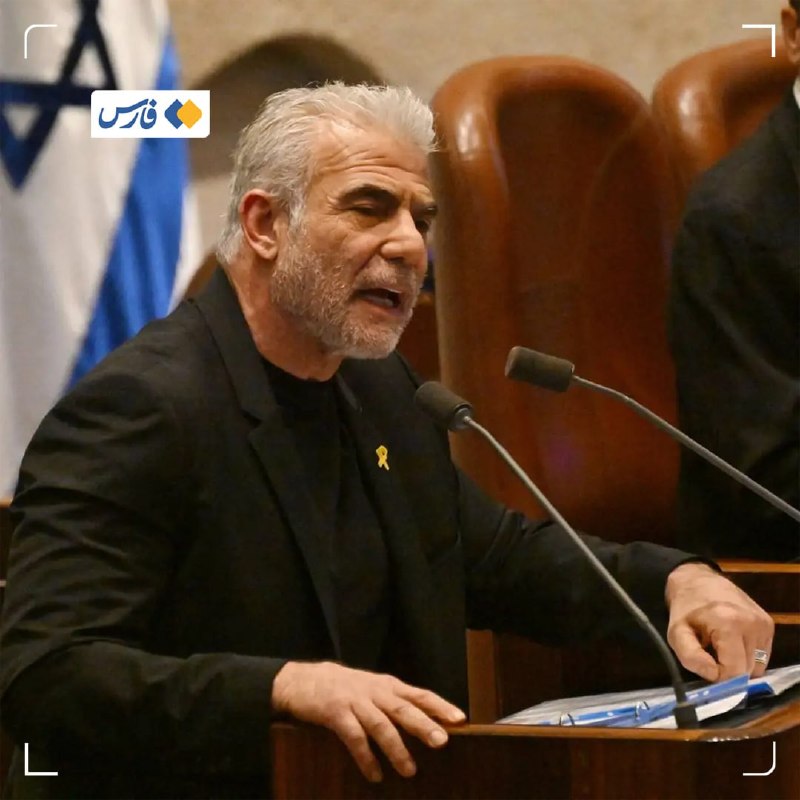
Negotiators from Lebanon and Israel sat down for a second consecutive day at the State Department in Washington on Friday, with a senior US official telling reporters late on 26 June that a signing window was being prepared on the seventh-floor diplomatic suite. The extension, confirmed by two Lebanese officials and an Israeli delegation source who spoke off the record, kept the technical teams in the same room where they had begun the previous morning's session, the room routinely used for mediated agreements between states that do not maintain full diplomatic relations. The State Department's own readouts have described the talks as "ongoing and productive," language calibrated to signal progress without pre-empting the text.
The headline that matters here is the gap between two readouts of the same overnight cycle. Iran's Tasnim news agency has carried the State Department's framing almost verbatim, emphasising that the negotiation remains unfinished and that nothing has been signed. Al-Jadeed's Washington correspondent, by contrast, has run with the more forward-leaning line that a signing window is being prepared. The two positions are not strictly contradictory, but they reflect different vantage points on the same process, and reading them together is more useful than picking one wire.
What the desk knows
The published text of any deal remains thin. As of the close of business on 26 June, no joint statement had been released from Foggy Bottom, and the Lebanese delegation had not briefed reporters on the operative clauses. The Israeli side has been similarly quiet in English, with the prime minister's office declining to characterise the talks beyond confirming that a delegation was present. The visible scaffolding is the ceasefire-violation ledger rather than the treaty text itself.
Hezbollah issued a statement on 28 June cataloguing Israeli ceasefire violations, citing raids, bombings and the targeting of several areas in southern Lebanon. The movement reserved what it described as "the right of defence" to counter what it termed Zionist aggression. Speaker of the Lebanese Parliament Nabih Berri, speaking separately, said that "the agreement that was signed in Washington" had marked the internal unity of Lebanon and that his movement would not enter into internal strife. The tense of Berri's language is itself a signal: he is describing a deal as already concluded at the same moment that the State Department is describing it as unfinished.
The tunnel under Majdal Zon
On the same day the technical teams were working through language in Washington, the Israeli army announced it had dismantled a Hezbollah underground complex near the village of Majdal Zon in southern Lebanon. Prime Minister Netanyahu and Defence Minister Katz said in a joint statement that the destroyed network contained hundreds of weapons and four launch shafts directed toward Israeli territory. The IDF Spokesman described the find as a roughly 200-metre route with multiple firing positions.
The political utility of the timing is hard to miss. Tunnel discovery footage circulates well, and it gives an Israeli negotiating team a domestic audience for the proposition that any agreement must come with verification architecture that is intrusive enough to make findings like Majdal Zun reproducible. It also gives a Lebanese team a reason to argue that residual Hezbollah military infrastructure on the border is being wound down regardless of whether a deal is signed in Washington, which softens the political cost of whatever compromise emerges.
UNIFIL and the verification problem
The verification problem is the deal's centre of gravity, and the United Nations Interim Force in Lebanon is the only institution on the ground with anything resembling the mandate and the footprint to monitor compliance at scale. UNIFIL's area of operations, the Blue Line and the Litani River corridor, is the same geography the technical teams in Washington are trying to put into a binding text. A monitoring regime that leans on UNIFIL inherits the force's established caveats on access and on freedom of movement, and any Israeli demand for more aggressive inspection rights runs into Lebanese sovereignty constraints that Berri's parliamentary bloc has historically policed.
Where the public record is thinest is precisely here. Neither the State Department nor the delegations have published a draft verification annex, and the most that can be said from the wires is that the talks were extended into a second day and that Washington is signalling a signing window. Whether the verification architecture that emerges is UNIFIL-led, US-led, Israeli-led or some hybrid is the question that will determine whether this deal holds.
The Iranian shadow
The Lebanon track is being negotiated inside a wider regional storm. Iran has launched fresh drone and missile attacks on Bahrain and Kuwait and has warned that it would halt negotiations and close the Strait of Hormuz if US strikes continue, according to reporting carried by France 24. Foreign Minister Abbas Araghchi, in meetings with the Iraqi president, said Iran would act resolutely against what he described as US and Israeli breach of covenant. Technical talks set for 28 June between the United States and Iran were not attended by the Iranian team, which cited recent US retaliatory strikes as its reason.
A Lebanon deal signed while the US-Iran track is in suspension would be a partial answer to a regional question. It would not be the answer. Hezbollah's position in Lebanon is bound up with the Iranian position in the Gulf, and Berri's statement that his movement will not enter into internal strife is the domestic Lebanese translation of a wider regional posture. The Washington talks are aware of this, which is one reason the State Department has kept its public language narrow.
What to watch next
The signing window, if it opens, will be measured in hours rather than days. Watch for three things: a joint readout from the State Department that names the verification mechanism, a Lebanese cabinet statement that survives the overnight news cycle, and an Israeli security cabinet decision that authorises the prime minister to sign. None of those three had appeared by the close of 26 June. The absence of all three is what "second day" means in practice: the technical teams are still writing the text that the politicians will then have to own.
Sources:
- https://t.me/tasnimnews_en
- https://t.me/JahanTasnim
- https://t.me/wfwitness
- https://en.wikipedia.org/wiki/United_Nations_Interim_Force_in_Lebanon
- https://en.wikipedia.org/wiki/Lebanon%E2%80%93Israel_relations
- https://www.state.gov/
- https://www.france24.com/en/middle-east/
- https://www.jpost.com/
Desk note: Monexus has run two readouts from the same overnight cycle, Tasnim's wire, which leans on the State Department's own framing of an unfinished negotiation, and the Al-Jadeed correspondent in Washington, which carries the more forward-leaning "signing window" line. We have presented both rather than picking a wire line, and where the source material thins on the text of the deal, the timetable and the regional response, we have said so rather than filling the gap with speculation.