Ecuador stuns Germany as expanded World Cup moves past the group stage
The expanded 32-team round-of-16 round is underway, with Ecuador's shock win over Germany reshaping the bracket and Jose Mourinho publicly urging Real Madrid to recall players early.
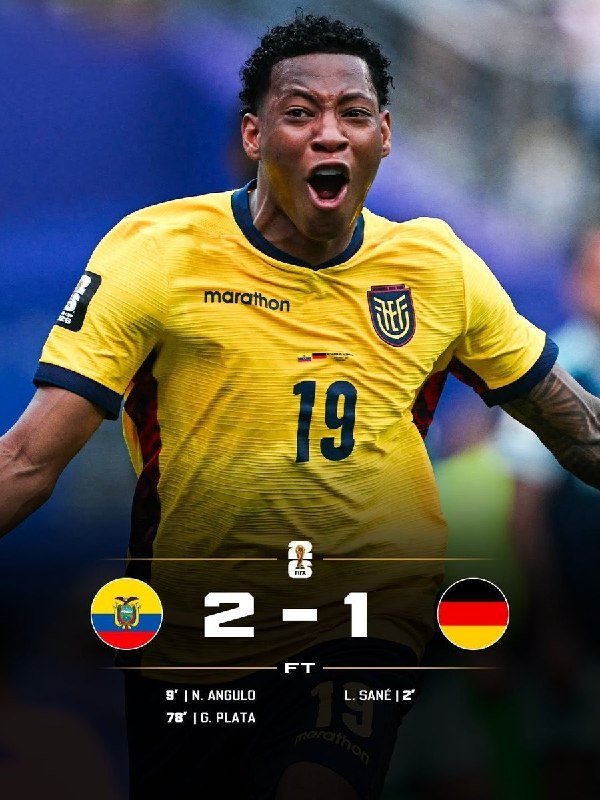
On 25 June 2026, Ecuador sealed one of the results of the group stage, beating Germany to stay alive in the FIFA World Cup and confirming the competitive bite of the tournament's expanded format. The Indian Express reported the result on 2026-06-25T22:52 UTC, alongside a separate briefing on the round-of-32 picture and a sharp intervention from José Mourinho, the former Real Madrid and current Benfica head coach, who said he wants Real Madrid players released from the tournament early.
The 2026 World Cup is the first edition staged under FIFA's expanded 48-team, 32-game knockout bracket. The shift from a 16-team round of 16 to a round of 32 has, as expected, padded the field with sides that would have been tourists in earlier cycles. It has also, less expectedly, handed the established powers more exposure to upset risk in the first week. Ecuador's win over Germany is the headline example so far.
What the bracket looks like
Per The Indian Express's 2026-06-26T01:52 UTC round-up of which teams have advanced and which have been eliminated, the round of 32 is now set, with European and South American sides joined by a wider slate of qualifiers than any previous World Cup has produced at this stage. The article catalogues the throughs and the exits, but the more interesting data point is what the new bracket implies: a single bad night in the group stage no longer carries the same tournament-ending weight it did in a 32-team, round-of-16 world, but the round of 32 itself is now its own minefield.
That structural change is doing some of the work behind Ecuador's win. A side that might once have been defending a one-goal lead against an established power with a round-of-16 cushion in hand now has to keep winning to reach the last 16. Ecuador's victory, in other words, is partly a function of format as well as form.
Mourinho, Real Madrid and the club-versus-country tension
The same Indian Express thread carried Mourinho's comments on the 2026 World Cup: he wants Real Madrid's players at the tournament to come home early, the implication being that their national-team obligations have run long enough and the club calendar is waiting. The remark fits a recurring post-2022 pattern, in which elite European clubs have become more vocal about the physical cost of mid-tournament releases, especially in summers that follow compressed domestic seasons.
The tension is not new, but the expanded format sharpens it. More matches in the group stage means more minutes on the legs of players who already carry 50-plus club appearances a year. Real Madrid's silence on the record — at least in the cited coverage — is itself part of the story: club statements during a tournament tend to come after a manager speaks first, and Mourinho's comment forces the issue into the open.
The South American counterweight
Germany's loss to Ecuador is also a reminder that the South American confederation, CONMEBOL, has produced at least one side in every World Cup knockout stage since 1998. The continental pattern is strong enough that European dominance in the modern game is structural rather than civilisational: better-funded academies, deeper domestic leagues, and more transferable tactical vocabulary, yes, but also a small number of confederations and a small number of clubs at the top of the talent pyramid.
Ecuador's win punctures that frame, briefly. It does not rewrite the tournament — Germany have lost group-stage matches before and gone on to win the World Cup — but it confirms that the expanded format is producing the kind of variance the format was, in part, designed to produce.
What it means going into the round of 32
The competitive question is no longer whether the expanded bracket will produce surprises; it is whether the surprises will be one-off nights like Quito 2006 redux, or whether they will compound into a knockout round in which a CONMEBOL or CAF side reaches the last eight on merit. The Indian Express's eliminated-team list, read alongside the Ecuador result, suggests the field is wide enough that the second outcome is at least plausible.
Mourinho's intervention, meanwhile, points at the second-order question: how the club game recalibrates around a tournament that now asks more of its players. Expect more managers, not fewer, to follow his lead before the next cycle.
This publication framed Ecuador's win as a competitive result first and a format story second; the wire coverage emphasised the upset, while the structural read sits in the expanded bracket and the club-versus-country friction Mourinho has now made explicit.
Wire provenance
This editorial synthesis draws on the following public wire/social posts:
- https://en.wikipedia.org/wiki/2026_FIFA_World_Cup