Syria’s environment ministry quietly launches a national water-pollutant monitoring network
Damascus flagged the launch of a national water-pollutant monitoring network via Telegram on 25 June 2026. The notice carries no budget, no pollutant list, and no partner agencies, which is why the announcement is the news, not the network.
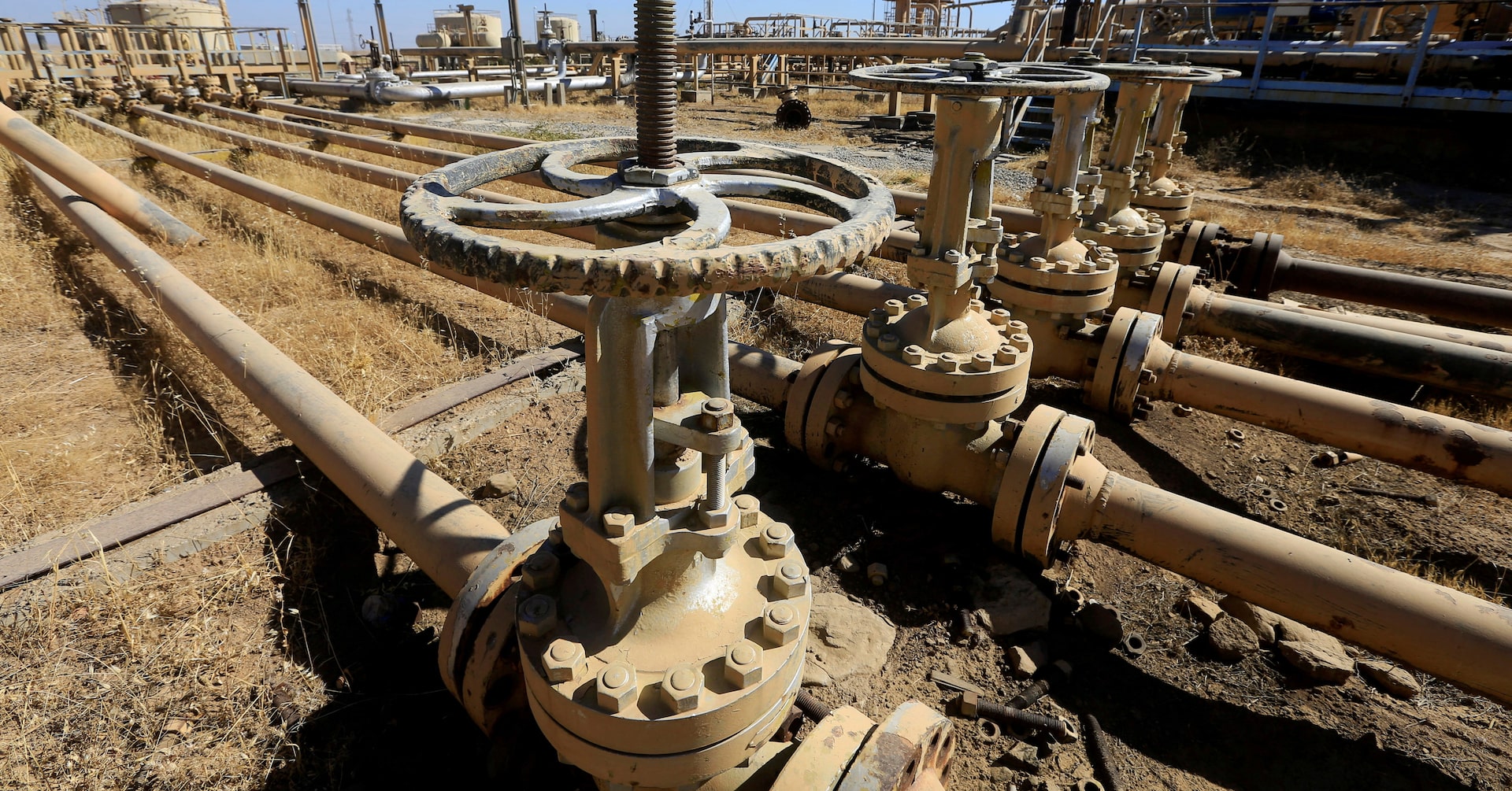
On 25 June 2026, Syria's Ministry of Local Administration and Environment posted a brief announcement on its official channels describing the launch of a national water-pollutant monitoring network, a programme that, on paper, reaches from the Orontes basin in the northwest to the coastal rivers south of Latakia. The notice was carried by the Shaam Network Telegram channel, the same outlet that has aggregated ministry statements since the post-Assad transition. No operational details accompanied the post: no list of monitored pollutants, no budget figure, no partner agencies, no rollout timetable.
That silence is itself the story. After more than a decade of war, drought, and the partial collapse of central water utilities, Damascus is signalling that it intends to act on environmental data again. Whether that signal becomes a programme depends on who shows up to fund, build, and operate it.
What the announcement actually says
The Telegram post, as captured by the Shaam Network channel, frames the network as a national instrument for tracking pollutants in rivers, groundwater, and selected municipal outflows. The phrasing emphasises "comprehensive coverage" and "modern measurement tools," two phrases that, in any environment ministry communique, tend to be aspirational rather than descriptive.
What is missing is more revealing than what is there. There is no reference to a sampling frequency, no specification of which heavy metals or organic compounds will be tested, and no indication of whether the data will be published or held inside the ministry. There is also no mention of the Syrian Arab Republic's commitments under regional water treaties, even though the Orontes basin is a transboundary system shared with Türkiye and, historically, Lebanon.
In short, the announcement is a flag-planting exercise: a public statement that the state intends to monitor. It is not, yet, a programme.
The Orontes problem
The Orontes River, which rises in Lebanon, crosses into Syria near the city of Hermel, runs north through Homs and Hama, and re-enters Türkiye near Antakya, is the test case that any credible national monitoring network will be judged against. The basin has been a byword for untreated discharge for years. Municipal wastewater from Syrian cities flows into the river largely untreated. Agricultural runoff adds nitrate loads. In the post-2024 transition period, the absence of functioning sewage treatment in several provincial capitals has only made the problem more visible.
A national network that does not include continuous Orontes gauging stations at Homs, Hama, and the northern border would be window dressing. The geography of the basin forces any honest monitoring effort to confront the transboundary question: what Syria measures, Türkiye will eventually want to compare against its own readings downstream. That is the level of accountability the announcement has not yet invited.
A ministry rebuilding itself
The Ministry of Local Administration and Environment is the institutional inheritor of a portfolio that, before December 2024, sat partly inside different agencies and partly inside governorate-level directorates with limited central coordination. The Wikipedia entry on the ministry traces its structure through the Baathist period and notes successive reorganisations, including the 2023 merger that consolidated environment functions with local administration.
That bureaucratic history matters because it explains the institutional incentive for a launch announcement of this kind. The new administration in Damascus is under pressure from donors and from its own population to demonstrate that the state is functioning. A monitoring network is a low-cost, high-visibility way to do that. Equipment can be sourced through Gulf or Turkish partnerships. Sampling protocols can be borrowed from WHO or FAO guidance documents. A ministry website can publish quarterly summaries that look like governance without committing the state to enforceable effluent standards.
The risk is that the announcement becomes the deliverable. A network whose data is never published, whose pollutant list is never made public, and whose laboratories are never independently audited would still allow officials to claim that monitoring exists.
Donor logic and the funding question
Syria's environmental reconstruction is, at this point, a question of who pays. The country is not a major recipient of traditional Western development assistance in the water sector, given the sanctions architecture that has only partially eased since the political transition. Gulf reconstruction funds, Turkish provincial cooperation, and multilateral lenders including the Islamic Development Bank have been more plausible counterparties.
Any of those funders would expect to see a project document before a network is announced, not after. The absence of a named partner in the ministry's post suggests one of three things: the network is being built entirely with Syrian state resources, which would be surprising given the fiscal picture; the partner has not yet been announced and the ministry is signalling first; or the announcement is preparatory groundwork for a fundraising push that will follow.
Each scenario carries a different implication for the network's credibility. A domestically funded programme would still need international technical accreditation for its data to be usable in transboundary negotiations. A donor-funded programme would carry the funder's reporting requirements, which tend to force publication. A pre-fundraising announcement is the least informative category, because it tells the public nothing about the eventual shape of the work.
What an honest network would have to include
There is a short list of features that would distinguish a real monitoring programme from a press release. Continuous gauging stations on the Orontes at the Lebanese and Turkish borders, with telemetered data published on a public dashboard. A defined pollutant panel covering, at minimum, biological oxygen demand, total suspended solids, nitrates, phosphates, lead, mercury, and the indicator bacteria used by WHO for recreational and drinking water. A laboratory accreditation pathway, ideally through a body recognised in the region. And a data-sharing protocol with Türkiye's State Hydraulic Works and Lebanon's ministries in Beirut.
None of these are present in the announcement. They are the open questions that the next month of Syrian and regional reporting will have to answer.
The stakes are not symbolic
Syria's water problem is not a future risk. The country entered its latest drought cycle in 2024, with reduced snowpack on the coastal mountain range and falling groundwater tables in the Jazira. A monitoring network that functions would do three things at once: give the agriculture ministry the data it needs to plan irrigation, give the health ministry early warning on contamination events, and give Damascus a credible basis for negotiating water-sharing arrangements with Ankara.
A monitoring network that exists only on Telegram does none of those things. The 25 June announcement is, in that sense, the first move of a longer negotiation between the Syrian state and its own environment, and between the state and the foreign partners whose involvement will determine whether the data is ever trusted.
The next test is whether the ministry follows the post with a partner announcement, a pollutant list, or a budget. Until then, the network is a flag on a map, not a programme.
Sources
- Ministry announcements via Shaam Network Telegram channel, https://t.me/shaamnetwork
- Wikipedia, "Ministry of Local Administration and Environment (Syria)", institutional history and reorganisations, https://en.wikipedia.org/wiki/Ministry_of_Local_Administration_and_Environment_(Syria)
- Wikipedia, "Water supply and sanitation in Syria", overview of pre-war and wartime utility capacity, https://en.wikipedia.org/wiki/Water_supply_and_sanitation_in_Syria
- Wikipedia, "Orontes River", transboundary basin geography and shared riparian context, https://en.wikipedia.org/wiki/Orontes_River
Desk note: Monexus has treated the Shaam Network Telegram post as a single-source launch announcement and has not extrapolated details, budget, pollutants, partner agencies, that the source does not provide. Subsequent coverage will revisit the programme once the ministry publishes operational specifications or a partner agency confirms involvement.