Scotland on the brink in Miami as Brazil cruise to Group C summit
Scotland's 3-1 loss to Brazil in Miami confirmed a group-stage exit that the mathematics had been whispering since kickoff, leaving Steve Clarke's side outside the band of third-placed qualifiers and reigniting the question of how far the current setup can take them.
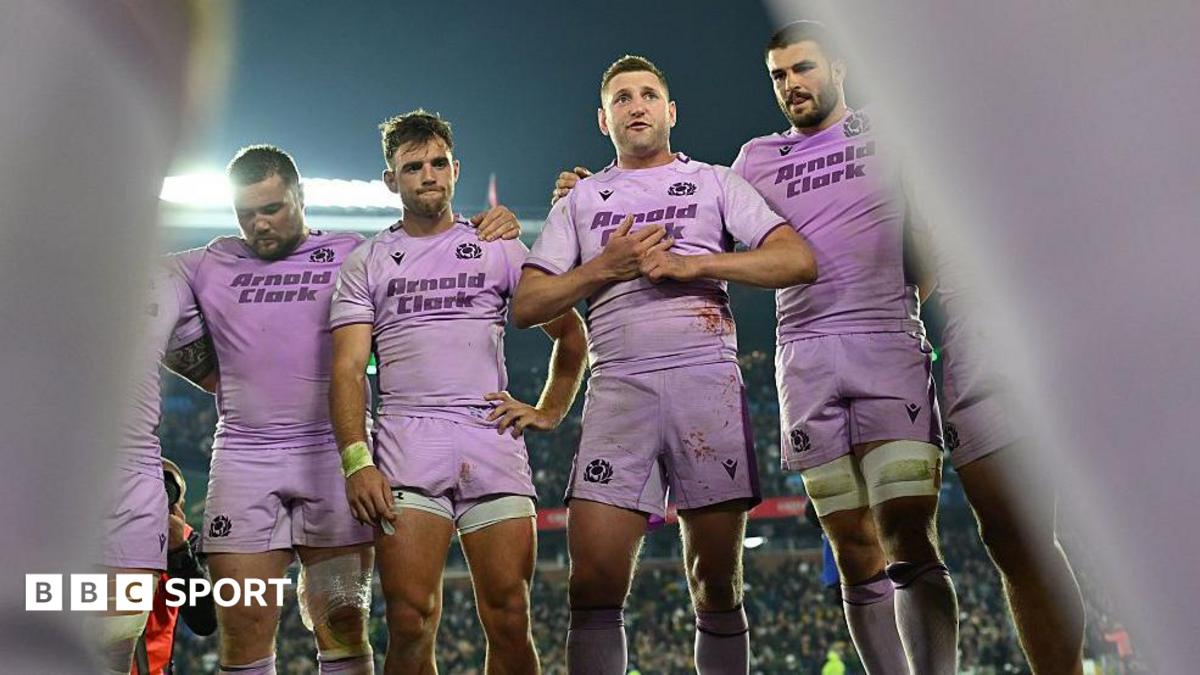
Scotland walked into Hard Rock Stadium on Wednesday night needing a result against a Brazil side already booked for the last 16, knowing that victory alone might not be enough to keep their World Cup alive. Instead they leave Miami beaten, outscored 3-1 by a Seleção that treated the group-stage finale as a coronation, and waiting on a chain of third-place results that, by Friday morning, refused to break their way.
The 3-1 scoreline flattered the closing choreography more than the contest itself. Brazil, already assured of top spot in Group C through two prior wins, struck early and often, moved the ball with the languid authority of a team playing for rhythm rather than survival, and used the second half to audition their bench. Scotland, for their part, competed in bursts: a set-piece, a counter, the kind of organised defiance that has defined Steve Clarke's reign. But the goal difference, the superior numbers across their group-stage rivals in Asia and Africa, and the unforgiving mathematics of a 48-team tournament have now closed the door.
The night the door creaked open
Hard Rock Stadium had been carved into Scottish territory long before kickoff. The BBC's Scott Mullen, filing from Miami on the night, captured the mood in his dispatch from the away end: a saltire-heavy pocket of Miami Gardens chanting as if Hampden had been airlifted across the Atlantic, mixing hope with the resigned fatalism of a fanbase that has learned to read group tables in real time. By the time Brazil's third went in, the singing had thinned.
Clarke had framed the fixture as a chance to measure his side against the best, and Brazil obliged. The Seleção's tournament had already delivered a statement win in their Group C opener and a workmanlike second, sufficient to seal progression before a ball was kicked at the home of the Miami Dolphins. Their head coach used the dead rubber as a laboratory, rotating eight players and handing minutes to forwards who had begun the tournament on the bench. The result was a performance that confirmed the gulf in squad depth, even on a night when neither side was playing for maximum stakes.
Scotland's goal, a scrappy consolation pulled back in the closing minutes, changed nothing about the ledger. It trimmed the goal difference by one. It did not, on its own, lift Clarke's side into the band of third-placed qualifiers permitted to advance. As the Guardian's live blog noted through the afternoon, the permutations had turned cruel: Scotland needed results elsewhere to fall a particular way, and the third-place table tightened around them in stages.
The drought, and what it costs
By Friday, the BBC confirmed what the arithmetic had already whispered: Scotland are out, unable to finish among the eight best third-placed teams. The framing in the run-up had leaned heavily on the symbolism of the occasion. Twenty-eight years since the last men's World Cup appearance, a generation of supporters raised on near-misses and play-off heartbreaks, and now a tournament staged across three host nations with a format designed to give more sides a longer stay. The expansion to 48 teams was supposed to be Scotland's window.
Instead it has become a reminder of how unforgiving even a generous bracket can be. Group C offered no gimme: Brazil, a side that has missed the knockout rounds of a World Cup only once since 1990, plus a fixture list that asked Scotland to convert possession into goals against teams who defend in numbers and punish in transition. Clarke's squad did the harder parts well. They organised. They competed. The structural complaint, audible from Glasgow to the away end in Miami, is that they did not score enough, and that the goals column is now the column that has ended their campaign.
The Guardian's Jonathan Wilson, surveying the wider last-32 picture, placed Brazil among the teams that could plausibly be on their way out before the quarter-finals. That is the company Scotland have kept at this tournament: not the underdogs who crashed out in the group stage of a 32-team World Cup, but a side that played three matches against elite opposition and lost the one that mattered most by a margin narrower than the scoreline suggests.
What Clarke built, and what comes next
The Clarke question, already being asked in Scottish press boxes on Friday morning, is whether the manager extracted everything from a squad that had dragged itself across the qualification play-offs and into a tournament many tipped them to exit early. The BBC's post-mortem posed it directly: did Steve Clarke get the best out of his Scotland squad at the 2026 World Cup as they face group-stage exit?
The honest answer is layered. Clarke built a side that punched well above its recruitment weight, that took points off teams with deeper pools and higher wage bills, and that travelled to a tournament on the other side of the Atlantic expecting to compete rather than make up numbers. The structural limits are not new: a talent pool that is shallower than the rivals they faced, a domestic league that produces fewer elite forwards than the Premier League alone supplies to Brazil's bench, and a calendar that compresses international windows in ways that punish smaller federations. None of those constraints disappeared in Miami. They simply became visible.
What changed is the conversation. Scotland's qualification campaign was framed as redemption; their tournament is now framed as evidence. Whether that evidence points to a manager who has taken the side as far as he can, or to a system that needs freshening around him, is a question for the Scottish FA rather than the Hard Rock Stadium press tribune. By Friday evening, both possibilities were being floated in equal measure.
The wider tournament, and where Scotland fitted in it
The 2026 World Cup has been, by design, a tournament of doorways. Japan and Morocco, profiled in the Guardian's last-32 preview, are precisely the sort of challengers the expanded format was meant to elevate: organised, technically credible, and capable of producing results that the traditional order has spent four years discounting. Brazil, for all their depth, are not the only superpower navigating awkward fixtures. England went through; Scotland wait, then watched the wait end. Cape Verde, the smallest nation ever to qualify for a World Cup, celebrated progress in the same window that Scotland were confirming their exit.
The pattern matters because it recasts what Scotland's exit means. This is not a traditional power humbled at the group stage. It is a competitive mid-tier side, drawn into a section with a genuine title contender, denied the goal difference that might have dragged them into the knockout rounds as one of the fortunate eights. The 3-1 loss in Miami is the headline. The underlying numbers, in a 48-team field, are closer than the scoreline suggests.
What Scotland can take forward is less comforting than the framing suggests. They competed. They did not collapse. They lost to Brazil by two goals in a fixture that the Seleção treated as an exhibition. The next cycle begins in months, not years, and the same manager, if he stays, will face the same structural questions with a squad that has now logged minutes at a World Cup and knows exactly what the gap looks like. Whether that knowledge narrows the gap, or merely documents it more clearly, is the only question that Miami actually answered.
Sources:
- BBC Sport, "Scotland's elimination from World Cup confirmed", 2026-06-27
- The Guardian, "Japan and Morocco face old order giants in the hope of a brave new world", Jonathan Wilson, 2026-06-27
- BBC Sport, "Where does Scotland's World Cup campaign leave Clarke?", 2026-06-27
- The Guardian, "World Cup 2026: England through, Scotland wait goes on and joy for Cape Verde – live", 2026-06-27
- BBC Sport, "One night in Miami: The Scotsmen of the apocalypse", Scott Mullen, 2026-06-27
Desk note: Monexus read this fixture as a defensive-execution story rather than a symbolism story. The wire ran hot on Scotland's 28-year drought in the build-up; the result at Hard Rock turned on goal difference and squad depth, and the article reflects that.