Pochettino's yellow-card math: how the USMNT manager is balancing risk against a knockout round that hasn't started yet
Four players, one yellow card each, and a round-of-32 match that has not yet been scheduled. The USMNT manager says he will not gamble his roster against Türkiye.
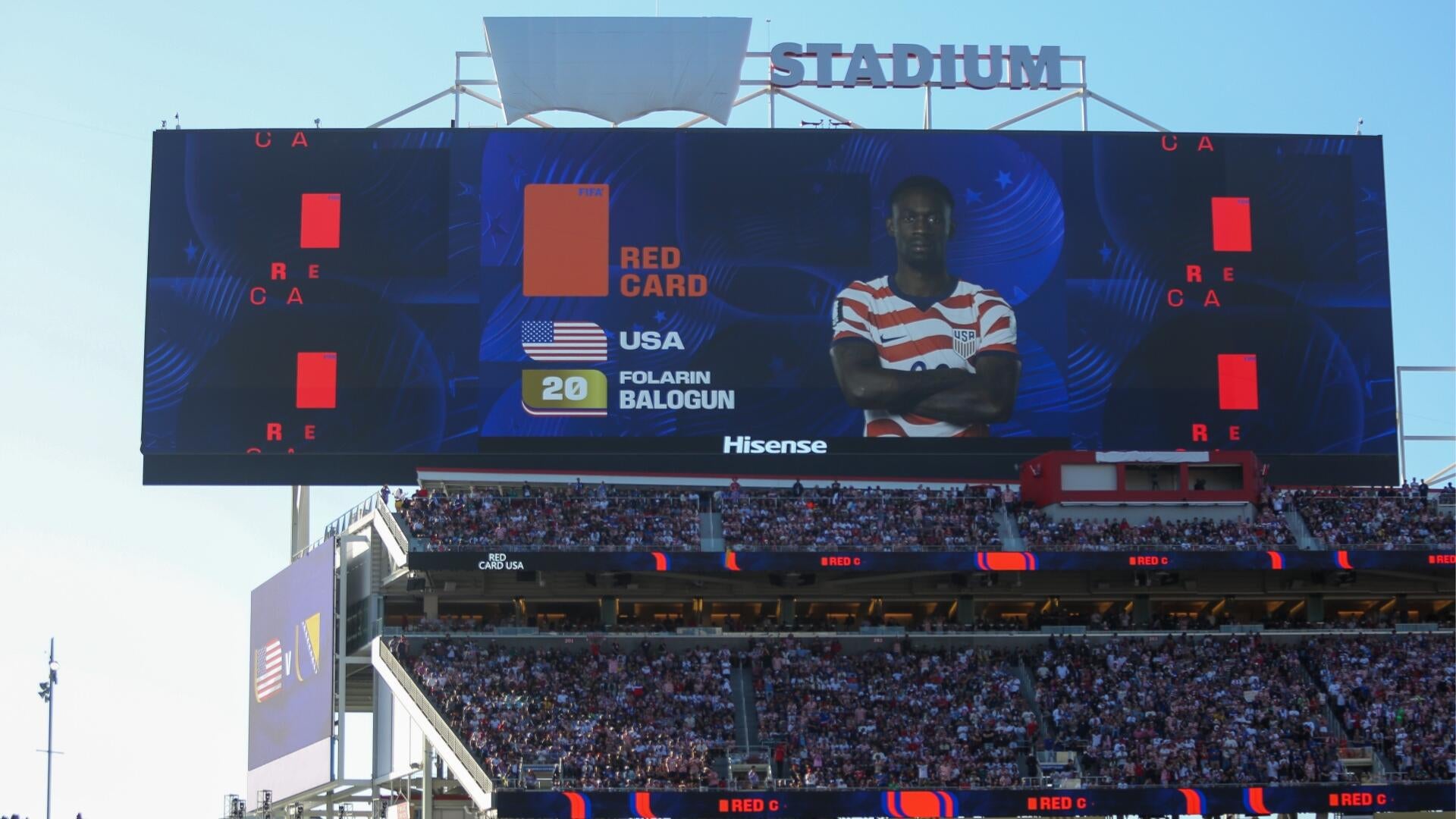
Mauricio Pochettino walked into a press conference in the United States' World Cup base on 25 June 2026 and did something most international managers refuse to do on the eve of a group-stage finale: he named the four players who would not be on his teamsheet. The USMNT head coach told reporters that Weston McKennie, Tyler Adams, Antonee Robinson and another squad regular carrying a booking would be held back from the starting lineup against Türkiye, the calculus simple enough to fit on a napkin. A second yellow card on Thursday means a one-match ban. A one-match ban means missing the round of 32 on 1 July.
That is the entire puzzle Pochettino is solving, and the answer is unflattering to the depth chart. Tournament football compresses risk into ninety-minute windows; managers who treat yellow cards as trivia tend not to last past the second round. Pochettino, the former Tottenham and Paris Saint-Germain coach hired to make the United States credible at a home World Cup, is behaving like a man who has read the rulebook and taken it personally.
The roster reality behind the caution
The four names Pochettino flagged are not interchangeable parts. McKennie and Adams anchor the midfield; Robinson is the first-choice left back; the fourth, by process of elimination and the ESPN report, completes a spine that the manager has spent eighteen months trying to harden. Each has accumulated one yellow across the group stage, the threshold at which every further foul becomes an existential question.
There is a counter-reading worth airing: holding four starters out of a group finale against Türkiye is a small concession to a side the United States are expected to beat regardless. A second yellow is not a likely outcome for a careful professional in a match his team controls. Pochettino's caution could therefore be read as either prudent management or a quiet admission that the squad behind those four is thinner than the federation's marketing wants to admit. The press conference did not resolve that question, and the manager was not asked to.
How a 'naive' start built the credibility
The Pochettino tenure began, by The Guardian's reconstruction, in tears. The Argentine took the United States job in late 2024 with a reputation as a developer of young talent and a builder of pressing systems; what he found, by his own later admission, was a federation that had overlearned the lessons of European club football and under-learned the lessons of international tournament football. The early body blows — defeats and dropped points that the manager has publicly called "naive" — forced a reset. By the time the World Cup opened on home soil, the team had a clearer identity: high press, vertical transitions, and a frontline built around Christian Pulisic's late runs.
The Guardian's account of those early months, drawing on Pochettino's own press conferences and interviews with staff at the federation, frames the rebuild as deliberate rather than reactive. The manager kept the spine; he changed the verbs around it. That is the most plausible reading of why a side written off as "naive" twelve months ago is now a round-of-32 side and the bookmakers' pick to advance.
What a knockout round actually demands
The round-of-32 matches are scheduled to begin on 1 July 2026, four days after the group stage closes. A suspension triggered on Thursday is not negotiable; FIFA's disciplinary code treats accumulated yellows as a hard cut-off, not a soft warning. Managers who pretend otherwise tend to discover the rulebook in the tunnel.
There is, however, a structural caveat the press conference did not address. Suspension rules reset after the group stage only for certain competitions; in FIFA World Cup regulations, accumulated yellows carry into the round of 32 and are wiped only at the quarter-final stage. Pochettino's caution is therefore not paranoia. It is arithmetic.
The stakes, in plain terms
The United States have not advanced past the round of 16 at a men's World Cup since 2002. The hosting cycle — the first with expanded 48-team format, the first on American soil since 1994 — sets a floor the federation cannot afford to miss. Pochettino's contract, his backroom staff, and the federation's 2026 broadcast revenue are all anchored to a run that begins, in earnest, on 1 July.
What remains genuinely uncertain is whether the depth behind the four rested starters can hold a lead against Türkiye for ninety minutes without conceding the kind of midfield foul that earns a card. The manager has made his bet. The substitutes he sends out instead will, fairly or not, be measured against the men they replace.
Desk note: this publication read the Pochettino press conference through two wires — The Guardian's long reconstruction of the manager's first year and ESPN's pool report on the 25 June team news — rather than relying on either alone. The structural reading (yellows carry, suspension is automatic, depth is the variable) is drawn from FIFA's published disciplinary framework as commonly applied in tournament play.