Morocco book knock-out place after four-goal rally sinks Haiti
Morocco's 4-2 rally over Haiti booked a round-of-32 place, but the scoreline tracks a deeper gap: a decade of professionalised diaspora recruitment against a federation still negotiating basic player-payment disputes.
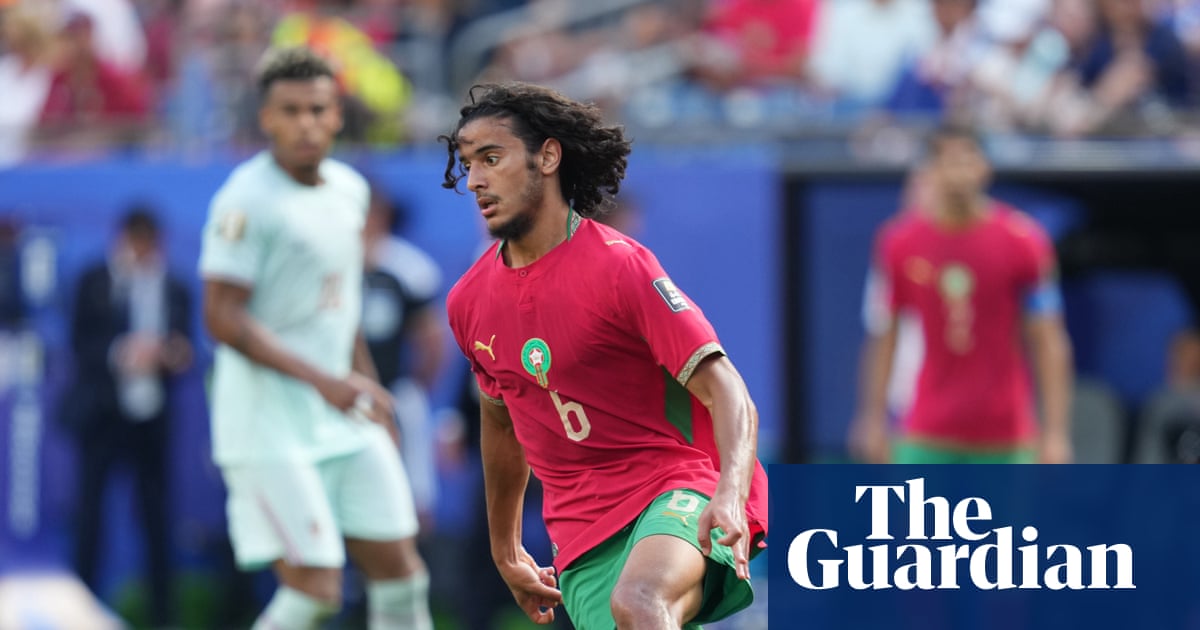
Morocco completed a four-goal rally against Haiti on 25 June 2026 to clinch a place in the round of 32 at the World Cup, a result that the wire reporting framed as a Moroccan story about nerve and tactical depth. The more interesting read is structural. The match paired a federation that has spent a decade professionalising its diaspora recruitment against one still negotiating basic player-payment disputes with its own squad. The 4-2 scoreline was a function of that gap, not a deviation from it.
The Atlas Lions were staring at an early exit in Philadelphia before halftime. Haiti, playing in their first World Cup since 1974, took a 2-0 lead through goals that exposed the kind of transitional defensive lapses that have undone less organised sides throughout the group stage. Morocco looked, for a stretch, like the team that had stumbled into the tournament rather than the one that had gone further in Qatar 2022 than any African side in the competition's history. Coach Walid Regragui's side has built its recent identity on control: possession-based, vertically pressed, and anchored by a core of Europe-born players who have chosen the Atlas Lions over the federations of their birth.
Then the second half began, and the depth told. Morocco's equaliser came from a substitute, a reminder that the squad list Regragui was working through is materially longer than anything Haiti could put on the field. A third, off a set piece, with the centre-back pairing that has been first-choice for a year. A fourth, on the break, finished by a winger who has been a peripheral figure for eighteen months but who has the technical floor to execute at this level. The recovery, in other words, was a federation-wide effort: a scouting department that identified the right bench, a backroom that prepared the substitutes, a youth pipeline that had them match-ready. The four-goal swing did not come from the coach's whiteboard so much as from a decade of institutional accumulation.
Where the depth comes from
Morocco's model is unusual. The federation's recruitment operation has, for the better part of a decade, targeted dual-nationality players across the Netherlands, Belgium, France, and Spain, often before those players had a single senior cap with any nation. The pitch, in effect, is a long-term one: come up through Moroccan age-group football, build a relationship with the technical staff, and earn a senior cap inside a system that knows your game. The fruits of that operation were visible in Qatar, and they remain visible now. The squad that took the field against Haiti included players who had been inside the federation's orbit since they were teenagers, which is the point. Recruitment, in this frame, is not a tournament-cycle problem; it is a fifteen-year arc.
Haiti is operating inside a fundamentally different constraint set. The country's federation has spent the better part of the past two years managing internal disputes over appearance fees and the conditions under which the squad has been asked to play major tournaments. Reporting through the qualifying campaign documented delays in player payments, the kind of administrative drag that drains morale even when the technical staff is competent. The squad that took the field in Philadelphia was competitive. It was not, however, the product of a federation that could draw on a deep, well-funded pool of dual-national talent with a long history inside the system. The two-goal lead held the difference in raw talent roughly equal. The eventual 4-2 scoreline tracked the difference in everything around the talent.
The structural frame
International football's recent history is a story of federations converting whatever their structural advantage is into a tournament result. The Gulf states have converted petrodollar-funded recruitment. Japan has converted a domestic league that has spent twenty years raising its technical ceiling. Morocco has converted diaspora. The pattern is not a comment on national character; it is a comment on the kind of professionalised apparatus a federation can build over a long enough horizon.
The Jonathan Wilson analysis in the Guardian, published as the group stage closed, identified Japan and Morocco as the two eye-catching last-32 ties from outside the traditional powers, a framing that pointed exactly at this depth question. Both federations had done the structural work that turns a competitive squad into a knockout-stage squad. Neither had stumbled into the round of 32 on a single result or a single moment of individual brilliance. The deeper question, which the Haiti match illustrated in microcosm, is what that gap looks like in real time on a field.
The result, recast
The wire frame for the match was straightforward: Morocco showed character. Regragui's substitutions worked. The team showed the mentality of a side that had been to a World Cup semi-final and knew how to manage a difficult afternoon. None of that is wrong. It is, however, the kind of explanation that treats a four-goal swing as a product of willpower rather than of organisational capacity. Willpower, on a 90-minute timeline, is what a federation has built into its squad over the decade before the match kicks off.
Haiti played the better football for forty-five minutes. They will leave the tournament with a creditable performance against a side that went on to win the group, and they will do so under conditions that no amount of tactical adjustment can offset. The federation will go back to the work of resolving the disputes that have followed the squad around, and the next cycle of recruitment will be a function of what the federation can offer a young dual-national who has options. The match result is a snapshot. The federation behind it is a film.
Stakes, looking forward
Morocco's round-of-32 opponent, drawn from the cohort that includes the second-place finishers in the more established groups, will be favoured to a degree that the depth model predicts. A win would put the Atlas Lions into a quarter-final and continue the run that began in Qatar. A loss would end the tournament, but it would not end the structural argument. The federation that built this squad will rebuild it inside the same system, with the same long arc, and the same ability to call on a diaspora that has been cultivated for a decade.
For Haiti, the tournament is effectively over, but the question it leaves behind is the one that matters. The four-goal swing, on the day, came from a substitute who knew the system, a set-piece routine that had been drilled, and a winger who had been match-sharp through eighteen months of peripheral selection. None of those resources were available to the side that took a 2-0 lead. The next cycle's question, for Port-au-Prince, is whether the federation can build the apparatus that produces them. The match result is a snapshot. The gap is a project.
Sources: Spectator Index match reporting (t.me/spectatorindex); Guardian, 27 June 2026 ("Japan and Morocco face old order giants in the hope of a brave new world"); BBC Sport, 27 June 2026 (group-stage wrap coverage); Sky Sports, 27 June 2026 (England–Panama group-stage context).
Desk note: Wire reporting on the match centred on the comeback as a Moroccan story; this piece frames the result as a structural one, the depth gap between a federation with a decade of professionalised diaspora recruitment and one still negotiating basic player-payment disputes with its own squad.