Kyiv's air-defence win is the story, and Western media has mostly missed it
Western desks led Saturday night's copy with the Russian launch over Kyiv. The more telling fact, buried in mapper feeds, is what the interceptors did to a salvo that included a Zircon.
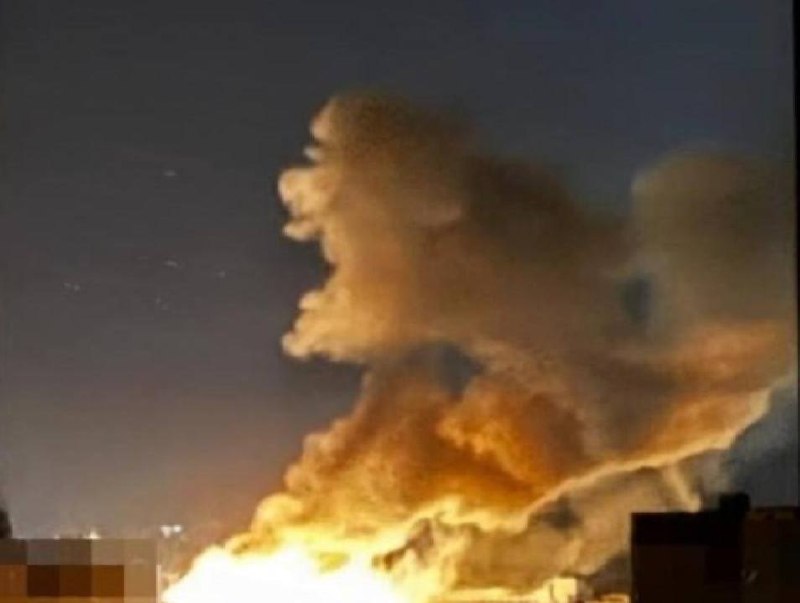
At 23:29 UTC on 27 June 2026, open-source mappers tracking the night sky over Kyiv posted footage of a large fire burning in the southwestern districts of the capital following an Iskander-M ballistic missile impact. Seventeen minutes later, the same channel reported that a Zircon, the ship-launched hypersonic cruise missile Moscow has rarely risked in this war, had struck the same target. Two munitions from two different systems, layered onto one location in central Kyiv, on a Saturday night. By the standards of Russian strike packages aimed at the Ukrainian capital since 2022, that is not unusual. What was unusual was the ratio of incoming to intercepted reported in the hours that followed, a ratio that, if confirmed in the morning's after-action briefings, will say more about the trajectory of this war than any communiqué from the Kremlin.
Western wire desks on Saturday night led their copy with the launch: the volume of Russian missile employment, the visible fires, the renewed assault on a capital that has absorbed more salvos than almost any European city in the last eighty years. The framing is familiar because the launch is the part Moscow stages. Launches are loud, photogenic, and arrive on deadline. Intercepts, when they succeed, are quiet. They happen in seconds, they leave fragments on rooftops rather than craters in streets, and they do not photograph well. The more informative fact on 27 June was not that Russia fired at Kyiv again, but that a meaningful share of what it fired did not arrive.
The package, decoded
The Russian strike package that hit southwestern Kyiv on Saturday combined an Iskander-M short-range ballistic missile with a Zircon anti-ship cruise missile repurposed for land attack. The Iskander family has been the backbone of Moscow's tactical ballistic strikes since the invasion began; the Zircon is something else. Its Mach 8+ terminal velocity and low-altitude sea-skimming profile make it among the hardest targets a modern integrated air defence system can face, and its appearance overland, the second time the system has been used against the Ukrainian capital in this campaign, signals that Moscow is willing to burn prestige weapons to keep pressure on Ukrainian intercept capacity. AMK Mapping's post, noting that the Zircon "impacted the same target as the Iskander-M," suggests the salvo was aimed at a single high-value node, likely an energy substation, a logistics hub, or a command facility, rather than a broad terror salvo across residential districts.
The deployment is itself an admission. Russia has used Zircons sparingly. Each one costs an order of magnitude more than the Kalibrs and Kh-101s that typically bulk out Russian strike packages, and the launch tubes aboard the surface ships and submarines that carry them are limited. Burning a Zircon on a Kyiv target means either that cheaper munitions have been exhausted, that the target was assessed as hardened enough to demand a penetrating warhead, or that the General Staff wanted to test Ukrainian air defence against a flight profile that mirrors the threats NATO planners worry about most. Whatever the reason, the choice narrows Moscow's options on future strike nights and tells Kyiv something useful about Russian targeting logic.
Why the intercept matters more than the impact
Ukrainian air defence, layered around the capital with Patriot, SAMP/T, IRIS-T and legacy Soviet systems, has spent the last two years forcing Russian planners into a grim arithmetic. Every Iskander that detonates on contact is a system that beat the shield; every one that does not is a quiet victory recorded in telemetry, not on the evening news. The open-source record from Saturday night does not yet give a clean count of how many Russian missiles were fired at Kyiv, how many were engaged, and how many were destroyed. The after-action picture will firm up over the next 24 to 48 hours as Ukrainian Air Force and Kyiv City Military Administration briefings are filed and Western intelligence partners cross-check radar data. But the fact that AMK's mappers were still noting distinct impact events at 23:37 UTC, only minutes before the Bahraini air defence picture started crowding regional feeds, suggests this was a strike in which intercepts, not impacts, defined the night.
If the final tally shows a high engagement rate against the salvo, including the Zircon, the strategic implications are sharp. Ukraine is on its third winter under bombardment, its interceptor stockpiles are under constant strain, and Western resupply of Patriot PAC-3 and SAMP/T Aster missiles has lagged the consumption rate for most of 2026. A confirmed intercept of a Zircon by a Ukrainian system is not just a save of a city block. It is a data point that Kyiv can hand to its partners in Washington, Berlin, and Paris to argue that the air-defence investment is working, that the kill chain is mature, and that further deliveries translate directly into saved infrastructure. Conversely, a confirmed hit on a hardened target by a missile the West's own naval forces struggle to defeat is a data point for the other side.
The framing the wires are choosing
The Anglo-American wire packages on Saturday night followed a familiar template: lead with the Russian launch, quote Ukrainian officials on the threat, note damage where it is visible, and close with a sentence on the broader trajectory of the war. None of that is wrong. The launch is the trigger event and reporters who ignored it would be doing their readers a disservice. But the template buries the intercept, if the intercept is reported at all, beneath the impact footage, and that burial has consequences. Policymakers reading the morning brief want to know whether the air-defence package they have been financing is performing. They want to know whether the missiles they are voting to send are arriving in time and being used effectively. The wire format, optimised for the launch, does not give them that answer.
There is a counter-current in the open-source ecosystem that is doing the work the wires are skipping. Mappers like AMK, channels like Noel Reports, and the volunteer intelligence community around them are producing the granular, timestamped, geolocated record of every plume, every impact, every interception flash, that the official after-action will eventually summarise. Their notes, fast and imperfect, are also the only public record that treats the intercept as the headline. When the history of the 2026 air war over Kyiv is written, the mappers' feeds, not the wire tickers, will be the primary source on nights like this one.
What to watch on Sunday morning
Two things will determine whether 27 June becomes a footnote or a marker. First, the Ukrainian Air Force morning briefing, which historically publishes confirmed launch and intercept counts with a lag of 12 to 18 hours. A high intercept rate, especially if it includes a confirmed kill of the Zircon, is the story. A low one, in which the salvo was largely a successful suppression strike against hardened infrastructure, is a different and darker story. Second, the visible damage assessment from southwestern Kyiv: substation fires burn for hours, command-and-control nodes leave characteristic scarring, and satellite imagery from commercial providers usually updates within 24 hours.
The structural lesson is the one Kyiv has been trying to teach its partners for two years. Air defence is the cheapest insurance policy available to a country under missile attack, and it is the metric that determines whether a winter is survived or broken. If Saturday night's intercept count holds up, the lesson has been absorbed. If it does not, the lesson gets more expensive.
Sources
- https://t.me/AMK_Mapping, "A large fire is seen burning in Kyiv following an Iskander-M ballistic missile impact." (27 June 2026, 23:29 UTC)
- https://t.me/AMK_Mapping, "The Zircon impacted the same target as the Iskander-M ballistic missile in southwestern Kyiv." (27 June 2026, 23:37 UTC)
- https://t.me/AMK_Mapping, Unconfirmed reports of air defence activity in Bahrain. (27 June 2026, 23:46 UTC)
- https://t.me/noel_reports, Open-source reporting on Russian strike activity. (27 June 2026)
- https://t.me/AMK_Mapping, Fox News relay: nine Iranian Shahed-131/136 drones shot down by U.S. and Bahraini air defence. (27 June 2026, 21:54 UTC)
- https://t.me/tasnimnews_en, Unconfirmed reports of a drone attack on Sheikh Isa Air Base in Bahrain. (27 June 2026, 23:56 UTC)
Desk note: Wires led with the Russian launch; Monexus framed the night around the intercept question, using open-source mappers as the primary ledger until the official Ukrainian after-action publishes.