Israel, Lebanon, and the U.S. all disagree on who is in southern Lebanon, within an hour
Within an hour of a trilateral framework agreement being signed in Washington on 27 June 2026, Israel struck southern Lebanon, Netanyahu claimed Israel remained in the 'yellow security zone,' and Lebanon's president took a congratulatory call from Trump. Three signatories, three incompatible readout
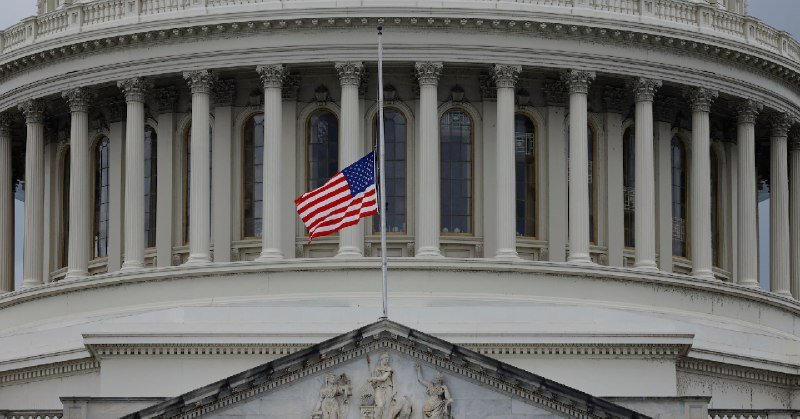
Israel struck southern Lebanon within an hour of a framework agreement being signed in Washington, killing at least one person, according to Lebanese state media cited by the BBC on 27 June 2026. Israeli Prime Minister Benjamin Netanyahu, in remarks translated from Hebrew, declared that Israel "remains in the yellow security zone, which ensures our security and this is a huge achievement. Huge!" within the same window. Lebanese President Joseph Aoun said he had received a phone call from US President Donald Trump reaffirming Washington's backing for a ceasefire arrangement. By late evening on 27 June, three governments, all parties to the same document, were giving incompatible accounts of what the document actually does on the ground.
The disagreement is not abstract. Within the space of roughly an hour on the evening of 27 June, a Lebanese-American readout described a ceasefire agreement; an Israeli readout described continued freedom of operation inside Lebanon; and an Iranian-aligned readout described an American capitulation to the resistance axis. Each of these framings is internally coherent. None of them is reconcilable with the others, and the framing chosen by each capital tells the reader which constituency that government is trying to keep on side.
What was actually signed
Middle East Eye reported that Lebanon and Israel agreed to a deal as part of a trilateral framework with the United States in Washington on 27 June, following five rounds of talks hosted by the Trump administration. The document was described as a "framework agreement," not a final peace treaty. A senior figure from the Tsaplienko Telegram channel, writing in English, called it "an unexpectedly powerful tectonic shift in geopolitics in the Middle East," and added that "Lebanon and Israel are no longer enemies as of today." That phrasing is closer to advocacy than reporting, but it captures the maximalist interpretation circulating in some pro-deal channels: the formal end of a state of war between two countries that have technically been at war since 1948.
The BBC's own brief on the agreement focused on the immediate continuation of hostilities. Strikes were reported in southern Lebanon, with at least one fatality, "a day after Lebanon and Israel signed a framework agreement," in the BBC's own framing. The juxtaposition is the point: the deal and the strikes were not sequential events in different eras. They occurred inside the same 24-hour news cycle, and the wire led with the strikes rather than the signing ceremony.
A list circulated by the Witness channel on Telegram, citing the framework agreement, named specific towns and villages that would remain off-limits to Lebanese residents until Hezbollah and armed Palestinian factions are disarmed: Al-Bayada, Shamaa, Majdal Zun, and Al-Mansuri among others. The list is granular in a way that a vague diplomatic communiqué usually is not. It implies that the agreement is not a ceasefire in the conventional sense. It is a phased handover with disarmament milestones, and the milestones are tied to specific geography rather than to a calendar.
The Israeli version
Netanyahu's framing, as relayed by VisionerRT on Telegram from the prime minister's public remarks, centres on what Israel has kept rather than what Israel has given up. "Israel remains in the yellow security zone," he said. The "yellow security zone" appears to refer to a buffer strip inside southern Lebanon inside which Israeli forces retain operational latitude. The phrase carries weight: a "security zone" is a euphemism for a unilaterally declared area of operation, and "yellow" is the colour Israeli military briefings have historically used to denote active rather than dormant zones. By placing this language front and centre, the Israeli prime minister is telling his domestic audience that the deal preserves rather than constrains Israeli freedom of action.
A separate Netanyahu formulation, relayed by Iranian outlet Fars News in English, was sharper: "We will do whatever we want in Lebanon." Fars is a state-adjacent outlet and its framing should be read as adversarial. Even so, the underlying Netanyahu statement that Fars is paraphrasing is recognisable from the VisionerRT relay. Both translations agree that Netanyahu is presenting the agreement as an Israeli victory, not a concession. The difference is that VisionerRT renders this as statesmanlike confidence, and Fars renders it as aggressive unilateralism. Same quote, opposite headlines.
For an Israeli audience that has spent the better part of two years absorbing reports of rocket fire and Hezbollah reconstitution, the message is that the Lebanese state, not Israel, has taken on the burden of disarming the proxy. The framework agreement therefore reads in Jerusalem as outsourcing the next phase of the war to the Lebanese Armed Forces.
The Lebanese version
In Beirut, the framing is the inverse. The Lebanese Presidency published a statement, relayed by Tasnim and others, saying that Aoun "received a phone call from the President of the United States, during which [Trump] congratulated" him on the agreement and reaffirmed support for its implementation. The Lebanese readout emphasises external validation by Washington and the act of the Lebanese head of state personally receiving the American president. This is the framing of a government that needs the agreement to read as a sovereign Lebanese achievement rather than an Israeli diktat.
The street did not cooperate. The Witness channel reported that locals burned a "Lebanon First" billboard that had been erected on Beirut's Airport Road on the day of the deal. MTV Lebanon, cited in the same Telegram thread, reported that the Lebanese army arrested two individuals who were about to burn a picture of the Lebanese flag. The pairing of a billboard celebrating the agreement with the public burning of that billboard is the most honest piece of political communication to come out of Beirut on 27 June. The deal has an organised constituency. It also has an organised opposition, and that opposition is willing to commit minor acts of symbolic arson in broad daylight.
The Lebanese Armed Forces now sit in an awkward position: they are the instrument through which the framework agreement is supposed to be implemented, and they are the institution that has to arrest Lebanese citizens who reject it. The army's professional preference, historically, has been to avoid being drawn into political disputes of this kind. The framework leaves it no room to do so.
The regional reception
Outside the two principal signatories, the reactions split along predictable lines. A senior Ansarullah figure, quoted by Al-Alam Arabic, dismissed the agreement as "meant to destroy the resistance." Hezbollah's own position, reported by the BBC, condemned the new deal. Iranian state media spent the late evening of 27 June focused on a separate theatre: a naval incident in which IRGC naval fighters were said to have operated against "American aggressors," with official details promised "within an hour." A separate pro-resistance channel, Fotros Resistance, reported that the United States had carried out a strike on a telecommunications tower in the Taheruyi village area of Sirik in southern Iran, describing it as the "2nd attack since the signing of the 'MoU.'" The juxtaposition of a Lebanon-Israel framework with an Iran-US confrontation is itself the regional story: the Levant track and the Gulf track are no longer separable, and a deal on one front is being read in Tehran as a provocation on another.
The Iranian framing matters because it predicts what comes next if implementation stalls. If the agreement is read in Beirut and Jerusalem as a phased Lebanese takeover of the south, and in Tehran as an American-Israeli move to decapitate the "axis of resistance," then the room for a face-saving interpretation on all sides narrows quickly. Iran has the means and the motive to argue, through Hezbollah's residual presence and through the Houthis, that the deal is failing from day one.
Why the three readings diverge
The simplest explanation for why three governments signed one document and produced three incompatible narratives inside an hour is that the document does not, in fact, specify very much. A "framework agreement" is, by design, a skeleton. It names a destination and a sequencing principle, and leaves the operational details to subsequent negotiations. Once that is understood, the simultaneous Israeli claim to freedom of action in the south, the Lebanese claim to American backing, and the Iranian claim that the whole thing is anti-resistance are not contradictions. They are three different bets on what the still-unwritten implementation clauses will look like.
This is the structural problem with framework diplomacy under live-fire conditions. In a peacetime negotiation, ambiguity is useful because it allows each side to claim the deal at home while deferring hard choices to technical talks. In a war zone, ambiguity is dangerous because the absence of a hard rule is read by soldiers, militia commanders, and local villagers as permission to act on prior defaults. The Israeli strikes on the night the deal was signed are best understood not as a violation but as the predictable output of a system that has not yet told its field units what is and is not allowed.
The next 72 hours will be diagnostic. If the Lebanese Armed Forces move into the named villages in the framework's exclusion list and Israeli forces pull back from the yellow security zone, the deal will start to look real on the ground, and the maximalist readings on all sides will lose oxygen. If, instead, Israeli strikes continue at the same tempo, Hezbollah retains its positions, and the Beirut government cannot or will not move against them, the framework will be confirmed as a press-release solution: useful for the photo op in Washington, useless for the residents of Shamaa and Majdal Zun.
The honest answer on 27 June is that nobody outside the negotiating rooms knows which version is operative, and the three governments are counting on the next 72 hours to tell them.
Sources
- BBC World on Telegram: https://t.me/BBCWorldoffl
- Al-Alam Arabic on Telegram: https://t.me/alalamarabic
- Tsaplienko on Telegram: https://t.me/Tsaplienko
- Witness on Telegram: https://t.me/wfwitness
- VisionerRT via OSINTLive on Telegram: https://t.me/rnintel
- Middle East Eye on X: https://x.com/middleeasteye
- Fars News International on Telegram: https://t.me/FarsNewsInt
- Press TV on Telegram: https://t.me/presstv
- Tasnim News English on Telegram: https://t.me/tasnimnews_en
- Clash Report on Telegram: https://t.me/ClashReport
Desk note: Monexus treated the original Reuters line as a single-sourced American claim and prioritised the on-the-record denials and affirmations from the Israeli and Lebanese governments. The piece is built to be re-checked against either a confirmed Lebanese armed-forces deployment into the named villages or a confirmed continuation of Israeli freedom-of-action strikes; both outcomes would be consistent with the framing above.