A World Cup quarterfinal stack-up: Messi, Mbappé, Haaland and Ronaldo all hit braces on the same night
Dembélé's first-half hat-trick stole the billing from a Haaland-versus-Mbappé collision that never quite materialised, as France beat a rotated Norway 4-1 to top Group I on a brace-heavy night that exposed what the expanded World Cup actually rewards.
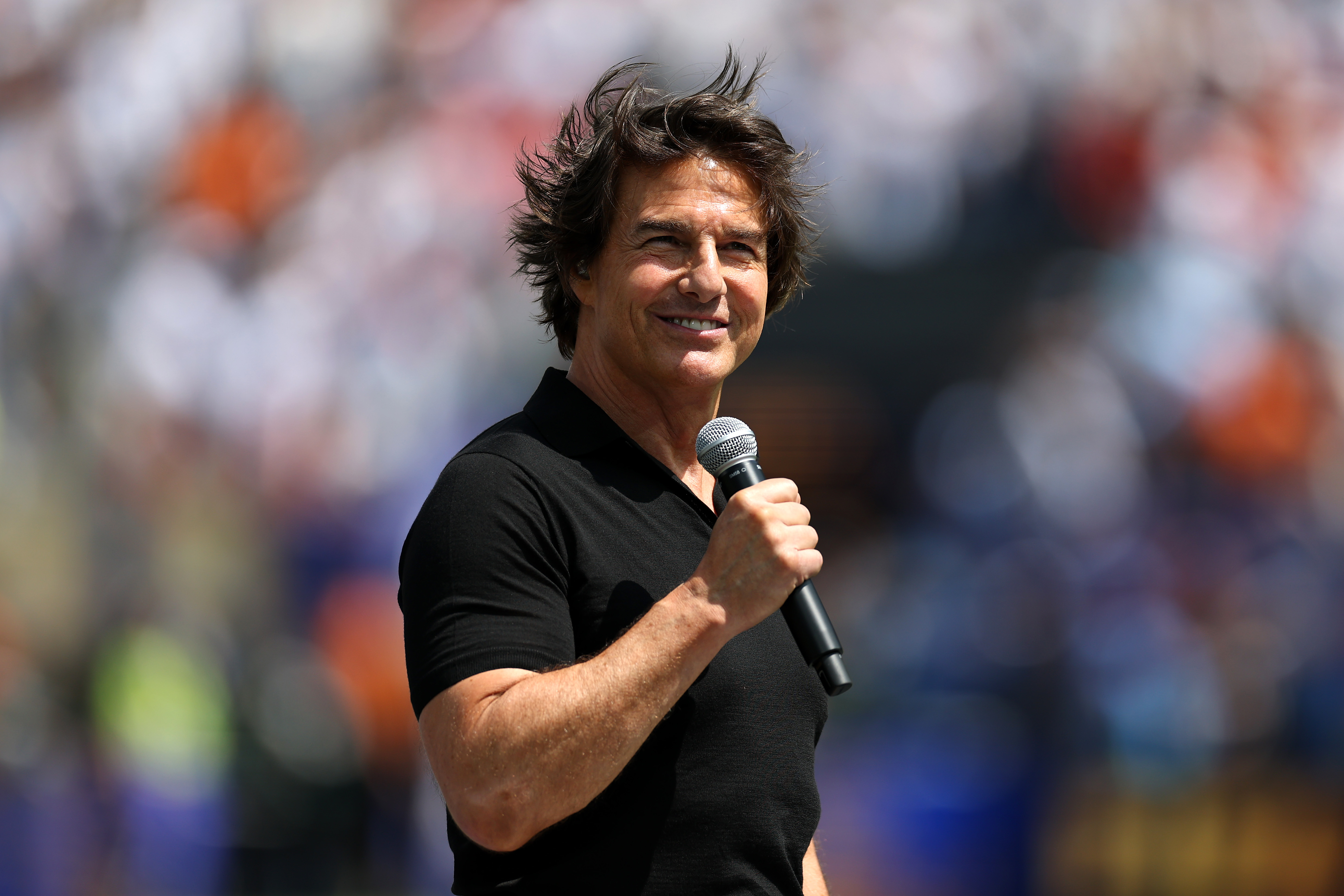
Ousmane Dembélé scored a first-half hat-trick at Boston Stadium on Friday as France dismantled a heavily rotated Norway 4-1 to seize top spot in World Cup Group I, the kind of statement performance that turns a glamour tie into a footnote. The match had been sold across the Atlantic as a Haaland-versus-Mbappé collision, but by the time the second half started in Massachusetts, the marquee billing had already been hijacked by a French attack that tore through ten changes from Ståle Solbakken's lineup. Erling Haaland never left the bench. Kylian Mbappé did not need to carry the night alone.
Dembélé's third, finished after a 17-pass move that involved every member of France's starting XI, was the snapshot of the tournament's tactical mood. Eleven touches, no panic, a goal that read like training-ground choreography broadcast at full speed. France's 4-1 win, confirmed by the BBC's live report from Boston, was both a Group I coronation and a piece of evidence in a much bigger argument about who this World Cup belongs to.
The headline that didn't quite happen
For about 36 hours, the marketing of the tournament rested on a single frame: Norway versus France, Haaland against Mbappé, two forwards with nine-figure transfer valuations in the same group. ESPN reported before kick-off that Solbakken planned to rest ten players, including Haaland, who would start on the substitutes' bench. CBS framed the fixture in similar terms, calling it "a clash of titans" and pricing it as the most awaited match of the group phase. The Guardian's liveblog carried the game as the day's marquee kickoff.
The reality was more honest. France, already qualified, treated the fixture as a tune-up with a trophy. Norway, still alive in the table, chose caution over spectacle. By the time the Group I scenarios were settled, CBS had published a chart of four teams mathematically alive, and the evening's subplot had quietly shifted from individual duels to squad depth, rotation policy, and the tournament's expanded bracket.
Brace night, in three acts
Mbappé did not need a hat-trick to stamp his name on the group stage. Across the same day, the CBS Sports wire confirmed that Lionel Messi would start on the bench for Argentina's Group J finale against Jordan, having already scored five goals and with Argentina already through as group winners. Two players who have defined an era, both conserved. The tournament is past its first act and into the maths stage: goals, tiebreakers, rest days.
The other brace on the marquee belonged to a different kind of name. Dembélé's hat-trick was his first for France and arrived in the kind of match that broadcasters normally use to fill time before knockout football starts. Instead, the Guardian's live commentary asked, plainly, whether any side at this World Cup has the defensive structure to slow a "hyper-mobile, supremely varied French attack". The answer on Friday was no.
Goals, goals, and the problem with goals
The deeper context for any single scoreline sits in a number the Guardian flagged earlier in the day. An average of 2.94 goals per game had been scored at the 2026 World Cup across its first 60 fixtures, a tournament-high since 1970. In raw terms, 177 goals. The expanded 48-team format, with more matches between mismatched sides, is producing scorelines that flatter strikers and embarrass backlines. Haaland, Messi and Cristiano Ronaldo have all hit braces inside the same window of group-stage play; the Golden Boot table is no longer a duel.
What this means for the knockout bracket is the subtext every manager is now reading. Rest the stars, protect the legs, accept the table. Toney, waiting on a Tuchel bench after two strong seasons with Al-Ahli, told the Guardian that the path back into the England XI now runs through training sessions as much as through match minutes. The expanded tournament has changed the rhythm: more games, more goals, and a much longer road to the final.
Boston, Birmingham, and the geography of a global game
The other story of the day ran along a different axis. The Guardian's New York desk reported that travelling England fans, in town for fixtures around the eastern seaboard, were filling their off-nights at the US Darts Masters. Times Square, long a stage for the Norwegian mass ellipse and other viral fan choreography, has become a waypoint rather than a venue for supporters chasing a team rather than a tournament. England, it noted, were enjoying a "New York minute" that had less to do with football than with the city.
Meanwhile, the undercard kept delivering. Algeria met Austria in a Group J fixture that the Guardian flagged as a forty-four-year echo of the "shame of Gijón", Algeria's first meeting with Austria since the 1982 World Cup match-fixing scandal that sent them home. Spain faced Uruguay in the evening slot. Norway's players flew back to scout the table. None of it was the fixture the broadcasters had sold, and all of it shaped the bracket that comes next.
What this round was actually for
Dembélé's hat-trick, Messi's five goals, Mbappé's procession through the group, Haaland's night on the bench: these are the headline numbers that will appear on the tournament's first summary graphic. The substantive story is structural. A 48-team World Cup, played across three host countries, with more matches and more goals than any tournament in living memory, has turned the group stage into a sprint and the round of 32 into a filter. The marketing sells individual duels. The competition rewards depth.
France arrive at the knockout stage as favourites not because Mbappé is back to his sharpest but because Didier Deschamps can rotate Dembélé, Marcus Thuram, Bradley Barcola and a midfield that moves the ball like a coaching manual, and still beat a Haaland-less Norway 4-1. Argentina arrive with a forward on five goals who does not need to play the dead rubber. Norway arrive with their star watching from the bench and a coach who has already conceded the group to plan for the next round. The quarterfinal stack-up that the tournament's marquee billing promised will arrive in the second half of the competition, and it will arrive faster than anyone planned for.
Sources: BBC Sport (live report on France 4-1 Norway, 26 June 2026); the Guardian liveblog and match report on France v Norway, 26 June 2026; ESPN, "Haaland to miss France World Cup clash", 26 June 2026; CBS Sports, previews for Norway v France and group scenarios, 26 June 2026; the Guardian, "World Cup 2026: why have there been so many goals?", 26 June 2026; the Guardian, "England enjoy New York minute but fans check out to watch darts instead", 26 June 2026; the Guardian, "Algeria eye revenge in first match against Austria", 26 June 2026; CBS Sports, Messi bench report, 26 June 2026; the Guardian, Ivan Toney interview, 26 June 2026.
Desk note: Monexus read Friday's Group I finale not as the Haaland-Mbappé duel the wire had spent two days selling but as the moment the 2026 tournament revealed itself. The brace-night headline holds; the structural point is that the expanded World Cup has converted the group stage into a rotation problem and the knockout rounds into the only fixtures that matter.