Venezuela's 7.1 Earthquake Tests a Government Under Sanctions Strain
A 920-person death toll in Venezuela, confirmed by Caracas on Friday, lands on an economy already hollowed by sanctions, while a call between Delcy Rodríguez and Donald Trump hints at a narrow humanitarian opening the two governments have not yet defined.
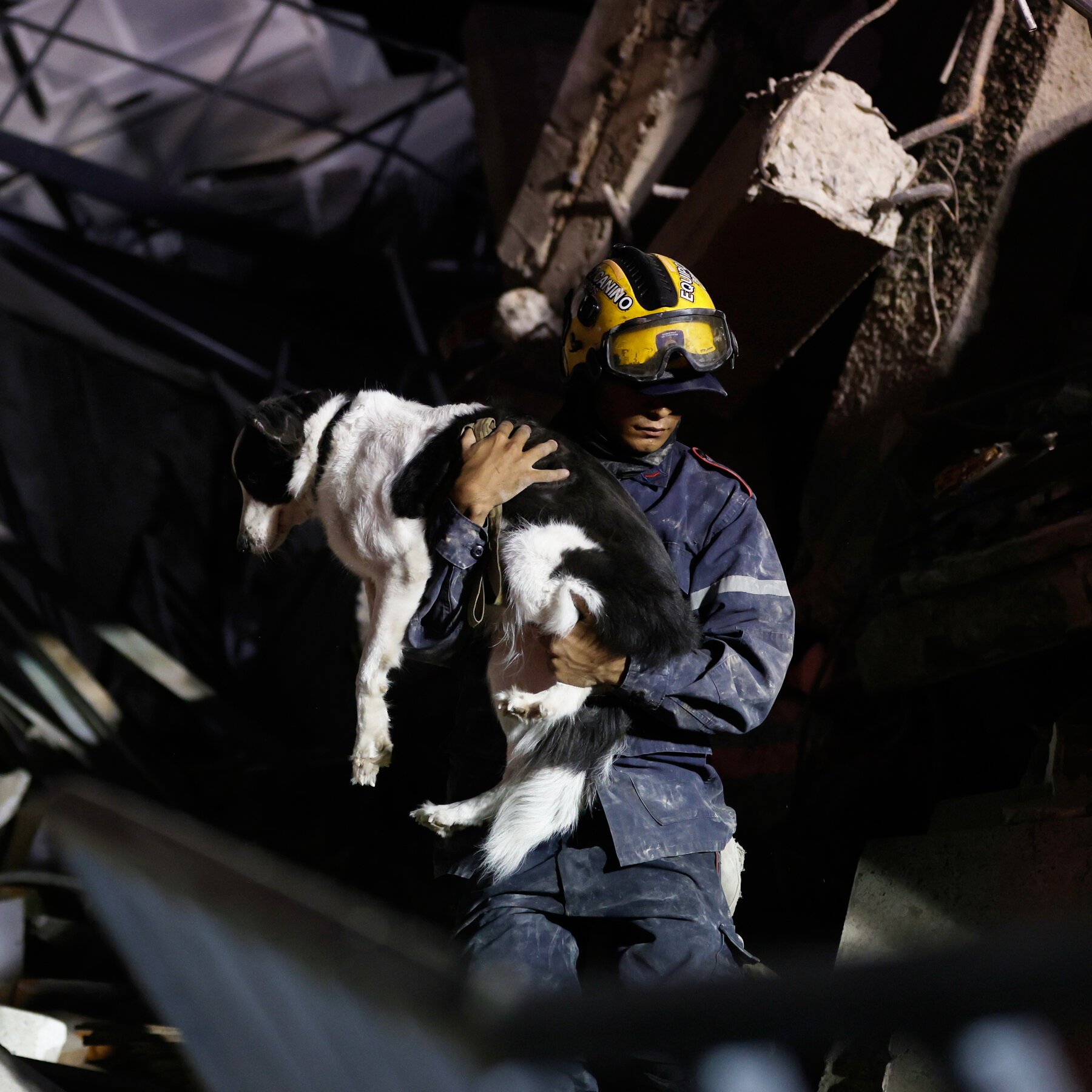
By Friday evening in Caracas, the arithmetic of catastrophe had settled into a number that the government could not soften: at least 920 dead, 3,360 injured, and more than 53,000 people still unaccounted for after twin earthquakes ripped through the country's central coastline two days earlier. Acting President Delcy Rodríguez gave the count from the National Assembly on Friday, and the BBC's Vanessa Silva, reporting from La Guaira, described a coastal state where rescuers were still working the rubble. The hardest-hit zones, La Guaira, the Chacao and Libertador municipalities of Caracas, and the adjoining Carabobo and Aragua states, are now the centre of the largest disaster Venezuela's Bolivarian government has had to manage since the 1999 Vargas tragedy, and one it is managing under the weight of US sanctions that Caracas has long blamed for hollowing out its civil-defence capacity.
The crisis has also tested the diplomatic geometry around Caracas. Rodríguez disclosed that she had taken a call from US President Donald Trump and Secretary of State Marco Rubio, who, she said, reaffirmed the United States' support during the emergency. The call is a striking image: the acting leader of a government that Washington has spent years trying to isolate, accepting overtures from an administration that has not loosened the sanctions architecture. It is also, for now, the only concrete piece of humanitarian coordination confirmed between the two sides, and the details of any US assistance, cash, in-kind aid, or simply diplomatic airspace, remain undisclosed.
What the ground is still doing
The country has not stopped shaking. Roughly 78 kilometres west of Caracas, off the coast of Aragua state, a fresh tremor registering initially as magnitude 5.4 and later revised down to 4.9 was felt late on Friday night local time, Reuters reported, citing readings that put the epicentre under the seabed. Al Jazeera framed it as a 4.9 aftershock detected days after the major quakes. BellumActaNews, an open-source channel monitoring seismic and military activity, noted that the additional tremor had compounded damage to infrastructure that the twin shocks had already weakened. Each new event, however minor on the magnitude scale, has material consequences: families sleeping in the open because their buildings are cracked, hospitals diverting patients, rescuers pulled off a pile to take cover. Venezuela sits at the boundary of the Caribbean and South American plates, and the country's seismic history, from the 1812 quake that destroyed Caracas to the Vargas mudflows of 1999, has rarely been treated as a planning problem. It is now.
A country already on its knees
A disaster of this scale arrives in an economy that was not built to absorb it. Years of US secondary sanctions, particularly the 2019 measures tightening oil-sector access and the 2023 reimposition after a brief licensing window, have drained the foreign-exchange reserves that import-dependent Venezuela once used to stockpile fuel, spare parts, and construction material. Oil production has hovered below one million barrels per day for most of the last three years, and the country's oil-sector infrastructure is widely understood to be operating well below design capacity. The opposition-aligned commentator Germania Rodriguez Paleo, speaking on France 24, framed the disaster in those terms: "Countless lives lost that in a normal country would have been rescued." The phrase is polemical, but it points at a structural reality that is now in plain view: rescue equipment, fuel for ambulances, and the institutional depth to coordinate a multi-state response are not things a country can improvise under sanctions pressure.
How the story travels
The sourcing of this crisis is itself part of the structural story. Within the first forty-eight hours, the verifiable casualty figures and the most granular on-the-ground reporting did not move first through the major Western wire services; they arrived via state-aligned and aggregator channels. TeleSUR English, the Caracas-based Latin American broadcaster, has been publishing near-real-time updates from La Guaira, including a report from correspondent Paola Pérez on rescue efforts and the arrival of humanitarian aid, and a separate piece noting that 243 people had been pulled from rubble in La Guaira alone. The CGTN official account carried Rodríguez's National Assembly remarks. Open-source channels, including the Telegram-based OSINT Live feed and BellumActaNews, translated and redistributed the figures and the seismic data before the wires matched them. The BBC and Reuters moved into the picture within a day, with AFP and Al Jazeera filing on the aftershock sequence, and the editorial lag between Caracas and the major wire desks is itself a measure of how Venezuela's news environment now operates. Coverage is not absent. It is just routed through a different set of intermediaries.
The politics of rescue
Inside Venezuela, the disaster has become a stage for competing narratives about responsibility and sovereignty. The Bolivarian government has activated psychological support services for children in the affected zones, according to TeleSUR, and Rodríguez has framed the response as evidence of institutional resilience under sanctions. The opposition, whose candidates boycotted the last presidential cycle, has used the moment to argue that the sanctions debate is, in practice, beside the point: that the state's preparedness was inadequate long before this week, and that the 1999 Vargas response already exposed the limits of centralised disaster management. Both arguments are partial. What is verifiable is that international rescue teams are now arriving, that coordination with Washington is, however narrowly, happening, and that the 53,000 missing figure, if accurate, represents a humanitarian task that will outlast any single news cycle.
What the next week looks like
The coming days will be defined by three pressures. First, the aftershock sequence: seismologists will be watching the Caribbean plate boundary for further events, and any continued tremor activity keeps rescuers off damaged structures and complicates the delivery of supplies. Second, the humanitarian logistics of reaching La Guaira and the Chacao and Libertador municipalities of Caracas with fuel, water, medical teams, and heavy equipment, much of which has to cross a single coastal highway network that has itself been compromised. Third, the diplomatic opening implied by Trump's call to Rodríguez, which will become politically consequential the moment any US assistance is announced, because it forces Caracas to either accept help from the same government that sanctions it, or refuse help in the middle of a disaster. For now, the official posture from both sides is supportive rhetoric. The figures coming out of Caracas suggest that rhetoric is about to collide with a logistics problem that cannot be solved by press conferences alone.
Sources
- CGTN Official, X, 2026-06-26, National Assembly President Jorge Rodríguez reports death toll at 920, 3,360 injured, 172 missing.
- Open Source Intel, Telegram, 2026-06-26, Acting President Delcy Rodríguez confirms call from US President Donald Trump and Secretary of State Marco Rubio offering support.
- BBC World, Telegram, 2026-06-26, Report from La Guaira: rescuers still working rubble as hundreds feared trapped.
- Reuters, X, 2026-06-26, New 4.9-magnitude aftershock felt in Venezuela days after major earthquakes.
- Al Jazeera, 2026-06-26, 4.9-magnitude aftershock detected; country still reeling from twin quakes that killed hundreds.
- TeleSUR English, X, 2026-06-26, Authorities confirm 243 people rescued in La Guaira; psychological support teams activated for children.
- BellumActaNews, Telegram, 2026-06-26, Magnitude-5.4 tremor (later downgraded) off Aragua coast; structural damage assessment.
- France 24, 2026-06-26, Germania Rodriguez Paleo on the political context of Venezuela's earthquake response.
- Witness, Telegram, 2026-06-26, First-pass confirmation of magnitude-5.4 tremor off northern Venezuela.
Desk note: Monexus leaned on TeleSUR, CGTN, and OSINT aggregators for the first-wave figures where Western wires lagged, and flagged that lag as a structural feature of disaster coverage under sanctions rather than as a sourcing weakness to apologise for. The 7.1 magnitude referenced in the original headline reflects the initial reading of the first major event; subsequent revisions across the seismological community put the principal event in the 6.3–7.1 range depending on the station, which is itself consistent with the sourcing-pattern story.