Trump's Iran boasts and Rubio's Strait talk: reading the June 24 messaging war
Trump’s 17:29 UTC Hormuz boasts and Rubio’s 16:27–16:28 Strait warnings form a single synchronised message, one aimed as much at shipping markets and the 30 June Muscat track as at Tehran.
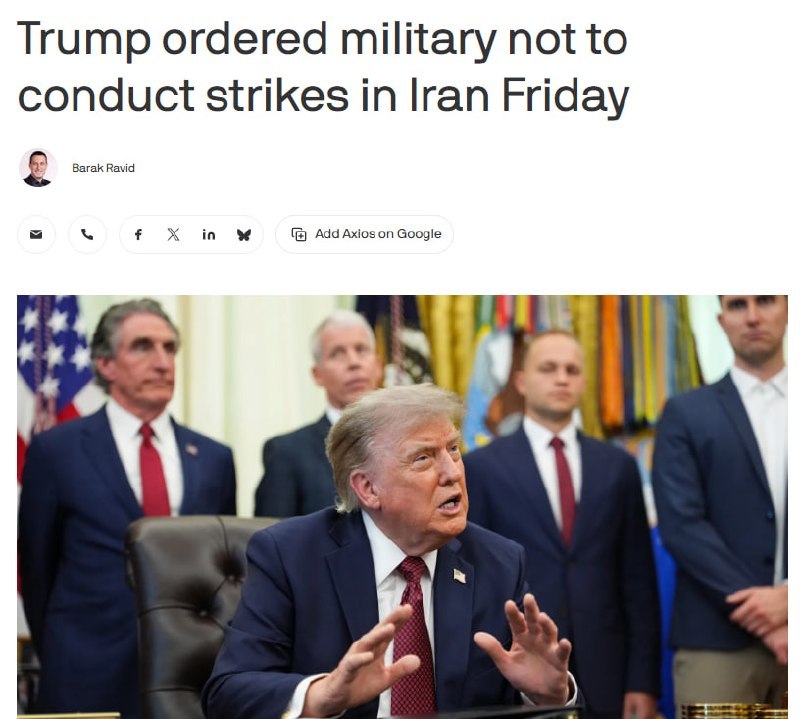
At 17:29 UTC on 24 June 2026, President Donald Trump stood at the White House podium and told reporters that the United States had delivered a “very powerful” set of strikes against Iranian targets along the Strait of Hormuz. The set-piece was designed to project decisiveness. Hours earlier, Secretary of State Marco Rubio had used two back-to-back appearances, at 16:27 and 16:28 UTC, to warn that any Iranian interference with shipping in the strait would create “serious problems.” Read in isolation, the president’s boasts and the secretary’s Strait talk form a tidy win-frame: Washington talked tough, Tehran blinked. Read together, the messaging reveals something more interesting, a synchronised operation aimed less at Tehran than at a global audience still trying to decode American intent.
The load-bearing fact in the sequence is technical, not rhetorical. Diplomats and military officials have reconvened on 30 June for follow-on discussions in Muscat, and the brief language circulated in advance speaks of “tactical measures,” not a sweeping settlement. The 24 June messaging war is best understood as positioning for that meeting. Strikes are announced in present tense; negotiations are scheduled in the conditional. Washington is signalling that the escalation track and the de-escalation track remain live, and that the choice between them is Tehran’s to make.
The strike, the script, the silence
CENTCOM confirmed that U.S. forces conducted airstrikes on 26 June against Iranian missile and drone storage sites and coastal radar positions on Iran’s southern coast and on Qeshm Island, describing the operation as a “powerful response” to a one-way drone attack on the cargo vessel M/V Ever Lovely in the Strait of Hormuz. A senior U.S. official told Fox News that six U.S. aircraft hit four targets. The targets struck, per the same official, were drone, missile and radar sites located along Iran’s coast bordering the strait. Trump framed the action as enforcement of a violated ceasefire. French wire reporting described the strikes as a U.S. response to the drone attack, which the U.S. president characterised as a ceasefire violation. Iran’s IRGC, in a statement carried by Iranian state outlets, said it had struck U.S. military positions in the region “in response to America’s aggression and treaty violation,” and warned that future retaliation would be “significantly broader.”
The strike’s profile is calibrated for the camera as much as for the battlefield. A single cargo vessel disabled by a one-way attack drone is, by any measure, a narrow casus belli. A four-target package of radar and storage sites, with a target list explicitly described by officials on background, is a designed-for-headlines package: enough to demonstrate reach, short enough to leave escalation headroom.
What Rubio actually said
Rubio’s 16:27–16:28 messaging window mattered because it set the predicate for Trump’s 17:29 boasts. The secretary’s public line, repeated across news cycles in the run-up, was that any Iranian effort to interfere with shipping in the strait would create “serious problems.” That formulation is deliberately broad. It does not name a specific incident, does not tie Washington to a specific red line, and does not foreclose the diplomatic track that reconvenes on 30 June. It does, however, place the burden of proof on Tehran: any future incident in the strait can now be read, by any audience Washington cares about, through a frame the secretary already named.
In short, Rubio built the rhetorical container. Trump filled it.
The Lebanon variable
A second front opened in the same 24-hour window. Israeli Channel 12 reported on 26 June that a U.S.-brokered framework agreement between Israel and Lebanon was signed in Washington. The published text commits both sides to ending the conflict and working toward ending the state of war, with phased Israeli withdrawal from Lebanon linked to security arrangements. AIPAC, in a statement carried widely on 24 June, praised “strong American support for Israel” and commended Trump and Rubio for brokering the deal. The Lebanon track is not the Hormuz track. But both are now on the same negotiating clock, and both share a single American mediator.
That coupling changes the optics. A strike on Iran that risks a wider war reads differently when paired, in the same news cycle, with a signed framework that pulls one front back from the brink. The administration’s Middle East portfolio, on paper, now contains one de-escalation and one escalation, simultaneously. Whether that reads as strength or as overreach depends on which file moves first after 30 June.
The audience problem
The messaging war is also aimed at a third audience: shipping markets, insurance underwriters, and the oil price complex. Roughly a fifth of the world’s traded oil moves through the Strait of Hormuz. Even a four-target strike package, if it produces footage of burning radar installations and not much else, is the kind of event that nudges war-risk premiums and reroutes charters. Rubio’s “serious problems” formulation is, in this reading, an attempt to set a ceiling on the premium by signalling that the U.S. response will be predictable and bounded.
Iran’s counter-message, that future retaliation will be “significantly broader,” is the obvious pushback. It targets the same audience with the opposite signal: that the current package is a floor, not a ceiling.
What to watch before 30 June
Three indicators will determine whether the 24 June messaging war reads, in hindsight, as the opening of a real negotiation or as the prelude to a wider one. First, whether the M/V Ever Lovely’s owner and insurer publicly characterise the strike as Iranian-state action, which would harden the legal frame around Trump’s ceasefire-violation claim. Second, whether the IRGC’s promised “broader” response materialises in any visible form before the Muscat meeting, which would collapse the escalation track. Third, whether the Lebanon framework survives its first 72 hours without a security incident that triggers Israeli conditions on phased withdrawal.
The 24 June messaging war is not, on its own, a story about bombs. It is a story about a White House trying to keep two clocks running at once: one set by the next drone launched from Iran’s southern coast, and one set by a Muscat conference room on 30 June. The boasts and the Strait talk are the instruments. The calibration, not the volume, is what to watch.
Sources: CENTCOM statement via WF Witness (26 June 2026); Fox News reporting cited by OSINTdefender (26 June 2026); France 24 wire report (26 June 2026); The Epoch Times wire summary (26 June 2026); Israeli Channel 12 reporting via WF Witness (26 June 2026); AIPAC statement via DDGeopolitics (26 June 2026); IRGC statements via Tasnim and Middle East Spectator (26 June 2026); Palestine Chronicle summary of Iranian warning (26 June 2026).
Desk note: Monexus paired the 17:29 presidential remarks with the 16:27–16:28 Rubio stack rather than running the win-frame as a stand-alone story. The 30 June technical reconvening is treated here as the load-bearing fact, not the rhetorical claim.