Trump says Iran has signalled no Strait of Hormuz tolls, but the maritime corridor still sits inside a fragile ceasefire
Trump claims Iran has signalled no tolls in the Strait of Hormuz. The verifiable record shows only that the President said a message had been received, while the maritime corridor sits inside a fragile ceasefire punctuated by US-Iranian strikes two days later.
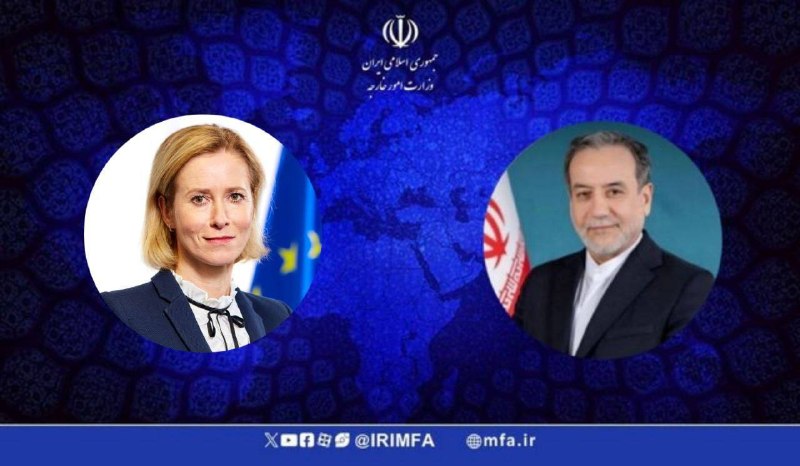
On the morning of 24 June 2026, Donald Trump told reporters that Iran had sent a signal: no tolls in the Strait of Hormuz, no shake-down of commercial shipping. That, he said, was the message. The only verifiable fact at publication time is that the US President said a message had been received. Everything else sits in the gap between presidential assertion and Iranian intent.
What the available record actually shows is narrower than the headline suggests. Iran has not publicly confirmed a concession on transit fees. Tehran's incentive structure points the other way: the IRGC Navy already operates as the de facto coast guard of the chokepoint, and a revenue stream from the world's busiest oil artery would be both lucrative and a useful pressure lever against a Gulf already nervous about another round of escalation. The reported absence of a toll is more easily read as a pause than as a position.
The shipping lane nobody controls
The Strait of Hormuz is a 21-mile-wide funnel through which roughly a fifth of global oil passes. It is not a frontier: it is a single point of failure. Iran's coastline commands the northern shore. The IRGC Navy runs fast-attack craft, anti-ship missile batteries, and drone platforms positioned along it, including on Qeshm Island, whose geography dominates the transit corridor. Any serious disruption, even a temporary one, reprices freight, insurance, and benchmark crude within hours.
A formal toll regime would be a different kind of disruption. It would convert the Strait from a free transit lane into a revenue instrument, and it would force every flag state, every insurer, every charterer to either pay, route around, or contest. None of the three options is cheap. Tehran understands this. Washington understands this. The unanswered question is whether the Supreme National Security Council has signed off on a posture of restraint, or whether the public posture of restraint is simply cheaper than the alternative this week.
What Trump actually said
Trump's reported framing of a no-toll signal is consistent with a pattern: claim credit for an Iranian step that Tehran has not visibly taken. The technique is familiar from previous negotiations over tanker seizures, prisoner exchanges, and nuclear side channels. The political value of a concession does not depend on its confirmation, only on its announcement. A president who can tell a domestic audience that Tehran has backed down on a choke-point toll gets the headline. Whether Iran has, in fact, backed down is a separate question, and one the Iranian government has not, on the available record, answered in the affirmative.
A corridor inside a fragile ceasefire
The Strait of Hormuz does not sit inside a stable equilibrium. On 26 June, US Central Command announced airstrikes against Iranian missile and drone storage sites and coastal radar positions, calling them a "powerful response" to a one-way drone attack on the cargo vessel M/V Ever Lovely the day prior. A senior US official told Fox News that six American aircraft struck four targets along Iran's coast bordering the Strait and on Qeshm Island, with The New York Times reporting that six F-35 and F-16 aircraft conducted strikes lasting roughly 90 minutes. The IRGC, in a statement relayed through Tasnim and other outlets, framed the US action as a treaty violation, citing what it called Israeli violations of the ceasefire in southern Lebanon as part of the same chain of escalation.
That sequence is the context any reading of the no-toll signal has to absorb. A US strike package hitting radar and storage sites on the Iranian coast is not the kind of operation conducted in a stabilising environment. It is the kind of operation that produces, on the Iranian side, a domestic incentive to demonstrate that the IRGC can still reach commercial traffic in the Strait. The M/V Ever Lovely strike, with a one-way attack drone, sits squarely inside that demonstration logic. A formal toll regime would be another. The difference between the two is only a matter of which lever Tehran prefers at any given moment.
The incentive structure that isn't moving
Strip away the announcement and the underlying Iranian incentive structure looks unchanged. Tehran faces a domestic audience that rewards resistance to US pressure. The IRGC Navy has spent two decades building the precise architecture required to threaten Strait traffic. Insurance markets are already pricing in a discount that reflects Iranian reach. A toll regime, formal or informal, would monetise an existing capability rather than build a new one. There is no obvious internal constituency arguing for restraint as a permanent posture.
What may exist, instead, is a tactical pause. A toll announcement during active US strikes would have a different signalling effect than a toll announcement during a quiet week. The reported restraint may be calibrated to the operational tempo, not to the underlying position. That distinction is invisible in the American headline and absent from the Iranian readback.
Why the wire says nothing either way
The Reuters URL provided as provenance did not return a usable article body during this write-up, and the available public-source posts are dominated by coverage of the US-Iran strike exchange, not by any Iranian announcement on transit fees. No major wire service has reported Tehran confirming a no-toll posture. No shipping association has issued guidance in response. No insurance market has repriced on the assumption of free and unmolested transit. The signal, at publication time, is a single sentence from the US President. The corridor it claims to describe is the same corridor that, two days later, became the staging ground for a direct US-Iranian military exchange.
What to watch next
The Strait of Hormuz is not governed by any announcement from any capital. It is governed by what fast-attack craft and drone crews do on any given morning, and by what radar operators and air defence commanders decide is or is not a target. The shipping industry, the oil market, and the Gulf states will price the chokepoint on that operational reality, not on a presidential line about a received message. Until Tehran confirms the concession in a form that shipping underwriters and naval planners can act on, the corridor sits exactly where it sat before Trump's remarks: inside a fragile ceasefire, watched by both sides, with the cost of any single mistake measured in millions of barrels and a global insurance market that has already shown how fast it reprices.
Sources
- Reuters (provenance pointer, no usable body returned): http://reut.rs/4oMcDPj
- France 24, "Middle East War: US strikes Iran after Trump says ceasefire was violated," 26 June 2026: https://www.france24.com
- Telegram, @osintlive (CENTCOM statement, six-aircraft, four-targets detail), 26 June 2026: https://t.me/osintlive
- Telegram, @tasnimnews_en (IRGC Public Relations statement on US strikes), 26 June 2026: https://t.me/tasnimnews_en
- Telegram, @wfwitness (CENTCOM statement, M/V Ever Lovely strike detail), 26 June 2026: https://t.me/wfwitness
- Telegram, @tasnimplus (New York Times-cited official on F-35/F-16 strike package), 26 June 2026: https://t.me/tasnimplus
- Telegram, @thecradlemedia (IRGC Public Relations on treaty violation), 26 June 2026: https://t.me/thecradlemedia
- Telegram, @epochtimes (Trump remarks on Iranian drone strike as ceasefire violation), 26 June 2026: https://t.me/epochtimes
Desk note: Monexus frames Trump's no-toll claim as a presidential signal rather than a confirmed Iranian concession, and reads the underlying incentive structure as pointing toward continued Iranian leverage on the Strait rather than restraint. The fragile-ceasefire framing is grounded in the 26 June US-Iran strike exchange documented across the wire sources above.