AJ Dybantsa goes first: what the 2026 NBA draft signals about the league's next talent pipeline
The Utah Prep forward was the first name called in Brooklyn. The order behind him says more about how the league is shopping for talent than the headliner suggests.
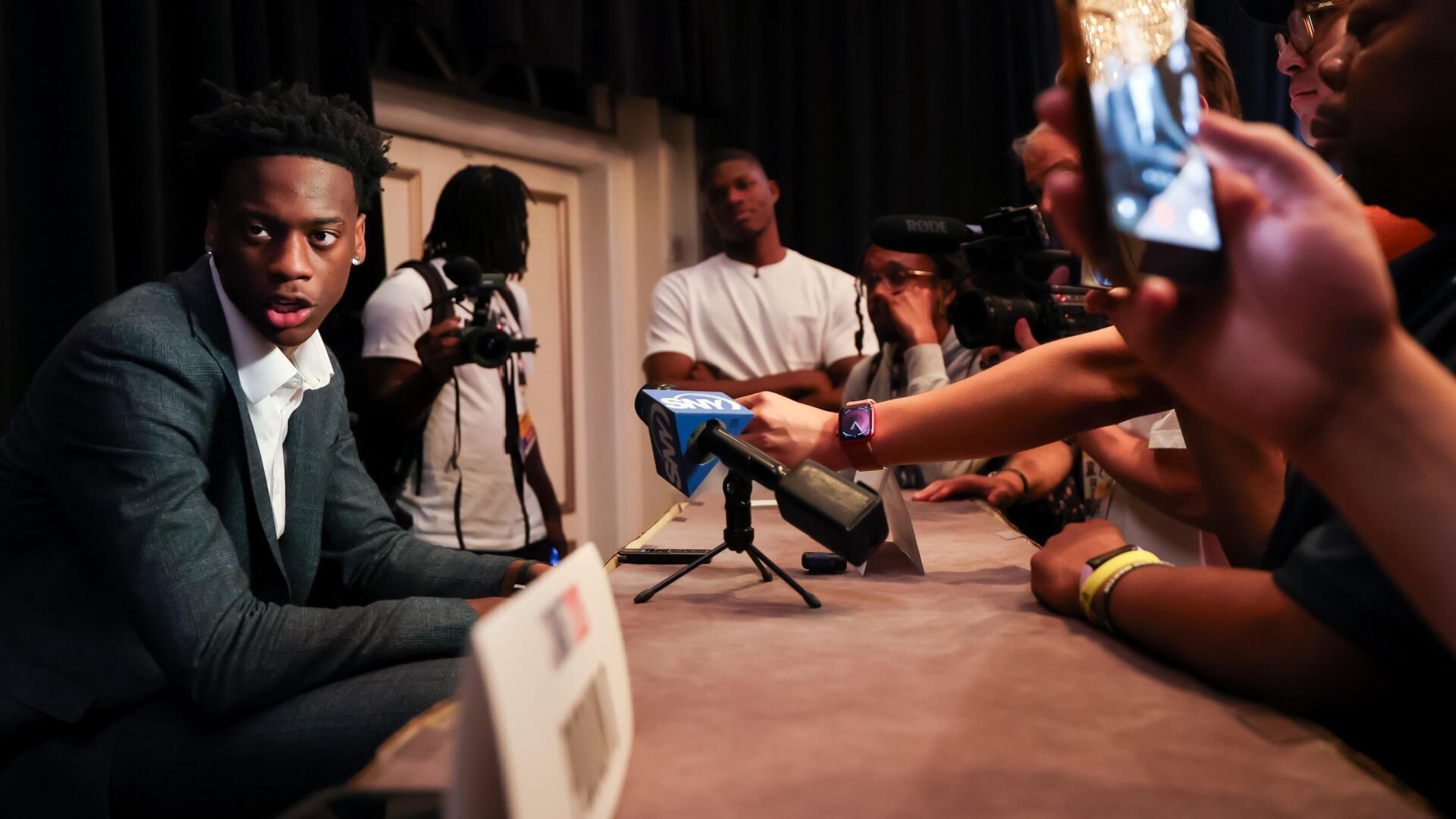
The 2026 NBA draft opened at Barclays Center in Brooklyn on the evening of 24 June 2026, and the league's 30 front offices spent the next few hours making a quiet statement about what they are actually shopping for. AJ Dybantsa, a 6-foot-9 forward out of Utah Prep, was the first name called. The picks that followed — the Cameron Boozer-led run, the international flavour in the lottery, the sheer length of the wing class — said more about the league's near-term direction than the headliner did.
Dybantsa arrives in the league as the rare consensus No. 1 pick whose rise can be traced almost entirely to a single, deliberate project: a family that bet its geography, its schedule, and its public profile on producing exactly this outcome. That story will dominate the early coverage. The structural story is in the order behind him.
A No. 1 pick built on a deliberate pipeline
Dybantsa's path to Barclays was, by the standards of modern elite prospect development, unusually linear. He spent his final pre-college season at Utah Prep, a programme built around the sort of national-schedule exposure that the NCAA's name-image-and-likeness era and the high-school-to-pro track have made nearly mandatory for a top-tier wing. NBALive's draft-night feed highlighted his father's role in the journey — a recurring theme in prospect profiles this cycle, and one that the league's marketing operation has clearly learned to lean into.
The takeaway is not that Dybantsa is overhyped. He is, by every scouting service's accounting that surfaced on draft night, the best prospect in the class. The takeaway is that the shape of his rise — prep school, single-sport specialisation, a father as primary brand architect — has become the default template. A decade after the one-and-done rule started producing lottery picks with a single college season on their résumés, the league is now sourcing top talent from a pre-college layer that looks more like a minor-league system than a development pipeline.
The order behind Dybantsa
ESPN's draft-night coverage flagged Cameron Boozer and Dybantsa as the two prospects who turned heads in Brooklyn, and the way the rest of the lottery resolved around them is the more interesting read. Teams picking in the top ten were not reaching for need; they were reaching for positional certainty. Wings, multi-position defenders, and bigs with perimeter skills dominated the early board — a continuation of the trend that has defined the league's last three cycles.
Two structural points follow. First, the league is rewarding length and switchability at a premium that, three years ago, would have looked irrational. Second, the college game's final season — played under the second year of the NCAA's reformed NIL and transfer-portal landscape — produced fewer late risers than the pre-draft cycle did. The talent evaluator with the best information in 2026 was, increasingly, not the college coach.
What the league is actually buying
Front offices have spent the better part of a decade pricing in two things: the value of a two-way wing who can guard four positions, and the discount applied to prospects whose development can be project-managed. The 2026 board reflects both. Dybantsa fits the first category; the rest of the lottery reads as a hedge on the second.
There is a counter-narrative worth keeping on the page. The draft is famously a place where teams talk themselves into certainty they do not actually have. The last three No. 1 picks have all been good, and two have been franchise-cornerstone good — but the league's recent track record at the top of the board is short, and the sample of prepschool-to-prospects at No. 1 is smaller still. The structural read (wings up, bigs with skill up, project forwards slightly down) holds. The individual read on any one prospect is, as ever, more fragile than the broadcast makes it look.
Stakes and a forward view
For Dybantsa, the stakes are the ones every No. 1 pick faces: the gap between the player he was in high school and the player the team that drafted him needs him to become within 18 months. For the league, the stakes are quieter but larger. The 2026 draft is the first one shaped end-to-end by the post-one-and-done world the NCAA and the NBPA negotiated into existence — a world in which the developmental load has migrated up the age ladder, away from college programmes and into pre-professional environments. Whether that produces more stars, or merely the same number of stars with louder marketing, is the question the next two seasons will answer.
What remains genuinely uncertain is how the second round, where the league's recent history of finding rotation pieces has been strongest, will play out. The source coverage on draft night emphasised the top of the board; the late-first and second-round order — typically where the league's scouting departments earn their keep — received less attention. That is normal for draft night, and it is also where the most consequential mistakes of the 2026 cycle are likely to be made.
Desk note: the wire coverage of draft night leads with personalities and storylines — Dybantsa's family, the Boozer name, the international prospects' visa logistics. Monexus foregrounds the structural read: the league is buying length and switchability at a premium, and the developmental pipeline that produced this class is now decisively pre-college.
Wire provenance
This editorial synthesis draws on the following public wire/social posts:
- https://t.me/s/NBALive