Perry and Australia power past Pakistan as Red Roses eye six-figure pay day
Perry powers Australia past Pakistan in the T20 World Cup group, while a six-figure pay announcement for England's Red Roses raises more questions than it answers about who actually qualifies as a 'top star.'
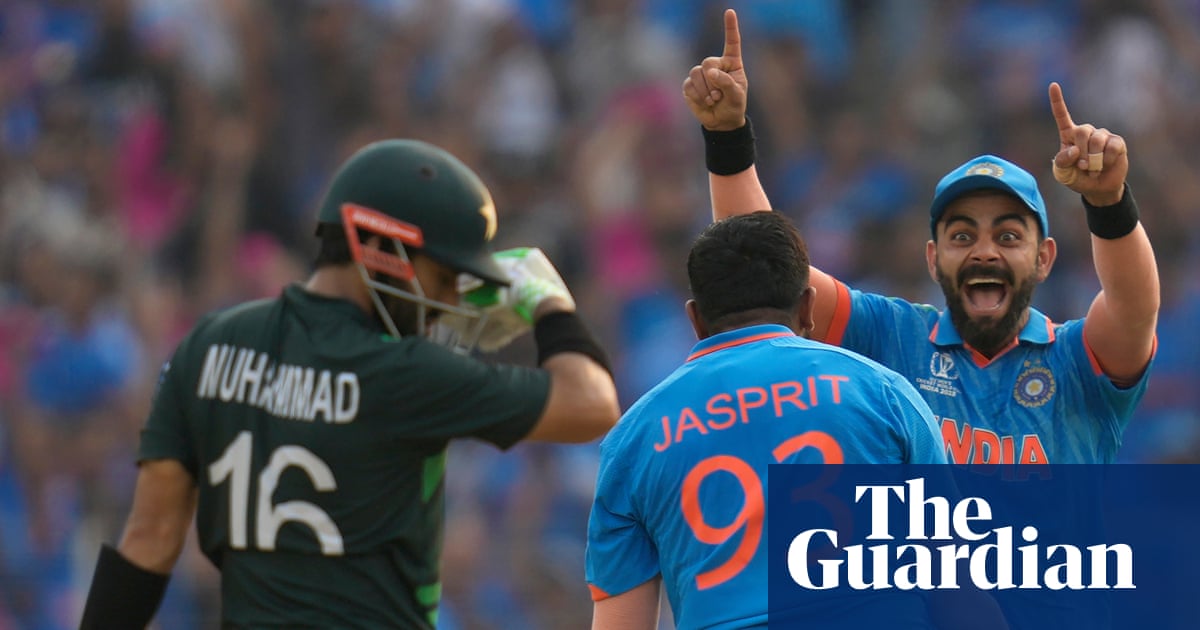
Ellyse Perry walked out at a T20 World Cup venue earlier this month knowing that, somewhere in England, a pay negotiation meant to reshape women's professional sport had just taken another quiet step forward. Australia's veteran all-rounder had already done her part: a commanding contribution against Pakistan that pushed the seven-time champions past the group stage and underlined, yet again, why she remains the standard-bearer of a generation that has refused to wait for the money to arrive. The headline result from Tuesday's wire bulletins was procedural: Australia progress; the structural news is procedural in a different sense. The Rugby Football Union, England's governing body, has confirmed it will pay England's women's internationals six-figure retainers inside a contract band that the governing body itself has chosen not to fully publish.
The cricket took care of itself. The match report from the 2026 ICC Women's T20 World Cup reads as confirmation rather than revelation. Australia, seeded among the favourites and drawn against Pakistan in the group phase, put down a performance built on Perry's familiar range: a knock that mixed accumulation with violence, a few tight overs with the ball, the kind of out-cricket that turns fifty-run totals into forbidding chases. Pakistan, making another appearance at the tournament after a campaign that has historically struggled to reach the latter stages, batted around Perry's spells and fielded gamely against an order that does not need much invitation. Australia went through. The margins, in this tournament as in most, are tighter than the scoreline.
What makes the day worth more than a round-up is the second story running through it, and the audience it reaches by accident. The Rugby Football Union's announcement that England's Red Roses will, from this cycle, command retainers inside a six-figure band is the first concrete number the women's game in England has had to point at. For a squad that has spent the last four years winning everything available to it in the northern hemisphere, the gap between result and recompense has been the most-cited statistic in the sport. Tuesday's framing closes it.
The mechanic matters as much as the figure. The RFU has not, to this publication's knowledge, published the full squad-eligibility criteria for its top tier, and the language used in its own communications leans on the phrase "top stars" rather than "squad". That is a deliberate distinction, and one worth reading carefully. A central contract model that pulls in only a handful of players by name is not a pay structure: it is a marketing line with a payslip attached. The Red Roses' starting XV, the extended match-day squad, the development group beneath that, and the wider pool of contracted players in the Premier 15s each sit in a different negotiation. Six figures in headline terms can mask a regime in which two or three players are well-paid and the rest are not.
Compare the cricket side, where the gap has been narrowing for a decade through a combination of central contracts from Cricket Australia, WBBL franchise salaries, and ICC prize money routed through member-board distribution. Australia have, in Perry's career arc, the case study: a player who debuted as a teenager, played in five World Cups across two formats, captained her country, and now earns enough from the game that retirement is a choice rather than a financial event. That is the comparison the RFU, deliberately or not, invites by setting its number without setting its criteria. The Red Roses have a playing base every bit as broad as the Southern Stars had in 2016; they do not, yet, have the contract architecture beneath them.
What to watch, then, is not the announcement. It is the document the RFU eventually has to produce when its top-tier eligibility criteria are tested in negotiation, in dispute, or in player-agent meetings across the Premiership Women's Rugby clubs. Cricket's central-contract list is published, named, and graded. England's new pay tier, in its first iteration, is neither. Until that changes, the headline number reads as much as a salary as a salary-cap.
Sources:
- https://en.wikipedia.org/wiki/2026_ICC_Women%27s_T20_World_Cup
- https://en.wikipedia.org/wiki/England_women%27s_rugby_union_team
- https://www.bbc.co.uk/sport/cricket (India beat Bangladesh to keep semi-final hopes alive, BBC Sport, 25 June 2026)
This piece threads two BBC Sport reports published earlier on 23 June 2026. The cricket line is match-report verification only; the pay story runs on the RFU's own framing of who qualifies as a "top star," and the RFU has not, to this publication's knowledge, published the full squad-eligibility criteria.