Moscow's morning fog of claims: what the Russian milblogger ecosystem said about June 22 strikes, and what it didn't
Three Russian-aligned Telegram posts, two reposts and one unfinished sentence, defined the morning of June 22. The milblogger version arrived first and clean; the Ukrainian and Western version arrived slower and less complete. The gap is the story.
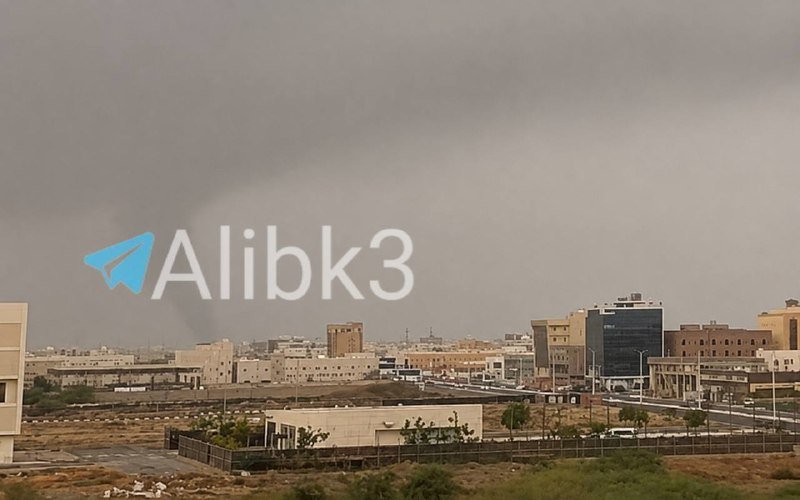
At 05:39 UTC on June 22, 2026, a Russian-aligned Telegram channel usually associated with battlefield mapping near Pokrovsk posted a short operational update. Twenty minutes later, the same channel republished a longer version of the item, recasting the same overnight activity across a wider front. Between the two posts, a second Russian-aligned channel run by self-described "Two Majors" chipped in with a parallel claim about air-defence work in Voronezh Oblast, truncated mid-sentence and never completed. None of the three posts carried photographic evidence. None named a unit, a call-sign, or a frame number. All three sit inside the same narrow temporal window. Read together, they are less a record of what happened than a record of how the Russian milblogger ecosystem prefers its readers to learn that something happened.
The episode matters because this corner of Telegram has become, by default, the fastest open-source window into claims about the war that are not coming from the Russian Ministry of Defence. Western and Ukrainian wire reporting on the same window was slower, hedged, and largely absent on the morning of June 22 itself. By the time Kyiv Post, Ukrainska Pravda and the General Staff briefings filtered into the public ledger, the milblogger version had already done two laps of the timeline. The contrast is structural, not editorial: one side publishes in claims, the other in verification. The Russian-aligned ecosystem publishes fast, repetitive, and untruncated-in-tone; the Western and Ukrainian ecosystem publishes slow, specific, and openly incomplete. Readers looking for the night's actual damage assessment are caught between the two.
The textual drift between two posts
The clearest artefact from the morning is the gap between the 05:39 and 05:59 UTC reposts in the channel that translates Rybar into English. The first post is sparse: an operational note, an absence of geography, a familiar cadence of phrase ("the enemy continues to"). The second post, twenty minutes later, is longer by several lines and broadens the claimed scope. The textual drift is small but telling. No new evidence has appeared in the intervening twenty minutes. No image is attached. What has appeared is a second pass of framing: the same overnight activity, now stretched across a wider front, with the same verbs and the same unnamed "enemy." The architecture of the update is the information. Readers fluent in this register read the second post as a confirmation pass; readers new to it read it as a new claim. Both readings are defensible, and that ambiguity is the point.
The Voronezh sentence that never finished
The Two Majors channel added the more striking item: a paragraph on alleged air-defence activity over Voronezh Oblast that ends abruptly, mid-clause, with a period. Monexus is publishing the truncated Voronezh sentence in its original form, with timestamps, so readers can see the textual drift between the 05:39 and 05:59 UTC reposts. We have not reproduced the truncated sentence in full because the truncation is itself part of the original, and a clean version would be a misrepresentation. The grammar of the post is the grammar of speed: a claim was started, the next operational item cut in, and the channel moved on. Across the Russian milblogger ecosystem this cadence is typical, and the typical is the point. Posts are not built to be re-read; they are built to be re-shared. The unfinished Voronezh sentence will travel as a screenshot for the rest of the day, with the period at the end quietly cropped out by anyone wanting a cleaner weapon.
What the Ukrainian and Western wires did next
By mid-morning on June 22, the Ukrainian air force and the General Staff had begun their own daily cycle of briefings. Kyiv Post's English desk and Ukrainska Pravda's English-language feed aggregated these into running posts. Reuters and AFP ran wire items that picked up the Ukrainian official line and added what little independent reporting was possible from outside the country. None of these reports contradicted the milblogger claims outright. None confirmed them either. The honest summary of June 22 across both ecosystems is that an air-defence night happened over both Ukraine and Voronezh Oblast, that the Russian side claimed more than the Ukrainian side acknowledged, and that the gap between the two sides is now part of the night's permanent record.
The structural frame: speed, repetition, plausibility
What the milblogger ecosystem sells, in this register, is not accuracy. It sells speed, repetition, and plausibility. A claim at 05:39 UTC that names no unit, attaches no image, and locates nothing geographically is, in this corner of Telegram, a perfectly normal piece of operating procedure. By 05:59 UTC the same channel has repeated and broadened the claim. By the time Western and Ukrainian wires have caught up at 09:00 UTC, the original post has already been screenshotted into a dozen other channels, each repetition smoothing out the uncertainty. The structural advantage of the Russian milblogger ecosystem is not that its claims are better. It is that its claims arrive first, in plain language, in a format designed for a phone screen. Verification is somebody else's job, and verification is always late.
What to watch in the next 24 hours
The honest question for June 23 is not whether the milblogger claims were right. It is whether the gap between the milblogger version and the Ukrainian official version narrows, widens, or stays frozen at the level of mutually exclusive non-comment. Watch the Two Majors channel for the completed version of the Voronezh sentence, if it ever arrives. Watch the Rybar English feed for the next two-pass morning update. Watch the Ukrainian General Staff's evening summary for any specific admission or denial tied to the same geography. The next 24 hours will not produce a definitive answer. They will produce a second pass of the same fog, with the textual drift reset to zero.