Thunder move Wiggins to Hawks for two second-rounders, signalling a tax-conscious title defence
Oklahoma City sent Andrew Wiggins and a $28.2 million expiring deal to Atlanta for two second-round picks, a quiet Monday trade that reveals how the defending champions intend to manage the repeater-tax window around their young core.
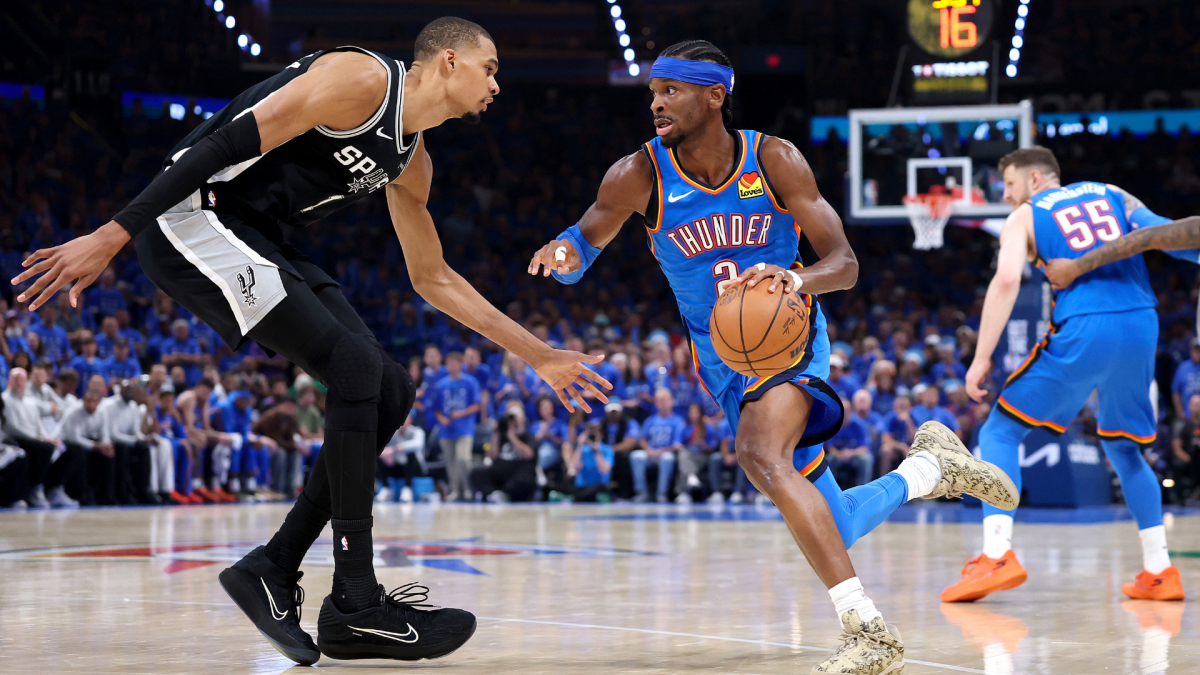
Oklahoma City sent Andrew Wiggins to Atlanta on Monday for a pair of second-round picks, the kind of low-spectacle deal that tells you more about the league than any blockbuster does. With Shai Gilgeous-Alexander still on a super-max and Chet Holmgren, Jalen Williams and Chet Holmgren's rookie extension now on the books, the Thunder's front office has spent the last week running the cap sheet rather than chasing headlines.
The trade strips roughly $30 million of guaranteed money off Oklahoma City's books for next season, according to the framework of the league's collective bargaining agreement. That is real money inside a repeater-tax window that punishes teams for spending above the luxury line in four of any five seasons. The Thunder are now paying that price for a 2025 title run, and every subsequent roster decision is being filtered through the same arithmetic.
What Wiggins actually cost
Wiggins arrived in Oklahoma City as part of the 2024 trade with Golden State that sent back a protected first, and he played a defined role on the championship team: long wing, secondary scorer, defensive matchup piece. He is owed about $28.2 million in the final year of his contract next season, the kind of figure that becomes fungible when the bill is due.
Atlanta, by contrast, is buying Wiggins' expiring deal and the cap space it unlocks in 2027, when several teams are expected to pivot into significant spending. Two second-rounders is, in this accounting, the market rate for a one-year rental of a useful veteran on a non-contending roster. The Hawks have signalled no intention to extend him.
The Thunder, meanwhile, walk away with flexibility, two developmental swings at the back end of the next two drafts, and a clean luxury-tax ledger for the offseason. There is no reported plan to spend the freed money on a replacement scorer. The bet is that the existing core is good enough.
The cap math behind the move
The NBA's salary cap is set each year through a formula tied to basketball-related income, and the 2026-27 projection sits north of $155 million per team, with a luxury-tax line carved in above it. For a championship team carrying a payroll already north of $180 million, every additional dollar is taxed at progressively punitive rates under the league's repeater structure. Oklahoma City crossed that threshold when it paid to keep its young core together.
The Wiggins deal is not a fire sale. It is a calibration. Send out the most movable long-money contract on the roster, take back the smallest possible return (draft picks, no salary), and reset the runway for the 2027 free-agent class. Holmgren's extension begins in 2026-27; Williams' begins the year after. The cap sheet compounds quickly when three max-level players share a backcourt.
What looks like thrift is actually the structural reality of defending a title under the post-2023 CBA. The repeater penalty was designed to make sustained spending painful precisely so that eventually, even successful teams must choose between keeping every contributor and keeping every dollar. The Thunder have chosen dollars, with confidence.
What the Hawks are actually buying
Atlanta's side of the trade is harder to read in isolation. The Hawks finished last season outside the play-in and have spent two years stockpiling young wings and guards, including the 2024 lottery pick and several recent first-round contributors. Adding a 30-year-old on an expiring deal does not obviously fit that timeline.
The most plausible reading is that the Hawks are not buying Wiggins at all. They are buying cap space in 2027, when Wiggins' contract falls off the books and the team can pivot into a max-level offer for a free-agent class that is shaping up to be unusually deep. Atlanta has been linked in trade chatter to several star-level players whose teams may look to rebuild. The Wiggins deal gives the front office the optionality to be a serious bidder without committing to Wiggins himself.
Two second-round picks are a cheap price for that kind of optionality. If Atlanta uses the space, the picks are forgotten. If it does not, the loss is minor.
The shape of the 2026 offseason
The Thunder are the defending champions, and they are the only defending champion in recent memory to be a tax-paying team built almost entirely on rookie-scale or near-rookie-scale contracts for their best players. Gilgeous-Alexander is the outlier; everyone else is cost-controlled through 2027 or 2028. That window is closing. Every contract decision between now and the 2027 cap spike is being made against the clock.
The Wiggins move is the first visible signature of how Oklahoma City intends to manage that window. It will not be the last. Expect the Thunder to be active in the buyout market, conservative in the trade market, and aggressive on minimum-salary veteran signings that do not trigger the tax. The roster that defends the title in 2027 will not look identical to the one that won it.
That is the subtext the casual fan will miss, and the one that explains why a quiet Monday trade deserves more column space than its on-court implications suggest. The Thunder are not selling the present. They are pricing it.
What to watch next
Three dates will define whether the Wiggins trade is read as shrewd or as the first move in a longer reset. The 2026 NBA Draft begins Thursday in Brooklyn, and Oklahoma City holds one first-round pick and a handful of second-rounders; how aggressively Sam Presti trades up will indicate whether the front office sees this offseason as developmental or as a holding pattern. Free agency opens in early July, and the first wave of cap-space teams (Atlanta, Brooklyn, Washington) will set the floor for what expiring veterans like Wiggins actually clear in trade value. And the league's mid-July release of the 2026-27 cap and luxury-tax figures will confirm whether the Thunder's math survives contact with the league's official projection.
For now, the trade sits as a single line in a transaction log, easy to scroll past. The story is not Wiggins. The story is that the team that just won the title has decided it can win the next one without paying to keep every piece, and that is a posture almost no defending champion in the cap-era has tried before.