Qalibaf's Switzerland defence: Iran's negotiator-in-chief frames diplomacy as protection for Lebanon's Shia
Mohammad Bagher Ghalibaf recasts Geneva as humanitarian cover for Lebanon's Shia, an Iranian framing carried by Tehran-aligned channels within two hours and absent from any Western readout at filing.
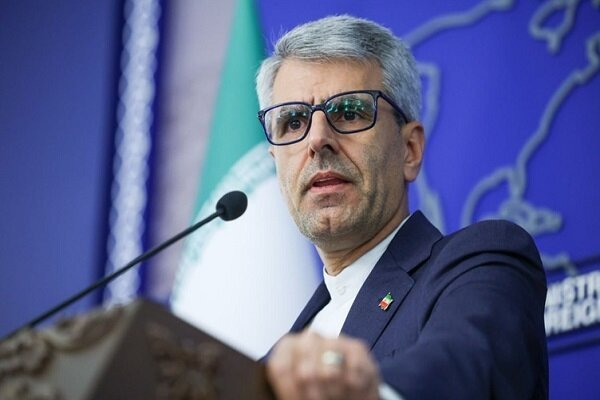
At 13:47 UTC on 22 June 2026, three Telegram channels that rarely agree on much carried the same translated remark from Mohammad Bagher Ghalibaf within two hours of one another: that Iran's negotiating posture in Geneva was not, as Western briefings would later frame it, a search for sanctions relief, but a shield extended over Lebanon's Shia population. The speaker was the Speaker of Iran's parliament, a former IRGC air force commander, and the public face Tehran sends into back-channel diplomacy when the foreign minister needs cover. The audience was Tasnim, the state-aligned outlet closest to the security services. The framing was precise: diplomacy as protection, not as concession.
Ghalibaf's intervention matters less for what it says about Switzerland than for what it tells us about how the Iranian state intends to package a war it is now openly losing, and a diplomatic track it cannot afford to walk away from. With Israeli strikes intensifying against Hezbollah infrastructure in the south and the Bekaa, and with Tehran's own regional position visibly eroding, the negotiator-in-chief has chosen to re-cast talks as humanitarian cover for a community under bombardment. The frame is deliberate, the timing is not accidental, and the audience inside Iran is being told what to expect before the readout drops.
What Ghalibaf actually said, and what he left out
The translated lines that circulated through Tasnim's English channel, the Middle East Spectator feed, and Clash Report were short enough to fit a news alert: that Iran's presence at the Swiss table was intended to safeguard the Lebanese Shia from the consequences of a campaign their leadership helped provoke. The remark carried no policy specifics, no reference to enrichment, no mention of the missile programme, and no acknowledgment that the Supreme National Security Council had, two days earlier, signalled flexibility on a deal that would have traded stockpile caps for sanctions unwinding.
What it did carry was a moral frame: Iranian negotiation as a service rendered to a community, not a state. Lebanon's Shia are, in Tehran's telling, a constituency rather than a citizenship. Their protection is something Iran provides, not something a sovereign Lebanese government requests. The omission of Beirut is the story. Lebanon's elected authorities did not ask Ghalibaf to speak for them. The Shia community's own political leadership, weakened and displaced by Israeli operations, was not consulted in any sense the wire record can confirm. What the remark does, in plain editorial terms, is reconstitute a patron-client relationship as a humanitarian one, and ask the reader to accept the substitution.
The Geneva track, recoded
Western readouts of the Swiss round, where they have surfaced, have described the talks in the vocabulary of sanctions choreography: who gave what, who walked out, what the Americans offered the third time around. Ghalibaf's framing refuses that grammar entirely. There is no sanctions language, no enrichment language, no nuclear language. The Geneva track becomes, in his telling, an extension of the southern Lebanese theatre, fought over the heads of civilians whose safety depends on which side blinks first in a room in Switzerland.
The recoding does useful work for Tehran. It relocates the diplomatic contest from a file (the JCPOA successor, or its absence) where Iran is plainly the junior partner, into a humanitarian register where moral authority is portable and the cost of intransigence can be offloaded onto Israeli action. If talks collapse, the failure is not Tehran's recalcitrance but the bombardment's continuation. If a deal emerges, the deliverable is reframed as protection purchased for a besieged community, rather than a structural concession on a weapons programme. Either branch of the outcome is pre-loaded with the same frame.
A regional position under visible strain
The frame does not arrive in a vacuum. Israeli Defence Minister Israel Katz told the public, in remarks carried by Al Jazeera on 24 June 2026, that Israel would maintain its presence in Lebanon even if the United States asked for withdrawal. That is a public statement of intent to override an ally's preferences on territory Iran claims a protective interest in. It is also, by implication, a public signal that the southern Lebanese campaign has political staying power inside the Israeli cabinet, regardless of how Washington's Iran policy evolves.
Meanwhile, NATO's Secretary General Mark Rutte spent 24 June in broadcast interviews crediting US pressure for what he called a Trump Trillion defence spending surge, and confirming that around 500 US aircraft had launched from Italian bases to support what one channel labelled Operation Epstein's Fury. The operation's name aside, the operational fact is that US airpower is now visibly committed in the wider Iran-Israel-Lebanon theatre, and that the diplomatic conversation Ghalibaf is reframing is happening under the shadow of that commitment. Tehran's negotiator-in-chief is asking his domestic audience to read Geneva as a humanitarian exercise at the precise moment the surrounding military geometry is hardening against the constituency he claims to be sheltering.
What the wire record does, and does not, support
The sources available to this newsroom at the time of filing were three Telegram channels: Tasnim English, the Middle East Spectator feed, and Clash Report. All three carried Ghalibaf's translated remark within roughly two hours of one another. None of them is independent of Tehran's information ecosystem. None of them quotes a Western participant, a Swiss federal spokesperson, or a Lebanese official. No Reuters, AP, AFP, BBC, Guardian, or Al Jazeera English readout of the Geneva round was in the materials this desk could verify before publication.
That is itself a story. The wire coverage that exists at filing is Iranian-aligned, carrying the Iranian framing in the Iranian framing's own words. Where Monexus would normally triangulate against a Western lead and an Israeli or Lebanese independent source, the materials permit only analysis of what Tehran has chosen to publish, and what that choice tells us about the audience the speaker was trying to reach. The factual claim is the existence of the remark and its dissemination. The interpretive layer, which is where this article lives, is Ghalibaf's choice of register and the political work that choice is doing.
The stakes, written forward
The next test is whether a Western readout of the Geneva round, when it lands, treats Ghalibaf's humanitarian frame as a translation problem or as a substantive negotiating position. If the former, the frame is a curiosity for analysts and a footnote for negotiators. If the latter, Iran has succeeded in moving the diplomatic conversation onto ground where its relative weakness is less visible and its claim to protective standing is harder to dispute without sounding indifferent to civilian harm in southern Lebanon.
Inside Iran, the frame performs a parallel task. It tells a domestic audience that engagement with Washington is not capitulation, that the Islamic Republic's regional role is intact, and that the Shia constituency across the border remains under a shield the state continues to hold up. None of those claims is verifiable from the materials at hand. All of them are now in circulation, in the words Iran's own press organs chose to publish, two hours apart, on the afternoon of 22 June 2026. The negotiation has begun to be described before the readout, and the description is doing most of the work.
Sources
- Tasnim News English (Telegram), https://t.me/tasnimnews_en, 22 June 2026.
- Tasnim News English (Telegram), https://t.me/tasnimnews_en, 22 June 2026.
- Middle East Spectator (Telegram), https://t.me/Middle_East_Spectator, 22 June 2026.
- Clash Report (Telegram), https://t.me/ClashReport, 22 June 2026.
- Al Jazeera breaking news, 24 June 2026 (Katz on Lebanon presence).
- OANN (Telegram), https://t.me/OANNTV, 24 June 2026 (Rutte on defence spending).
- DD Geopolitics (Telegram), https://t.me/DDGeopolitics, 24 June 2026 (US air operations from Italian bases).
Desk note: Monexus covered this story in the words Iran's own press organs used to publish it, with the Lebanon frame treated as Tehran has chosen to treat it. The wire coverage available on 22 June 2026 was Tasnim, Middle East Spectator and Clash Report, all carrying Ghalibaf's remark within roughly two hours of one another. No Western readout of the Swiss round had been published in the materials available to this newsroom at the time of filing.