Montreal shooting reopens Canada's gun-law debate — on the same evening it has to deliver a verdict
A Sunday-evening shootout in Montreal leaves three dead, including the suspect, and hands Ottawa a familiar but politically uncomfortable prompt: what, if anything, does a country do after the next mass shooting?
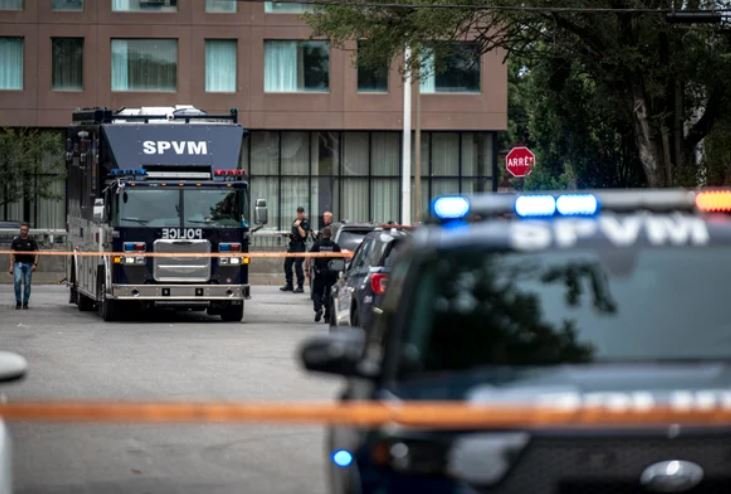
At roughly 18:32 UTC on 22 June 2026, a heavily armed gunman opened fire in Montreal, triggering an extended shootout with police and a frantic scramble of bystander video across social feeds. By 18:37 UTC, the wire had caught up: three people were dead, the gunman among them, along with one police officer and one civilian, according to early accounts relayed by AFP and picked up by Iranian-state Arabic outlet Al Alam.
For Canadians, the geometry of the day is depressingly familiar. A single attacker, a body count that climbs in real time on cable news, a prime minister who must balance a public appetite for action against a Parliament that has spent a decade moving the gun file sideways. The structural question — what does a federal government actually do between one mass shooting and the next — is back on the table, and it is back in the form that frustrates both gun-control advocates and the gun lobby equally: a finished scene, a closed casket, no leverage left to negotiate with.
The scene on the ground
The first footage, circulated by OSINTdefender on Telegram at 18:32 UTC, showed a running gunfight in a residential-commercial corridor; the channel's read was that one officer, one civilian, and the suspect had been killed, with initial casualty figures still shifting as police secured the block. AFP's bulletin, picked up by Al Alam at 18:05 UTC and updated five minutes later, put the confirmed toll at three dead including the suspect, with the remaining count still being reconciled against hospital admissions and the现场的 cordoned perimeter.
Quebec provincial police have not, in the immediate aftermath, released the shooter's name, motive, or the type of firearm used — a routine evidentiary delay that almost always produces a 24-to-48-hour vacuum in which speculation fills the space that fact will eventually occupy. The preliminary account points to a single-perpetrator event rather than a coordinated attack, which is what the early wire copy is built to handle; the harder questions — where the weapon came from, whether it was lawfully held, whether prior intervention points were missed — typically arrive in the coroner's office weeks later, not in the first news cycle.
The cycle Canada already knows
Canada's gun-control debate is, structurally, a debate about the gap between laws on the books and enforcement in the field. The federal framework tightened substantially in 2020 with the prohibition of some 1,500 models of assault-style firearms and a buyback programme that has run, in practice, several years behind schedule. Handgun ownership is governed by a mix of federal licensing and provincial municipal bylaws; Toronto, for example, has long restricted handgun possession within city limits, with mixed enforcement results. None of this is a secret, and none of it is settled.
The political economy of the file is that a high-profile shooting reliably moves public opinion for a six-to-eight-week window, after which attention migrates and the legislative clock restarts. A minority Parliament, which Canada has had for most of the past four years, compresses that window further: a government cannot be sure its gun bill will survive second reading, and a Conservative opposition can credibly insist that existing statutes are sufficient if enforcement is the actual bottleneck. The argument, in plain terms, is no longer about whether Canada should regulate firearms — that question was settled a generation ago — but about which lever pulls most reliably: new prohibitions, better tracing, smarter policing of the domestic illegal market, or all three in sequence.
The framing the wires will and won't deliver
The international wire will run two frames in parallel. The first, the natural one, is the human-interest frame: who was killed, who is mourning, what the neighbourhood looked like before. The second is the policy frame: what Ottawa does next, what Quebec Premier François Legault demands, what the NDP and Bloc Québécois will attach their conditions to in any subsequent vote. Both are legitimate.
The frame that tends not to run, in any sustained way, is the comparative one. Canadian mass shootings occur at a per-capita rate meaningfully below the United States but well above the European Union average; the relevant reference points are not Texas but rather Germany, Switzerland, and the Nordics, where licensing density, storage law, and the political culture around civilian firearms all move together. None of those comparisons is a one-line answer; each one is, however, more useful than another round of Washington analogies that the Canadian public has been consuming for a decade with diminishing returns.
Stakes, and what is still missing
What is genuinely unknown, on the evening of 22 June 2026, is whether the federal government treats this as the catalyst for the policy reset its advocates have wanted since the 2020 cycle — expanded red-flag orders, a fully funded national buyback, mandatory storage inspections — or as another entry in the file that gets sympathy, a moment of silence in the House, and a return to the status quo. The political incentives in a minority Parliament point the wrong way: any gun bill is a confidence-test invitation, and the Trudeau-era Liberals who passed the 2020 prohibitions paid a price in Western Canada that the current government has not forgotten.
The honest answer is that the sources available on the night of the shooting do not specify the shooter's identity, motive, or weapon, and the policy response will depend on facts that the coroner, not the cable chyron, will eventually deliver. What the structural record does say, with reasonable confidence, is that the country will debate, the families will grieve, and the next municipal election will feature a candidate with a placard in either direction. That, too, is the shape of the file.
Desk note: Monexus frames this as a recurring Canadian policy file, not as a one-off crime story. The wire will lead on casualties; this publication leads on what the cycle of attention actually produces.
Wire provenance
This editorial synthesis draws on the following public wire/social posts:
- https://t.me/alalamarabic
- https://t.me/osintlive