Jack Draper's Eastbourne return tests whether injury lessons travel to Wimbledon
Jack Draper's 'below the floor' admission in Eastbourne reads less as a comeback story than as a structural test: can a body that learned to fail in 2025 trust itself again on Wimbledon's lawn?
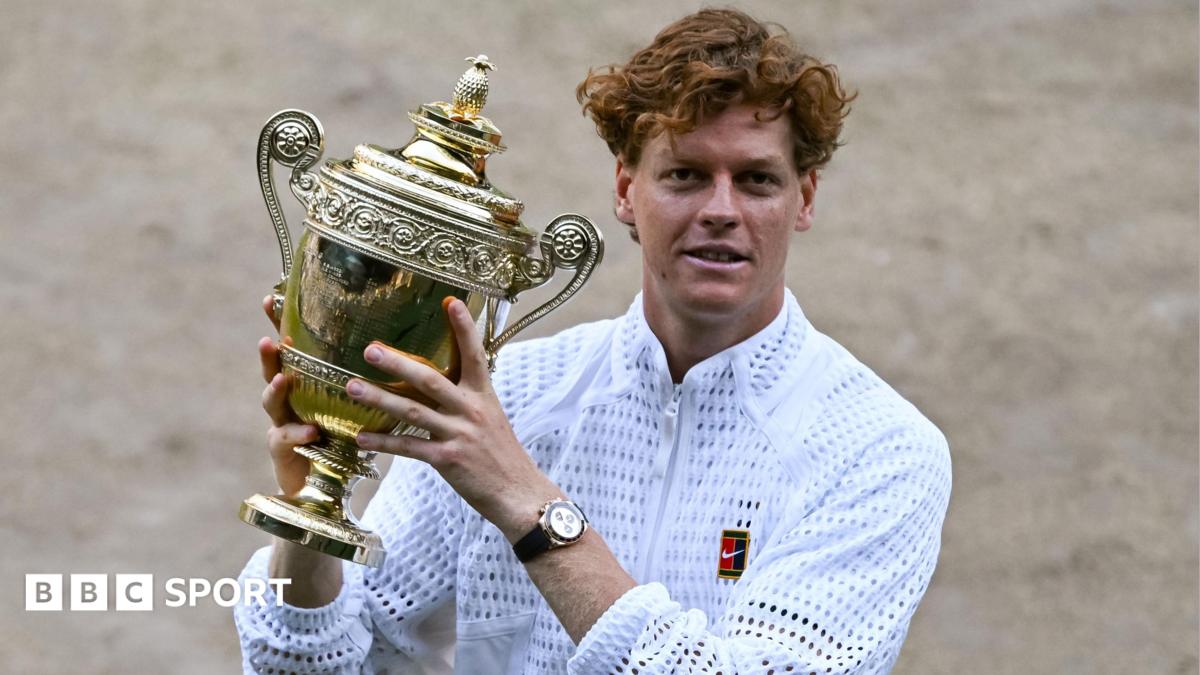
Jack Draper returned to grass in Eastbourne on 24 June 2026 and beat fellow Briton Jack Pinnington Jones 7-5, 6-4 to reach the quarter-finals, the small print of an evening that mattered less for the scoreline than for what preceded it. In his post-match interview, the 24-year-old said his recent injury problems had left his confidence levels "below the floor," an unusually candid admission from a player seeded inside the world's top ten. The match itself was scrappy, British-on-British, and short on rhythm; both men were playing a tournament neither owns. Eastbourne was a checkpoint, not a destination.
The structural question Monexus is asking is whether lessons absorbed on a treatment table translate when the calendar turns to a fortnight the sport does not let players control. Wimbledon begins on 29 June 2026, five days after Draper's Eastbourne quarter-final, and the lawn at the All England Club punishes hesitation with a prejudice the rest of the tour does not. A body that has spent the spring learning it can fail will meet a surface that refuses to wait for it to remember it can win.
A comeback that begins in the head
Draper has not played a full grass-court block since 2024. His 2025 season was a sequence of interruptions: a shoulder issue at the Australian Open, a hip problem that pulled him out of the pre-Wimbledon swing, and the slow, mistrustful return of a serve that is supposed to be his primary weapon. The numbers behind his ranking tell the story in outline; the words he used in Eastbourne filled in the colour. "Below the floor" is not the vocabulary of a man returning to form. It is the vocabulary of a man who has had to renegotiate the contract between his body and his expectations.
British tennis has seen this movie before. Andy Murray in 2013, after the back surgery that nearly ended his career, arrived at Queen's Club looking like a player who had simply forgotten how to play tennis and left it looking like one who had remembered something more important. The pattern is consistent: the body returns before the brain does, and the brain returns only after the body has stopped flinching. Eastbourne is the place where Draper has to stop flinching.
Pinnington Jones and the depth chart
The win over Pinnington Jones deserves a sentence of its own, for a reason that has nothing to do with Draper. Pinnington Jones is a 21-year-old British wildcard with a left-handed forehand and a ranking outside the top 150, and on Wednesday evening he made Draper play five sets worth of tennis for a match that lasted an hour and 41 minutes. The depth of the British men's game is sometimes overstated and sometimes understated, and Wednesday sat closer to the underrated end. Britain now has one man inside the top ten and another who can push him on a grass court; that is a healthier ratio than the LTA's 2018 strategy document promised for this date.
It also means Draper cannot treat his domestic opponents as a soft landing. A British wildcard on grass in Britain is, by definition, a player who has grown up on the same surfaces, in the same weather, with the same access to indoor courts in March. The days of a top-ten Britney walking past a wildcard in straight sets on the way to a Wimbledon draw are not over, but they are less automatic than they used to be.
The Wimbledon squeeze
The wider tour context intrudes. On 24 June 2026, the sport's leading men and women confirmed they would continue their protest over grand-slam revenue share, with players currently receiving 14.4% of tournament revenues and asking for 16%. The dispute is scheduled to run into Wimbledon, where the symbolic cost of any disruption is highest. Media-access limitations have already been signalled. For Draper, whose profile and ranking make him a likely candidate for the All England Club's marquee slots, the political weather is part of the preparation.
Whether that matters for his first-round opponent depends on who he draws on Friday. The men's seedings place Draper in the top eight, which means a protected draw through the first three rounds on paper and a fourth-round collision course with one of the game's heavier hitters. The body has to be ready. The brain has to be readier. And the calendar, as ever, does not negotiate.
What Eastbourne cannot tell us
Eastbourne rewards first-strike tennis and a willingness to keep the points short. Wimbledon, in its current guise, rewards defence, patience, and a serve that holds under the weight of two weeks of expectation. Draper's serve has historically held; his movement has historically broken first. The hip that cost him the 2025 grass season is the hip that has to survive five best-of-five matches across a fortnight, and no Eastbourne quarter-final, however tidy, can simulate that.
The honest reading of 24 June is that Draper did what the checkpoint asked of him. He won a match he was expected to win, he spoke honestly about the territory he had been in, and he left the court without a recurrence of the problem that has defined his last eighteen months. None of that is Wimbledon. All of it is the kind of base on which Wimbledon has been built before.
The question that travels
British tennis has spent a decade arguing about pathways, about the LTA's funding model, about how many Slams a country should expect from one generation. The Eastbourne return is a smaller, more private argument: whether one player's body, repaired once, can be trusted to carry the rest of his season across a surface that punishes doubt. The answer will arrive in southwest London, on courts Draper knows well, against opponents who do not care how he got there.
Wimbledon qualifying begins on Monday. The main draw begins the day after. Five days is not a long time to climb back above the floor. It is, however, exactly the time the tour gives British players between the last rehearsal and the first night.