Ten days in: how the 2026 World Cup is already rewriting the record book
The tournament in the United States, Canada and Mexico is barely a week and a half old and several all-time marks have already fallen. Monexus looks at which records are gone and which ones are wobbling.
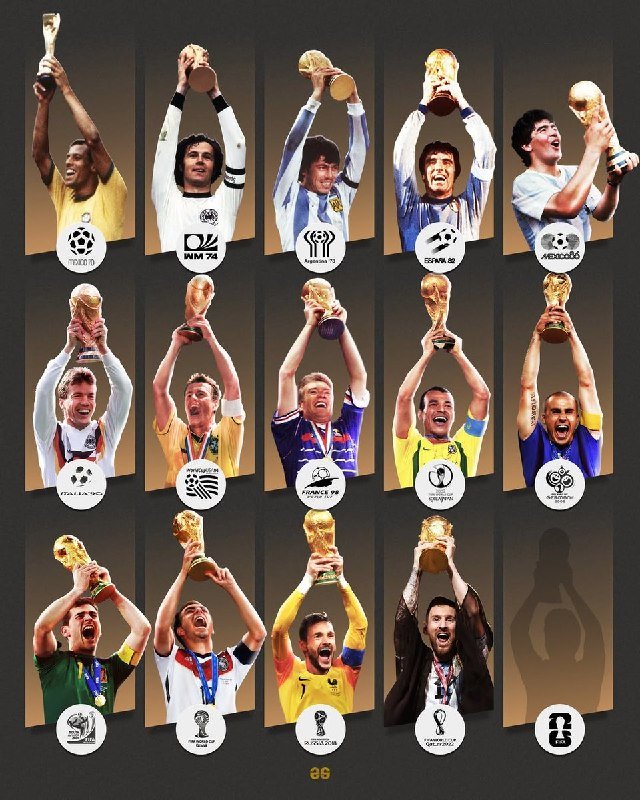
Ten days into the 2026 World Cup and the tournament in the United States, Canada and Mexico has already redrawn parts of the all-time record book. The fixtures have not stopped coming; the numbers, in several cases, have.
What is unfolding is not simply a fast start. The expansion of the field to 48 teams, combined with the compressed early schedule, has guaranteed a higher tempo of matches than any previous men's World Cup. Goals, appearances and minutes on the pitch accumulate by the day, and several long-standing benchmarks are within touching distance of the new arrivals. The story of the group stage is, increasingly, also a story of milestones being set in real time.
What the tournament has already done
The clearest marker is volume. With more teams in the competition, more matches are being played in the opening stretch than at any previous World Cup, and that has direct consequences for the record book: every appearance, every goal, every minute on the pitch counts towards a ledger that is being written faster than ever. BBC Sport's rolling catalogue of records already broken, or set to be, runs across goalscoring, appearance and disciplinary categories — the kind of breadth that reflects a tournament structurally unlike its predecessors.
The expansion is the through-line. The decision to grow the field to 48 sides was taken years before a ball was kicked in North America, and its effects are now visible in the raw data. Squads are deeper, rotations are wider, and players who might once have been on the outside of a 23-man roster are now central to a 26-man squad competing in a longer tournament.
The other story, told from the stands
Records are a quantitative story, but the tournament has also produced a quieter human one. BBC Sport's feature on parents and children attending their first shared World Cup captures something the statistics cannot: a transmission of memory across generations, played out in stadium concourses, in front of televisions, in arguments about whose turn it is to wear the new shirt. It is the kind of moment that a record book does not capture but that, for many of those present, will outlast the tournament.
That softer angle matters. A World Cup is as much a social fact as a sporting one; the players break records, but the parents explain them. The 2026 edition, hosted across three countries for the first time, has widened the geography of who gets to be in the room when history is made.
A structural shift, not just a statistical one
The record-breaking is best read as the visible surface of a deeper change. FIFA's expansion was sold, in part, on the promise of broader participation — more nations, more matches, more revenue. The early numbers suggest the sporting logic has held: there are simply more places for milestones to be set. A player can now overtake a goalscoring record not by being exceptional, but by being exceptional for long enough in a tournament that simply runs longer than any of its predecessors.
There is a counter-view worth naming. Critics of the expansion argued that diluting the field would reduce the average quality of matches and, by extension, cheapen the records set within them. The early evidence is mixed: standout performances have come from the established heavyweights, while several of the newer entrants have struggled to make an impression. The records being set, in other words, are not all of the same kind — some are genuinely historic, others are products of the format.
What to watch next
The group stage still has days to run, and the knockout rounds will follow. The categories most likely to fall in the next fortnight are the ones already in motion: cumulative appearances by veteran players, goalscoring tallies for forwards on hot streaks, and the all-time minutes-played ledger for goalkeepers and defenders who have become fixtures of their national sides. Each will accumulate a little faster than in any previous World Cup, simply because the tournament gives them more matches in which to do so.
There is also an open question the sources do not resolve: how the all-time lists will be reweighted once this tournament closes. A record set across 48 teams, in a longer format, against a wider spread of opposition, is not strictly comparable to one set in a 32-team field. The answer will be settled less by statisticians than by the culture of the sport — by which numbers fans, broadcasters and federations choose to treat as canonical, and which they quietly reclassify.
For now, the headline is simple. The 2026 World Cup is ten days old, and it is already on the record book. The next ten will tell us how much of that record book is being rewritten — and how much of it is being replaced.
Desk note: Monexus framed this around structural change — the expansion to 48 teams, and what it does to the record book — rather than around any individual milestone, which will be superseded within days. The BBC's two threads supplied both the statistical spine and the human counterweight.
Wire provenance
This editorial synthesis draws on the following public wire/social posts:
- https://en.wikipedia.org/wiki/2026_FIFA_World_Cup
- https://en.wikipedia.org/wiki/FIFA_World_Cup