Trump's Truth-Social diplomacy just walked Iran's team out of the room
A Truth Social post demanding Iran rein in its Lebanese allies ended US-Iran talks in Switzerland on 21 June 2026 before the Iranian delegation had finished its first session.
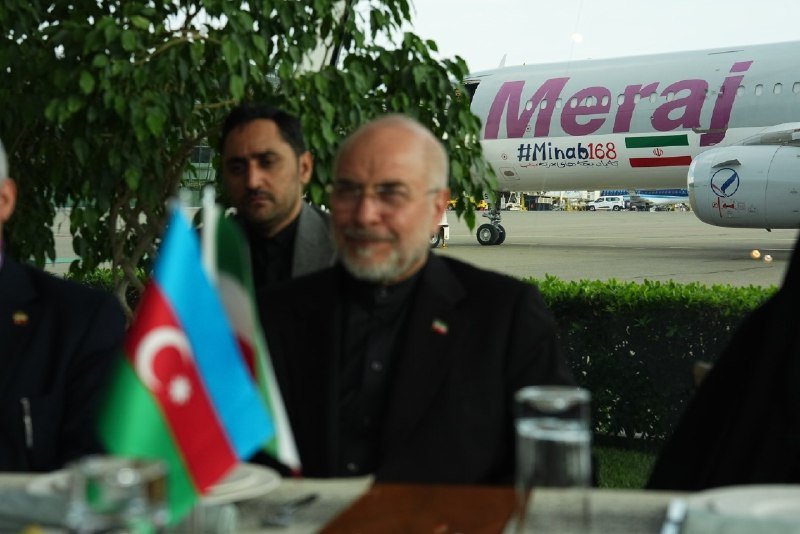
The Iranian delegation walked out of US-Iran talks in Switzerland on the afternoon of 21 June 2026, roughly 16:24 UTC, after a Truth Social post from President Trump demanded Tehran rein in its Lebanese allies and warned of a heavier strike than the previous week's. Tasnim News reported, at 16:24 UTC, that Iran protested the post and adjacent presidential comments as a violation of a clause in the Memorandum of Understanding under negotiation. By 16:29 UTC the Iranian team had left the venue, according to a source close to the negotiating team cited by Tasnim and relayed via al-Manar.
The collapse matters less for what was actually on the table than for the negotiating method it exposes. Diplomacy by social-media ultimatum, delivered in capital letters and exclamation marks, has now produced its first walkout of the year. The pattern is familiar — a maximalist demand, a deadline implicit in the punctuation, a refusal to let the talks become the story — but the venue matters: this is the channel through which a sitting US president has chosen to communicate with a sovereign negotiating counterpart in the middle of a session.
The post that ended the session
Trump's message, circulated at roughly 16:21 UTC on 21 June, told Iran to "immediately stop their highly paid PROXIES in Lebanon from causing trouble" and warned that, if Tehran did not, the United States would "hit Iran very hard again, just like we did last week, only harder!!!" The reference to the prior week's strikes — and the implicit threat of escalation — was read inside the Iranian delegation as a violation of a standing negotiating clause, according to Tasnim. The framing of Hezbollah as "highly paid proxies" also runs directly against Iran's own public line on its relationship with the Lebanese movement, which Tehran describes as one of independent resistance rather than paid direction.
Two facts sit underneath the rhetoric. First, there had been a working round in Switzerland, which suggests both sides still saw value in talking. Second, the post was issued while the delegation was on the ground, not as a prelude to talks that might still have been cancelled. That timing is the procedural complaint: a sovereign counterpart cannot accept that the rules of a session can be rewritten mid-session by a social-media post issued from Washington.
Why Tehran walked
Tehran's public posture across the past year has been that it will negotiate, but not under duress visible enough to look like surrender. The walkout serves two domestic audiences. Inside Iran, it lets the negotiating team claim it refused to be humiliated; inside Lebanon and the wider regional axis, it lets Tehran signal that Hezbollah is not a card to be bargained over the heads of the Lebanese in a Swiss conference room. Both of those audiences matter more to the Iranian system than the marginal technical progress a session might have made.
There is also a structural reason to walk. Talks that proceed after an explicit public ultimatum produce text the Iranian side cannot sign without that text being read, at home and in Beirut, as capitulation. The Memorandum of Understanding under negotiation is, by definition, a confidential document; a presidential post attacking Iran's regional posture in vernacular English, broadcast to the same audiences who will eventually read any signed text, makes confidentiality impossible. The Iranian team walked because staying meant losing before the cameras what it would then have to defend at the table.
The US framing, taken seriously
The US position is not without content. Hezbollah's continued armament and political entrenchment in Lebanon is a documented security concern for Israel, and by extension for any US administration that treats Israel's northern front as a standing strategic interest. The reference to the previous week's strikes establishes continuity with an ongoing campaign. A serious reading of the post is that Washington is signalling it will not separate the nuclear file from Iran's regional posture — that any deal must include a credible Iranian pressure-down on its Lebanese partners.
That is a defensible position. It is also a position Iran has repeatedly said, in its own MFA briefings and in outlets aligned with the government, that it will not accept, because it treats a sovereign allied movement as a subordinate asset. The US and Iranian framings of what Hezbollah is are, genuinely, incompatible. Diplomacy is the art of finding language that allows both sides to ratify what they have in fact agreed without either having to disown its own public doctrine. The 21 June post made that ratifiable language harder, not easier.
What this is really about
The larger pattern is not about this one session. The pattern is that US-Iran diplomacy in 2026 is being conducted in a hybrid register in which the most consequential documents are not communiqués but social-media posts. Negotiators in the room cannot draft text faster than the platform can broadcast an instruction. Every draft becomes instantly legible to the hardest of hardliners on the other side, who can then insist that any agreement weaker than the post is itself a betrayal. The Truth Social post is, in this reading, not a failure of diplomacy but the medium of diplomacy — and a medium that strongly favours the side willing to escalate in public over the side that needs quiet to ratify.
The structural stakes are concrete. If the talks resume, they will resume with a precedent: the US can change the terms mid-session by issuing a public post, and the Iranian side's only recourse is to leave. That is not a stable equilibrium. It is a race in which the side most willing to walk gets the most concessions, because the other side bears the larger cost of collapse. Iran, structurally, can survive a walkout; the US negotiating calendar cannot afford one. The walkout therefore strengthens Tehran's hand at the cost of its reputation for reliability, and weakens Washington's hand at the cost of its reputation for seriousness.
What remains unclear
The sources available as of 16:29 UTC on 21 June 2026 do not yet confirm whether the Swiss venue has been suspended, rescheduled, or simply paused. They also do not specify which clause of the Memorandum of Understanding Iran alleges was violated, nor whether the previous week's strikes referenced by the president were publicly attributed to the US at the time. Iranian state-aligned coverage and the al-Manar relay of Tasnim are the only wires so far; Western agencies have not yet posted parallel confirmation. Until they do, the procedural claims of both sides — that the post violated a clause, that the post was a legitimate re-statement of standing US policy — remain uncorroborated beyond the parties themselves.
The honest reading is that a meeting broke down because one side sent a message through a channel that the other side cannot, by its own doctrine, ignore. Whether it was a negotiating tactic that misfired or a deliberate collapse that produced a useful walkout will depend on what the Swiss venue looks like by the end of the week.
This article was framed from Iranian state-aligned wires and al-Manar relays, the only sources reporting the walkout in real time as of 16:29 UTC on 21 June 2026. Western wire confirmation of the procedural claims is pending; the desk will update when Reuters, AP or the State Department posts a parallel account.
Wire provenance
This editorial synthesis draws on the following public wire/social posts:
- https://t.me/tasnimnews_en/
- https://t.me/rnintel/
- https://t.me/rnintel/