Two tracks in Switzerland: Trump's threats, Iran's red line, and the rickety architecture of a 'negotiation'
With envoys meeting in Geneva while the US president publicly reserves the right to bomb harder, the 21 June 2026 track is less a negotiation than a parallel performance — and Tehran has now publicly drawn a line it says it will not cross.
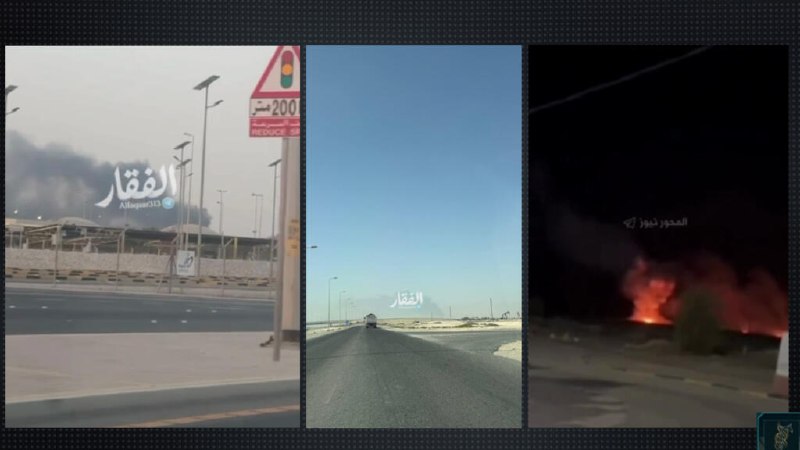
On 21 June 2026, as American and Iranian delegations opened a fresh round of talks in Switzerland, the US president used a public platform to remind the other side of a different kind of leverage. The threat of force, he said, remained on the table — explicitly, in the conditional tense. The Iranian negotiating team, in the same hours, was told separately that the United States expected Tehran to order its regional partners to cease operations in Lebanon, and that a hard refusal to surrender the right to enrich uranium would not be entertained. The picture on the table, by mid-afternoon UTC, was not of a negotiation. It was a negotiation and a threat, running on parallel tracks, with the threat calibrated for an American audience and the conditions calibrated for an Iranian one.
This piece walks through the four signals that converged on 21 June 2026 — the Swiss track, the public warning from Washington, the demand over Lebanon, and the Iranian red line on enrichment — and asks what they tell us about the architecture, and the limits, of a diplomacy that openly advertises its military alternatives.
The Swiss track, and what is actually being negotiated
Reporting on the 21 June session is thin in detail and unambiguous in shape. Indian wire service Scroll.in, drawing on wire copy, summarised the day as a peace-and-pressure hybrid: the United States and Iran meeting in Switzerland "even as" the US president warned that strikes could resume. The framing — talks in one sentence, the threat in the next — captures the geometry of the exercise. The two tracks are not sequential, with talks preceding action, nor are they substitutes. They are running simultaneously, and each is doing different work.
A separate Telegram channel affiliated with the Iranian state press, Tasnim News English, framed the same Washington posture as a violation: a threat against Iran and its negotiating team, it said, breaches clause one of the memorandum the parties are operating under, which obliges the US side to refrain from "threats." That is a substantive, document-based objection, not atmospherics. If a written framework exists, and if clause one is in fact the text Tasnim describes, then the public warning is — on Iran's reading — not posturing outside the talks but posturing inside the same room.
The audience geometry is also part of the design. The Swiss track is narrow — a small number of officials in a room, in a country with a long and uneven track record as a neutral venue for US–Iran contact. The threat track is wide — public, repeatable, and unmediated. Whatever is conceded in Switzerland, the Iranian side will be conceding it under the visible shadow of a US president who has, on 21 June 2026, named the alternative.
The demand on Lebanon, and the architecture of conditionality
Separately from the nuclear track, the day produced a second, more politically specific American demand. According to a 21 June 2026 alert on Polymarket's news feed, the US president ordered Iran to immediately stop its "proxies" in Lebanon from "causing trouble." The phrasing is telling. It treats Lebanon not as a separate sovereign political space with its own internal crisis, but as a node in an Iranian portfolio — a portfolio that the US side is now formally asking Tehran to manage on Washington's behalf.
This is not a side-issue. It is the condition on which the nuclear question is being asked to rest. Any settlement on enrichment is, on the US posture, an umbrella for behaviour in Beirut, in Sanaa, in Baghdad, and potentially elsewhere. The negotiating room in Switzerland is, by this construction, a place where a regional security ledger is to be balanced in a single sitting. That is a much larger ask than the dossier itself implies, and it puts a structural premium on the question of what Iran can actually deliver, and over what timeline.
The Iranian government, for its part, has not publicly accepted the framing. Its objection on enrichment, set out in the same news cycle, is a flat refusal to bargain the architecture that gives the negotiations their reason for being.
The red line, and why it is structural rather than tactical
The same Polymarket feed on 21 June 2026 carried a one-line statement that condenses the Iranian position: the Iranian president has declared that Iran will "not relinquish our right to enrich uranium." The word is "right," not "capability." The distinction is not pedantic. A negotiation that concedes a right can be reversed; a negotiation that concedes a capability is over.
Enrichment, in the Iranian constitutional and political vocabulary, sits inside a longer argument about technological sovereignty and access to peaceful nuclear energy. For Tehran to walk away from that position in exchange for sanctions relief is, in its own framing, a one-way trade: the relief is reversible by a future US administration, the right once ceded is not. That asymmetry is the structural reason the red line holds across Iranian governments of different political temperaments, and it is the reason the same line has appeared in successive rounds of talks going back years. It is also why the alternative — a deal that limits enrichment without extinguishing the right — is the form any durable agreement would have to take, and the form that has historically been hardest to police.
What the four signals, together, imply
Read the 21 June signals together and a recognisable pattern emerges. The US side is bargaining under the visible weight of a military threat, expressed publicly in advance and held in reserve. The Iranian side is bargaining under a competing set of constraints: a written clause that prohibits threats, a domestic political baseline that prohibits the abandonment of enrichment, and a regional portfolio it cannot easily disarm even if it wished to. Each side is operating inside its own ceiling, and the ceiling is, in both cases, structural.
The negotiation that opens under those conditions can do one of three things. It can produce a narrow, technical agreement — an extension, a verification protocol, a confidence-building measure — that papers over the disagreement without resolving it. It can break down, and the threat track takes over. Or it can produce a settlement that the Iranian public and the Iranian constitutional vocabulary will not recognise, in which case the settlement is, in effect, a deferred breakdown.
The risk for the wider regional order is that the third outcome is increasingly indistinguishable from the second. A deal Tehran cannot defend at home does not stabilise the Gulf, the Levant, or the nuclear file; it only postpones the same crisis by the length of one American political cycle.
What remains uncertain
The four source items do not, on their own, settle the most important questions. They do not tell us who, by name, is sitting across the table in Switzerland, or what the written memorandum actually says in full. They do not give us the size or the location of any new military footprint, or the date by which either side expects the other to move. The "clause one" objection, as reported by a state-affiliated outlet, has not yet been confirmed by the American side or by an independent wire; it is a claim about the architecture, made by one of the parties to it. And the line on enrichment is, in the public reporting, a single declarative sentence — directionally clear, substantively underdetermined.
What the four signals do settle is the basic shape of the day. There is a negotiation. There is a public threat running alongside it. There is a regional ask attached. And there is a red line drawn in advance. None of that is compatible with a clean breakthrough, and none of it is a clean collapse. What it is, is a long, slow process of bargaining in public, with the clocks running differently on each side.
How Monexus framed this versus the wire: the day's headlines elsewhere reduced the moment to a single verb — talks, threats, or refusals. The fuller story is the parallelism: the negotiation and the threat are not competing narratives of the same day, they are two instruments in the same operation. Monexus has reported them as one piece because the sources did.
Wire provenance
This editorial synthesis draws on the following public wire/social posts:
- https://t.me/tasnimnews_en
- https://x.com/polymarket/status/
- https://x.com/polymarket/status/