Pakistan walks into the room: why Islamabad's role in the US–Iran technical track matters
As Pezeshkian lands in Islamabad and Sharif publicly fences off Iran's missile file, the real story is a four-sided regional architecture in which Pakistan's military, not its civilian face, will decide what holds.
Iranian President Masoud Pezeshkian stepped off his plane in Islamabad on the evening of 23 June, greeted on the tarmac by both Prime Minister Shahbaz Sharif and President Asif Ali Zardari. The choreography of that welcome, with the head of government and the head of state flanking a foreign visitor, was the first signal that this was not a routine bilateral. By the time the two leaders sat down at a joint press conference, the Iranian side had already named the prize: a common understanding with Islamic countries and, in Tehran's phrase, a new regional security architecture. The Pakistani side, in turn, drew a hard line around what was not on the table in a very different negotiation happening in parallel, the technical US–Iran track reportedly mediated through Pakistani channels.
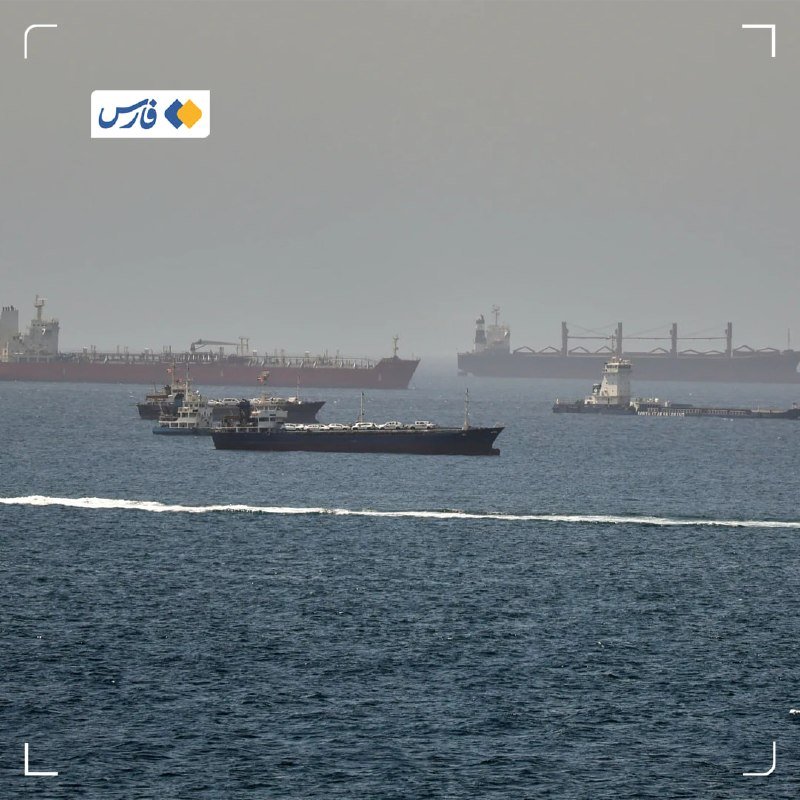
What is unfolding in Islamabad is less a single event than a four-sided architecture coming into focus. On one corner sits Tehran, seeking regional cover for a diplomatic opening with Washington. On the second sits the Pakistani civilian government, hosting and mediating. On the third sits the Trump administration, which on 23 June hailed what it called a "historic peace agreement" with Iran over the Strait of Hormuz and claimed 19 million barrels of oil had moved through the waterway in a single day. On the fourth sits Pakistan's military establishment, the durable institution that has historically shaped Islamabad's posture toward both Iran and the Gulf. The wire copy has treated this as a parade of personalities. The more durable story is the geometry.
The line Sharif drew
The most concrete signal of the day came from the Pakistani prime minister, and it was about what was not being discussed. Sharif told reporters that Iran's missile programme was neither on the table in the US–Iran negotiations nor in any associated memorandum of understanding. It was an unusually specific public fence, drawn by a mediator, around a piece of the Iranian state that Tehran considers non-negotiable. Pezeshkian reinforced the point from the other side of the podium: "We will never, under any circumstances, negotiate with anyone about Iran's defence potential." The two statements, delivered in the same room within minutes of each other, did useful work for both governments. They signalled to Washington that any deal brokered through this channel will have a ceiling. They signalled to Tehran that the host is willing to absorb domestic political cost to keep the talks alive.
That posture matters because the missiles are precisely the issue that has stalled previous rounds. By publicly narrowing the agenda before the technical track resumes, Islamabad has given itself a defined lane to operate in. The lane is narrow, but it is real: nuclear file, sanctions choreography, possibly Hormuz transit protocols. It is not the full Iranian deterrence portfolio.
The architecture Tehran is pitching
Pezeshkian's framing went beyond the bilateral. "We are extending a hand of friendship to Islamic countries," the Iranian president said, "to form a common understanding and create a new security architecture in the region." Press TV's coverage of the visit described the two governments as forging a "blueprint for Islamic economic integration," with a high-ranking Iranian delegation including the ministers of interior and foreign affairs arriving alongside the president. The phrase "new security architecture" is the one to watch. It is the kind of formulation Iran has used in the past when it wants to recast a bilateral relationship as a regional one, pulling Pakistan into a wider Shia–Sunni political frame at a moment when both capitals are recalibrating their relationships with the Gulf monarchies and with Beijing.
For Islamabad, the upside is obvious. A Pakistan that hosts and shapes a regional security conversation becomes a node in the diplomatic circuit, not a waypoint. The risk is that the architecture talk outruns the architecture itself, and Pakistan ends up hosting atmospherics without the institutional follow-through that would make the role durable.
The army chief, and what the wire didn't say
Notably absent from the published readouts is a Pakistani military voice. That silence is itself the story. Pakistan's army chief has historically been the decisive actor on both Iran policy and the management of relations with Washington; the civilian government hosts and speaks, the GHQ shapes the red lines. The fact that the day's choreography was carried by Sharif and Zardari, with Pezeshkian as the visitor, suggests the military is content to let the civilian face front a process it has already vetted. The institutional role of the army chief in sustaining any US–Iran technical track is precisely the kind of structural fact the wire copy tends to underweight, and the kind that will outlast a single press conference.
What comes next
The near-term test is procedural. If the technical track produces a concrete deliverable, a date, a sanctions waiver, a Hormuz transit mechanism, the Islamabad architecture will be vindicated. If the next round collapses over the missile question that Sharif publicly bracketed, Pakistan will be left holding a process that promised more than it could deliver. The interesting question is not whether Pezeshkian and Sharif produced a communique. They did. The interesting question is whether the four-sided geometry holds once the cameras leave, or whether the US–Iran track and the Iran–Pakistan regional pitch drift apart into the kind of parallel monologues that have defined the file for two decades.
Watch the army chief's travel schedule in the next fortnight. That is where the architecture will either get reinforced or quietly walked back.