Netanyahu vows open-ended Israeli presence in southern Lebanon, framing it as a 'security zone'
Speaking on 21 June 2026, the Israeli prime minister said troops would remain in southern Lebanon 'as long as necessary' — a posture Israeli commentators warn is temporary, fragile, and strategically dangerous.
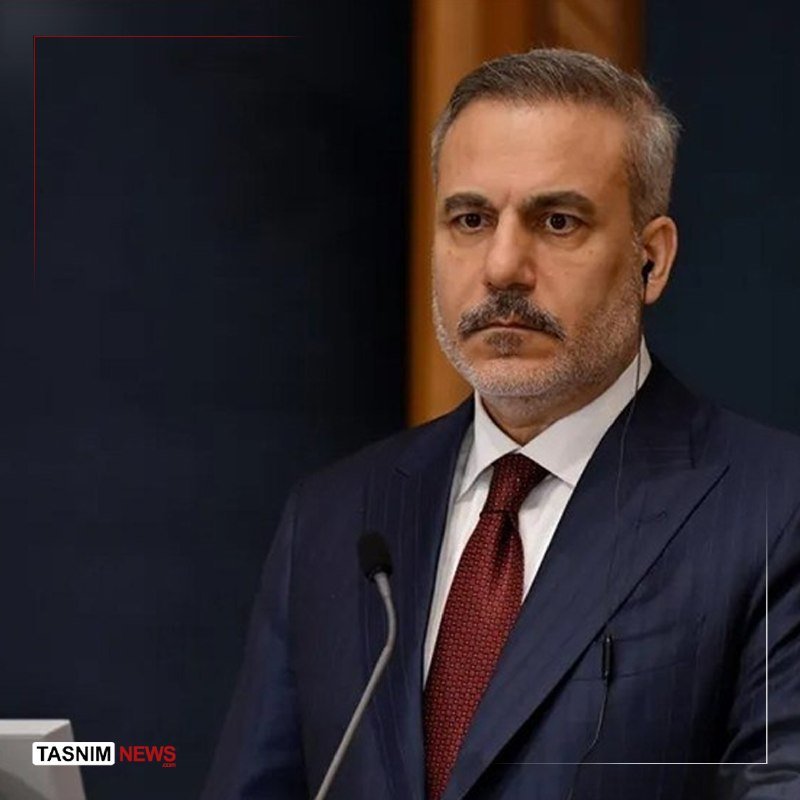
Israeli Prime Minister Benjamin Netanyahu declared on Sunday 21 June 2026 that Israeli forces would remain inside a buffer strip of southern Lebanon "as long as necessary," hardening a posture that, until now, the government has formally cast as a limited counter-operations deployment. The statement, carried in real time by Iranian state-linked outlet Fars News at 15:51 UTC and amplified by The Cradle at 15:30 UTC, is the clearest public articulation yet of an indefinite Israeli footprint on Lebanese territory — a position Beirut has never accepted and one that, on the Israeli side, prominent commentators are already describing as both temporary and structurally dangerous.
The choice of words matters. Netanyahu spoke of a "security zone in the south of Lebanon," not of a temporary "limited operation" or a "defensive perimeter." That phrasing repositions the deployment from a tactical response to a strategic asset: a piece of Lebanese real estate the Israeli prime minister intends to hold, by his own account, for an open-ended horizon. For a Lebanese state that has insisted since the November 2024 ceasefire on full Israeli withdrawal, and for an Iranian axis that treats the southern frontier as a forward line against Israel, the language is a provocation by definition.
What Netanyahu actually said
According to the Fars News wire at 15:51 UTC on 21 June 2026, Netanyahu told reporters: "As long as necessary, we will remain in the security zone of southern Lebanon. I firmly insist on this issue and nothing will change this decision." The same line was carried almost verbatim by The Cradle at 15:30 UTC. There is no published Israeli Prime Minister's Office transcript of an extended surrounding statement, and the framing — "security zone" rather than a defined depth, duration, or chain of command — is the operative part of the message. It tells the Israeli public that the deployment is a strategic choice, and it tells Beirut, Tehran, and Washington that any near-term drawdown is off the table.
That is a notable shift from the operating concept that defined Israel's autumn 2024 operations in the south. Throughout 2025, Israeli spokespeople described the presence as a calibrated set of outposts tied to the dismantling of Hezbollah infrastructure north of the Litani. Sunday's language collapses the distinction between "outpost" and "zone." It also collapses the distinction between a tactical hold and a strategic occupation.
The Israeli critique: temporary, but dangerous
The most pointed pushback in Israeli public life has come from Channel 12 reporter Amit Segal, who, in a Telegram post at 16:31 UTC on 21 June 2026, framed the policy as "temporary but dangerous." Segal's argument — familiar to readers of the Israeli security-commentary ecosystem — is that an Israeli zone of operation in southern Lebanon without a corresponding diplomatic horizon is a strategic liability by construction. Without an agreed end-state with the Lebanese state, and without a credible hand-off to a multinational force, the buffer becomes a recurring target: for Hezbollah reconstitution, for Iranian resupply, and for the kind of low-intensity attrition that historically defined the 1985–2000 South Lebanon occupation.
That history is the unspoken backdrop. Israel's previous eighteen-year presence in the same strip ended in a unilateral withdrawal in May 2000 under Ehud Barak, in circumstances that the country's security establishment spent two decades arguing over. The lesson most Israeli officers draw from that episode is that a force posture with no diplomatic terminus gets attrited, not maintained. The lesson Netanyahu appears to be drawing is the opposite: that withdrawal from a forward line, in the absence of a verified disarmament of the adversary, is a strategic gift.
What Lebanon and the Iranian axis hear
In Beirut, the response to "security zone" is essentially predetermined. Lebanon's official position, restated repeatedly by successive governments, is that any Israeli presence on Lebanese soil is an occupation and a violation of sovereignty and of UN Security Council Resolution 1701. The "as long as necessary" formulation makes that objection sharper: it explicitly strips the presence of the temporary character that the November 2024 framework tried to attach to it.
In Tehran, the framing on Fars News is more pointed. Fars cast the Israeli statement in the same breath as the broader Iranian narrative of an Israeli search for new forward lines after the degradation of its deterrent posture in 2024–2025. That is not a neutral read. It is the read the Iranian state wants its regional audiences to receive. The substantive point underneath it — that Israel is moving from episodic strikes to a standing deployment — is, however, the same point Israeli critics like Segal are making from a different direction.
Stakes, and what remains uncertain
If Netanyahu's words are taken at face value, the trajectory is clear. The buffer becomes a structural feature of the Israel–Lebanon border rather than a phase. The diplomatic cost is paid by Beirut, which must either negotiate an arrangement it has rejected in principle or absorb a continuing Israeli presence on territory it claims. The military cost is paid by the IDF, which must hold a forward line in terrain that historically resists static occupation. The political cost is paid by the Israeli government, which must explain to a war-weary public why the war that ended eighteen months ago has produced a permanent garrison on the other side of the border.
Several things remain genuinely unclear. The government has not published a defined depth for the "security zone," nor a defined force structure, nor an exit condition. There is no publicly available Israeli statement on whether the deployment is contingent on a wider diplomatic settlement with Beirut or on a separate track with Washington. And there is no Israeli official text, as of the 16:31 UTC Segal post, that addresses what happens if Hezbollah's presence in the zone is verified, rather than suspected, in the months ahead.
The most important uncertainty is the simplest one: how "as long as necessary" is defined. Without a metric — and the prime minister's office has, to date, declined to provide one — the phrase functions less as a policy and more as a placeholder for one. That is precisely the strategic shape Amit Segal was warning against, and it is the shape the prime minister's own words, on Sunday, sketched in public.
This piece sits inside Monexus's standing coverage of the Israel–Lebanon frontier. The wire reports the statement in real time; the analytical question is what the statement does to the operating concept of the deployment. Where Western wires carry Netanyahu's words, Monexus reads them against the Israeli security commentariat's own warnings — and against the regional reception the statement is designed to provoke.
Wire provenance
This editorial synthesis draws on the following public wire/social posts:
- https://t.me/amitsegal
- https://t.me/farsna
- https://t.me/thecradlemedia
- https://t.me/FotrosResistancee