The Lebanon Withdrawal That Wasn't: How a Single Day Collapsed the US-Iran Track
On 21 June 2026, an Iranian negotiating team walked out of talks in Switzerland, citing Israeli operations in Lebanon and US threats. The episode exposes how a single battlefield can dictate the tempo of an entire regional diplomacy.
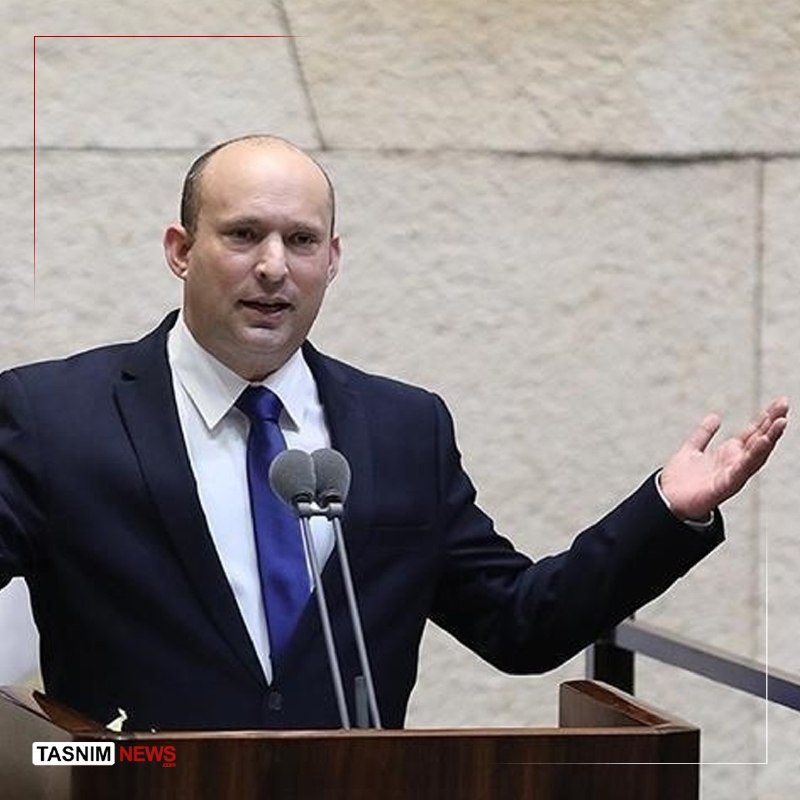
On the afternoon of 21 June 2026, Iran's delegation to the multilateral talks in Switzerland packed its briefcases and left the room. The walkout, confirmed by Iranian state media and relayed on social media within the hour, was the clearest signal yet that the diplomatic track between Tehran and Washington is being held hostage to events on a battlefield more than 2,000 kilometres away — in southern Lebanon, where Israeli forces continue operations against Hezbollah-linked infrastructure that Iran insists is its own red line.
What began as a goodwill gesture — a partial Israeli withdrawal from Lebanese territory reportedly brokered by the United States, according to an Iranian source cited by Middle East Spectator on Telegram at 18:22 UTC — collapsed inside six hours. By evening, Iranian negotiators were airborne, the talks were suspended, and the threat of a wider regional conflagration was back on the table.
The mechanics of the day matter, because they expose how a single piece of territory can dictate the tempo of an entire regional diplomacy — and how easily that diplomacy can unravel when the underlying military facts on the ground shift.
A partial withdrawal, a full precondition
The Iranian source relayed by Middle East Spectator at 18:22 UTC on 21 June described an American-brokered arrangement under which Israel would conduct a partial pullback from Lebanese territory as a "goodwill gesture." The same source was explicit that Tehran continued to insist on "an eventual full withdrawal from all occupied territories" — a formulation that reaches well beyond Lebanon and encompasses Iranian demands long articulated in multilateral channels, including the return of territories the Islamic Republic considers occupied.
The framing matters. A "partial" withdrawal is, by definition, an interim step; an "eventual full" withdrawal is the strategic end-state Iran says it is bargaining for. The two are not necessarily contradictory in negotiation theory, but they are radically different in their political weight. Washington, by the Iranian account, was offering the former; Tehran was demanding the latter. The gap between them is the entire diplomatic problem.
The walkout, in sequence
By 17:18 UTC, the social-media account Unusual Whales was reporting, on the basis of Iranian state media, that Iran's negotiating team had left the talks in Switzerland "in protest over President Trump's threats." The Iranian framing was that the threat posture from Washington — not the Israeli operations alone — was the proximate cause of the walkout.
An hour later, at 18:16 UTC, the Telegram channel @megatron_ron, citing Iranian sources, reported that Iran was suspending all negotiations with the United States unless Israel fully withdrew from Lebanon. The same dispatch warned that continued Israeli operations could prompt a much broader Iranian response — a formulation that left deliberately vague the threshold at which "continued" becomes unbearable, and the form a "much broader" response might take.
The sequencing is itself a story. A goodwill gesture was reported, then diluted by an ultimatum, then answered by a walkout, then escalated by a suspension of talks. Each step narrowed the available diplomatic space. By the end of the day, the Iranian position had hardened from "we want a full withdrawal eventually" to "there will be no talks at all until the full withdrawal happens first."
Why Lebanon, and why now
The Iranian insistence on linking the bilateral track with Washington to the situation in Lebanon reflects a strategic calculation that long predates the 21 June talks. Hezbollah's standing as the most capable Iranian-aligned non-state military force in the Levant gives Tehran a degree of leverage that it has been unwilling to trade away in exchange for sanctions relief or nuclear concessions. A deal that leaves Israeli forces operating against Hezbollah infrastructure at the Syrian-Lebanese border, or in the south, is, from Tehran's perspective, a deal that tolerates the slow decapitation of its forward deterrent.
Western and Israeli analysts would push back on this framing. Israeli security sources have consistently argued that operations in southern Lebanon target the reconstruction of Hezbollah's precision-missile and drone manufacturing capacity, infrastructure that the Israeli security establishment says was rebuilt in violation of the November 2023 understandings. The Israeli position is that any withdrawal must be conditional on verified demilitarisation, not on Iranian diplomatic convenience. Reuters, the BBC, and the Times of Israel have all carried Israeli sourcing in this vein; their framing treats Lebanese operations as a defensive necessity rather than as the expansionist posture Iran describes.
The structural point is that both readings are internally coherent, and that the diplomatic impasse of 21 June is a function of that incoherence at the level of regional order. A framework that gives one side the ability to link an unrelated bilateral track to a third country's battlefield can hold only as long as both sides prefer diplomacy to escalation. The events of 21 June suggest that, at least for the Iranian delegation, that preference has weakened.
The structural frame, in plain prose
What the day's events expose is a regional order in which the major powers have run out of separable files. The US-Iran nuclear track, the Israel-Lebanon security track, the Syria reconstruction track, and the broader question of Iranian regional posture are no longer tractable as independent negotiations. They have become a single file with several front doors. That makes the diplomatic architecture more fragile, because any one door can be slammed shut by an actor who only cares about the room behind it.
The corollary is that the actors with the most divergent threat perceptions — in this case Tehran and the Israeli security establishment — have a structural incentive to spoil the room in order to make the cost of the larger diplomatic undertaking higher than its expected benefit. Whether the suspension announced on 21 June is a tactical pause, an opening bid in a new round of escalation, or the genuine end of the present diplomatic cycle is a question the sources do not, at this point, permit a confident answer to.
The honest read is that Iran walked out, and that walking out is a posture with costs and benefits on both sides. The cost to Tehran is the loss of sanctions-relief leverage and the implicit admission that the bilateral track cannot move on its merits alone. The benefit is the restoration of bargaining credibility — the demonstration that Iranian red lines are red. The cost to Washington is the loss of momentum on the one regional file in which the United States has been perceived to have meaningful leverage. The benefit, if there is one, is that an Iranian walkout shifts the burden of escalation management back onto Tehran.
What remains uncertain
The single largest gap in the public record on 21 June is the question of what, exactly, the Iranian source meant by "partial" Israeli withdrawal, and how that partial withdrawal was being measured on the ground. Middle East Spectator's reporting describes the arrangement as a goodwill gesture; it does not specify the timetable, the geography, or the verification mechanism. Without those details, it is impossible to judge whether the Iranian delegation walked out over a real provocation or over a gap between what was announced and what was implemented.
A second area of uncertainty concerns the role of President Trump's reported threats. The Iranian state media framing, as relayed by Unusual Whales, placed the threats at the centre of the walkout rationale. No Western wire had confirmed the specific content of those threats by the time the Iranian delegation departed Geneva. If the threats were the kind of rhetorical escalations that have characterised the Trump administration's posture toward Iran since the start of his second term, the Iranian response is calibrated; if they were qualitatively different, the response looks more like over-reaction to a face-saving pretext.
A third area of uncertainty is the question of who, if anyone, holds the diplomatic file on 22 June. With the Iranian delegation having left Switzerland and negotiations formally suspended, the question of whether the track is parked, paused, or buried is one that no source item permits this publication to answer.
The stakes, plainly stated
The stakes of the 21 June walkout are not abstract. If the talks remain suspended into the autumn, the diplomatic window in which a successor to the 2015 framework could be negotiated will close ahead of the US election cycle. If they collapse entirely, the regional order that has held since the 2023 Gaza ceasefire will face a stress test it was not designed to pass. The Iranian threat of a "much broader" response, whatever form it might take, would in that scenario be set against an Israeli security establishment that has shown little appetite for tolerating Hezbollah reconstitution. Lebanon, already the most fragile of the regional states, would be the theatre in which that contest is fought.
The single most important fact about 21 June 2026 is that none of the parties to the talks — not Tehran, not Washington, not the Swiss hosts — appears to have a settled theory of how to relight the diplomatic engine once it has been switched off in public. The walkout was not a procedural event; it was a signal. Signals, once sent, have to be answered, and the answer, on the evidence available, is not yet in.
This publication's desk note: The wire on 21 June carried the walkout as a procedural event; the more durable story is the linkage — that a single battlefield, in southern Lebanon, has acquired the capacity to dictate the tempo of a much wider set of negotiations. Monexus treats the Iranian framing on its own terms, gives the Israeli security framing the weight it carries in mainstream Western and Israeli sources, and declines to attribute the collapse to any one party's bad faith without the documentary basis to do so.
Wire provenance
This editorial synthesis draws on the following public wire/social posts:
- https://t.me/Middle_East_Spectator
- https://t.me/megatron_ron
- https://en.wikipedia.org/wiki/Joint_Comprehensive_Plan_of_Action
- https://en.wikipedia.org/wiki/Hezbollah
- https://en.wikipedia.org/wiki/Switzerland%E2%80%93Iran_relations
- https://en.wikipedia.org/wiki/2023_Gaza_ceasefire
- https://en.wikipedia.org/wiki/Israeli%E2%80%93Lebanese_conflict
- https://t.me/Middle_East_Spectator
- https://t.me/megatron_ron
- https://en.wikipedia.org/wiki/Joint_Comprehensive_Plan_of_Action
- https://en.wikipedia.org/wiki/Hezbollah
- https://en.wikipedia.org/wiki/Switzerland%E2%80%93Iran_relations
- https://en.wikipedia.org/wiki/2023_Gaza_ceasefire
- https://en.wikipedia.org/wiki/Israeli%E2%80%93Lebanese_conflict