Israel weighs Lebanon troop pullback as cabinet holds the line in the south
Israel's public broadcaster says the military will begin thinning its presence in southern Lebanon in coming days. The defence minister publicly disagrees.
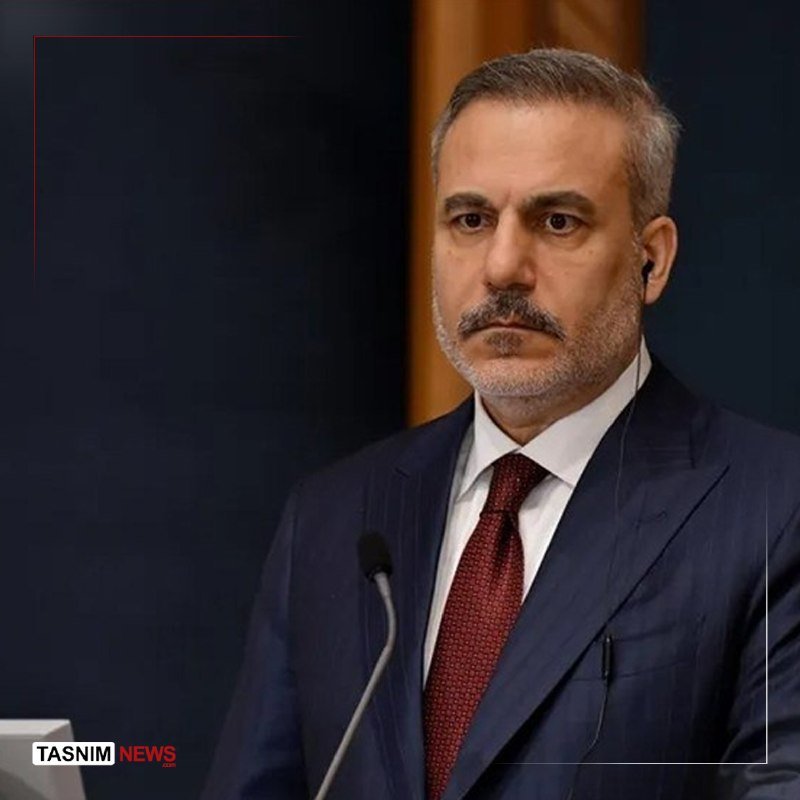
Israel's military will begin thinning its deployment in southern Lebanon "in the coming days," the country's public broadcaster Kan 11 reported on Sunday, 21 June 2026, citing the completion of most stated offensive objectives in the year-long cross-border campaign against Hezbollah. Within hours, Israel's defence minister publicly broke with that framing, telling journalists there was "no intention of withdrawing" from positions along the frontier while the Iranian-aligned movement retains significant capabilities north of the Litani.
The split signal — operational commander moving toward a drawdown, political leadership holding the line — is the clearest indication yet that the government in Jerusalem has yet to settle on a post-war posture on its northern border. The cabinet has begun lifting domestic restrictions that had been imposed on northern Israeli towns during the war, signalling that civilians displaced by rocket and drone fire can in principle return, even as the army keeps forward positions in place.
A cabinet divided against its own commanders
Kan 11's report, picked up by regional outlets including Middle East Eye and The Cradle, framed the reduction as a measured conclusion: most declared objectives met, residual missions handed to a smaller residual force. The framing fit a year in which Israeli planners had insisted the campaign's purpose was the destruction of Hezbollah's forward infrastructure in the border belt, not the indefinite occupation of Lebanese territory.
The defence minister's intervention, reported by Middle East Eye's live coverage on the evening of 21 June at 20:11 UTC, cut directly against that read. The minister was explicit that withdrawal was not on the table until guarantees were in place — language consistent with the harder line that has defined Israeli ceasefire diplomacy with Beirut since a November 2024 arrangement first paused the fighting. The two statements issued within the same news cycle show a government that wants the political dividend of "the north is safe to return to" without committing to the operational cost of actually leaving the buffer zone.
Why the southern Lebanon question matters beyond the border
The southern strip between the Blue Line and the Litani River has been the explicit flashpoint of Israel–Hezbollah confrontation since the 1990s. UN Security Council Resolution 1701, the architecture that governed the ceasefire framework in place from 2006 until late 2023, placed the area off-limits to Hezbollah military assets and to Israeli ground forces. The current Israeli presence is the first sustained ground deployment in that zone in nearly two decades.
A drawdown would represent the first credible sign that Israel is willing to revert to the 1701 model — a framework Washington and Paris have publicly endorsed as the basis for a longer-term arrangement. A refusal to draw down, by contrast, signals that Jerusalem intends to maintain a forward security belt that the Lebanese state is too weak to police on its own, and that Beirut's army will not be given the room to take over. Either outcome reshapes the Lebanese state's internal balance of power between its army, the UN Interim Force in Lebanon (UNIFIL), and residual Hezbollah structures in the south.
The Iranian shadow over the ceasefire calendar
The troop-reduction question is unfolding against a diplomatic calendar that includes the US–Iran accord due to be signed in Geneva on Friday, 26 June 2026, according to Middle East Eye's same live blog. That makes the Lebanon question not a stand-alone military decision but a sub-clause of a wider regional settlement that also touches the Lebanese file. Israeli decision-makers have framed their operations against Hezbollah for the past year as inseparable from the wider contest with Tehran's regional architecture — the so-called "unity of fronts" doctrine that linked Hezbollah's force posture in Lebanon to Iranian decision-making.
If Geneva delivers a written understanding, the political incentive to leave southern Lebanon grows: Israel can argue that Hezbollah's resupply and reconstitution has been leashed at the Iranian end, making a permanent forward presence redundant. If Geneva stalls or collapses, the Israeli political logic for staying put strengthens — the buffer becomes insurance against a re-arming cycle the cabinet does not believe has been externally constrained.
The sources disagree on what "reduction" means
The reporting that reached readers on Sunday is not internally consistent. Kan 11, the Israeli public broadcaster, presented troop reduction as a near-term operational reality — "in the coming days." The defence minister, on the same day, framed the conditions for any withdrawal as not yet met. Middle East Eye carried both signals without resolving them; The Cradle's Telegram relay reproduced the Kan 11 framing.
That gap matters. A troop reduction inside Israeli doctrine can mean anything from a quiet rotation of companies back across the border to a formal redeclaration of the 1701 framework to a smaller but permanent forward presence. Until the defence ministry publishes binding force-level figures, the gap between "no intention of withdrawing" and "reducing presence in the coming days" is the policy itself — and it is being set in real time, in public, by officials who do not agree with each other.
What to watch this week
Three indicators will determine whether the cabinet's hard line or the general staff's drawdown plan prevails by the end of June 2026. First, the actual force levels the IDF publishes for the southern sector — units, brigades, battalion positions. Second, the text of the Geneva accord on 26 June, particularly any clause that touches Lebanese border arrangements or Hezbollah disarmament verification. Third, the domestic Israeli debate over reconstruction aid to the northern communities most affected by displacement, which will set the political ceiling on how long a residual presence can be defended in public.
If the general staff wins, the practical implication is a return to the pre-October 2023 status quo ante — a Lebanon file handled through 1701, UNIFIL, and Lebanese-army policing, with the Israel–Iran contest conducted elsewhere. If the cabinet wins, southern Lebanon becomes a permanent forward security zone, the Lebanese state is denied the sovereignty dividend of its own territory, and the next Hezbollah reconstitution cycle begins inside a buffer that Israel has publicly committed to hold.
Monexus framed this piece against the dominant Israeli wire on the troop-reduction claim (Kan 11 via The Cradle), against the official Israeli counter-claim on withdrawal conditions (Middle East Eye's live blog carrying the defence minister's statement), and against the wider Geneva timeline that will, in practice, decide which reading carries the week.
Wire provenance
This editorial synthesis draws on the following public wire/social posts:
- https://www.middleeasteye.net/live/live-us-and-iran-confirm-peace-accord-signing-set-friday-geneva
- https://t.me/thecradlemedia