A photo-op refused in Switzerland: what the Iranian walkout tells us about the state of US-Iran diplomacy
Iran's delegation refused a joint photo with the Americans in Geneva. The optics say more than the communiqués.
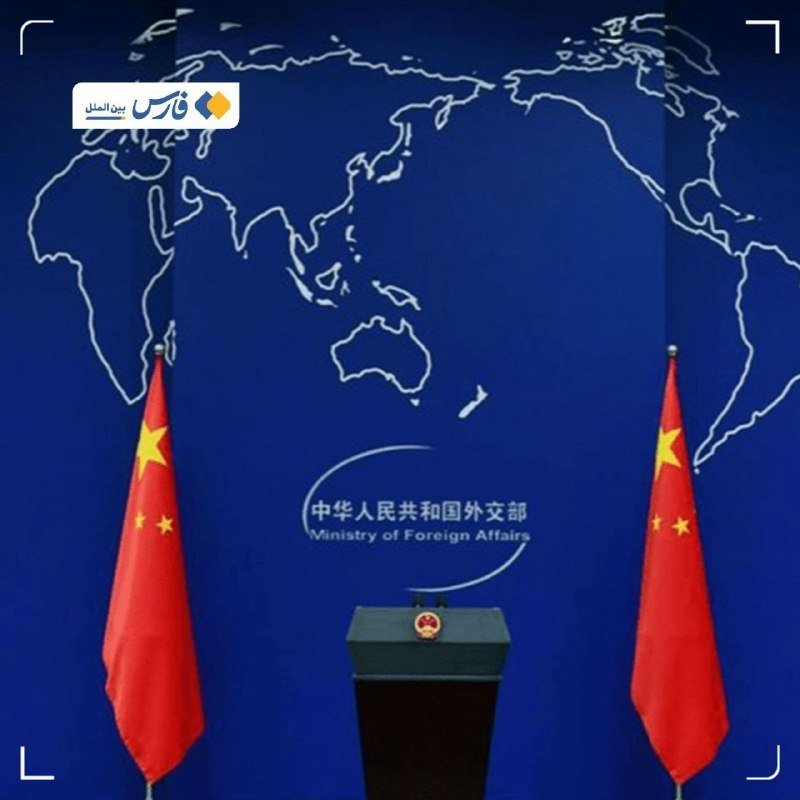
At 20:09 UTC on 21 June 2026, an image out of Switzerland said more than any communiqué so far. The Iranian delegation, midway through a fresh round of talks with American counterparts, refused to take part in a joint photo session and a joint press conference with the US side. Video circulated by the X account @SprinterPress showed the moment; AFP, cited in the same thread at 19:40 UTC, confirmed that negotiations were continuing regardless. The walkout was not a walkout from the table. It was a walkout from the pageantry, and pageantry, in this channel, is where most of the diplomatic signal actually lives.
A refusal to share a frame is not a breakdown of talks. It is a statement about who is willing to be seen next to whom, and on whose terms. Geneva is hosting the encounter because both governments need a venue that is neither Washington nor Tehran. The Iranians arrived earlier in the day, per a 00:28 UTC wire from the Polymarket-affiliated account that flagged their landing. The Americans followed. What was supposed to be the visible handshake — the still photograph that every foreign ministry plants in its own press cycle — did not happen. The substance, by contrast, is still being negotiated behind closed doors.
What the refusal signals
In any two-sided negotiation between governments that do not formally recognise each other, the joint photo is a deliverable. It is the artefact that proves to domestic audiences, to allies, and to markets that the encounter was real. When one side refuses it, three readings are available, and all three are likely operating at once.
The first is procedural. Both delegations are working off different drafts of what a shared appearance would communicate. One side wants the photo to look like the beginning of a deal; the other wants it to look like the beginning of a conversation. A refusal to be photographed together freezes the encounter at the second, lower-status category — and that is rarely accidental.
The second is substantive. Geneva is, by long diplomatic convention, where sensitive bilateral tracks get tested before they are ready for the camera. If Iran's negotiators believe that any image of smiling proximity would be read at home as concession — or, in Washington, as momentum the administration can spend politically — then the cost of being seen together exceeds the cost of being seen apart. Walking away from the lens is, in that sense, a way of keeping the substance alive by starving the optics.
The third is audience-facing. Iran's negotiating posture has long treated the optics of parity with the United States as itself a deliverable. Refusing the shared frame reasserts that parity, on Iranian terms, before the substance is settled. It also gives Tehran a story to tell domestic audiences that does not depend on what, if anything, gets agreed in the room.
Why this matters beyond Geneva
The Western wire coverage of US-Iran talks tends to treat any meeting as movement toward a deal, and any refusal as a breakdown. That framing flatters the assumption that diplomacy is a linear track from hostility to accord. It usually is not. Between states that do not recognise each other, diplomacy is more often a process of calibrating the cost of continued non-relationship — sanctions pressure, nuclear latency, regional posture, energy markets, hostage files — until one side or both decide that the cost of talking has fallen below the cost of not talking.
A photo-op refused in Geneva does not move that ledger by itself. It does, however, reset the political cost of pretending a deal is imminent when one is not. For an American administration, the absence of a shared image removes the easiest piece of evidence that talks are "going well." For Tehran, the same absence removes the easiest piece of evidence that engagement has been conceded. Both sides lose a cheap rhetorical win, which is often the condition under which the actual hard work begins.
The structural reality is that neither government has an interest in a public collapse of this track right now. Washington is managing a regional file in which Iranian behaviour is one variable among several. Tehran is managing a sanctions environment and an internal political economy that rewards a posture of strength without rewarding a posture of surrender. The shared interest is in continuing to meet without yet producing the kind of image that locks either side into a position it cannot walk back. Geneva, on the evidence of 21 June, is producing exactly that: meetings without pictures, talks without a joint press conference, and a story that the world's wires will have to write from fragments rather than from a podium statement.
What remains uncertain
The thread does not yet specify what was on the table in the closed session, nor which Iranian and American officials are leading each delegation. AFP's confirmation, as relayed in the 19:40 UTC item, is that negotiations are continuing; that is a thin reed, but it is the one the wires are presently offering. Whether the photo refusal was a coordinated Iranian position or a tactical move by a single official is also not specified in the source material — a relevant distinction, because the former signals a negotiating strategy and the latter signals bureaucratic friction. Until either side reads out a more detailed account, the most that can be said is that the cameras were told no, and the talks were not.
Stakes if the trajectory holds
If the pattern of meetings-without-images continues into the next round, two outcomes are plausible. The first is a slow, unglamorous de-escalation track in which both governments accept that the absence of a public handshake is the price of any private progress. The second is a hardening of position on one or both sides, in which the refusal to share a frame becomes a refusal to share substance, and the channel narrows to crisis management rather than deal-making. The next forty-eight hours of wire traffic from Geneva will tell us which one we are in. For now, the most accurate thing to say is the most boring one: the talks are continuing, and the photo did not happen.
This publication treats the Iranian-American channel with the same analytical weight we apply to any other bilateral file: neither as a procession toward inevitable accord nor as theatre heading for collapse. The story today is what the cameras were not allowed to see, and what that refusal tells us about the price of being seen together.
Wire provenance
This editorial synthesis draws on the following public wire/social posts:
- https://t.me/sprinterpress
- https://x.com/sprinterpress/status/2068788393383735296
- https://x.com/polymarket/status/2068696075943170048