Graham Floats a Strait of Hormuz Seizure If Iran Deal Collapses: Reading Between the Lines of a Sunday Talker
On CBS's Face the Nation, Senator Lindsey Graham sketched a cascade scenario in which a failed Trump-era deal with Tehran ends in a US seizure of the Strait of Hormuz and a strike on Iran if Hezbollah strikes Israel. The remarks are the most explicit articulation yet of what failure looks like inside the administration.
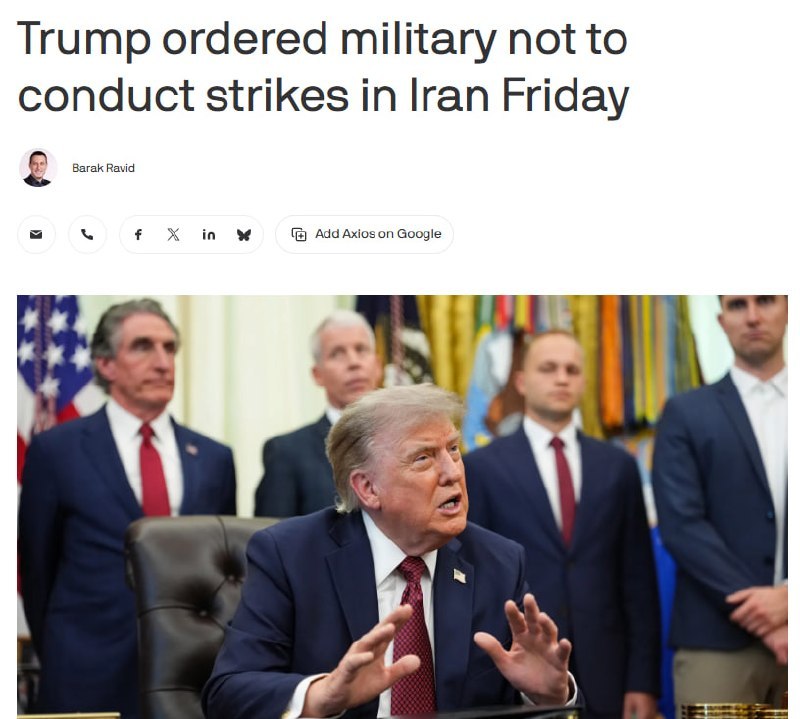
On the morning of 21 June 2026, Senator Lindsey Graham of South Carolina sat down with CBS's Face the Nation and laid out, in unusually explicit terms, the chain of events he expects to follow if the Trump administration's ongoing nuclear track with Iran collapses. According to multiple transcriptions circulated within hours of broadcast, Graham told host Margaret Brennan that he had spent four and a half hours with President Donald Trump the previous Friday, and that his read of the meeting was blunt: "If this deal fails, President Trump is gonna take the Strait of Hormuz over by force." He then added a parallel conditional — if Hezbollah attacks Israel, Graham said, "we will attack Iran" — folding a regional flashpoint into what is officially a nonproliferation negotiation.
The interview is the clearest public articulation yet, from a sitting US senator, of what the failure mode of the current Iran track looks like inside the Republican mainstream. It also illustrates how thin the boundary has become between negotiating posture and threats of force in the Trump-era Middle East file.
A cascade, drawn in two sentences
The architecture of Graham's warning is a chain of conditionals. First: the diplomatic track with Tehran fails. Second: in the senator's telling, that failure translates into a US naval move on the Strait of Hormuz, the chokepoint through which roughly a fifth of global oil traffic passes each day. Third: should Hezbollah — the Lebanese movement backed by Iran — strike Israel, that strike, in Graham's framing, triggers a US military response against Iranian territory itself.
The first two steps are widely understood in Washington as the implied threat matrix behind any maximum-pressure posture toward Tehran. The third is more striking. It ties a non-state actor's behaviour directly to a US strike decision on a state sponsor, collapsing the usual buffer of Israeli action followed by a US supplemental response. Graham presented it as seamless: Hezbollah strike → US strike on Iran.
He did not specify a triggering threshold, did not name an operational timeline, and did not indicate whether he was relaying administration policy or his own reading of the president's inclinations. The CBS exchange, as captured in the broadcast and as transcribed by Telegram channels including Open Source Intel and The Cradle within hours, gives the public more of a vibe than a plan. But the political signal is loud: failure of the nuclear track is not being priced inside the Senate as a return to diplomacy. It is being priced as the opening of a wider war.
The Strait, and what a seizure would actually mean
The Strait of Hormuz is the narrow maritime passage between Iran and the Arabian Peninsula, bordered by Oman to the south and the United Arab Emirates to the west, connecting the Persian Gulf to the Gulf of Oman and the Arabian Sea. Closing it, or attempting to control it by force, is the textbook definition of an energy shock. Oil markets would reprice within hours; insurance war-risk premiums on Gulf shipping would spike; tanker traffic would reroute or stop.
Graham's choice of the Strait as the symbolic target is deliberate. It signals that the cost of Iranian non-compliance is not abstract — it is measured in barrels and dollars. It also signals that the administration, in Graham's reading, views naval dominance over the waterway as the lever to pull before reaching for air strikes on the mainland. The implicit sequencing — chokepoint first, country second — is closer to a coercive blockade than to a war plan, even if Graham's parallel Hezbollah conditional points back toward strikes on Iranian soil.
That two-step framing matters for markets and for allies. A blockade posture, even one announced rhetorically, raises the immediate question of how Gulf states, China (the largest single buyer of Iranian crude and a major customer of Saudi and Gulf oil), India, and the European Union would react. None of those governments have publicly endorsed such an operation. The senator's confidence that Trump would "take the Strait of Hormuz over by force" sits in tension with the multilateral coalition any such operation would require.
Counterpoint: what is missing from the CBS frame
The cascade Graham described is not a forecast. It is one senator's read of a 4.5-hour conversation. Several points of friction deserve to be named.
Iran's negotiating position has not publicly broken. Tehran has, through the foreign ministry and through outlets including PressTV, Tasnim, and Mehr News, signalled willingness to continue talks under terms that would constrain enrichment capacity in exchange for sanctions relief. The Iranian state framing — that the current track is a serious, if adversarial, negotiation — is not consistent with the imminent-collapse timeline Graham sketched. The Iranian position is, of course, shaped by state-aligned media, and its public statements should be read as both strategic and performative. But the gap between Tehran's stated posture and Graham's prediction of failure is large enough to be worth flagging.
The Hezbollah conditional is even more contested. The Lebanese movement's posture toward Israel in mid-2026 has been calibrated, publicly, around the ceasefire framework that took hold after the 2024 escalation. A Hezbollah strike on Israel sufficient to trigger the Graham scenario would itself be a major break from the present equilibrium. The senator's claim that "if Hezbollah attacks Israel, we will attack Iran" treats that break as the modal outcome rather than the tail. That is a meaningful assumption to bake into the threat.
The force-sequencing inside the Strait of Hormuz is also being debated. The Iran-focused outlet Iran International has, in recent reporting, framed the current negotiation as a last credible chance to constrain Iran's program without military action; the Iranian-state framing on PressTV has argued the opposite — that any collapse of talks would be the fault of US maximalism, not Iranian intransigence. Both should be read as interested parties. Neither, however, supports the clean sequencing Graham laid out on Sunday morning.
A wider frame: how threats talk travels in 2026
Strip the specific actors out and Graham's interview is a textbook example of how an administration communicates red lines in a media environment that flattens everything into a clip. A four-and-a-half-hour meeting between a senator and a president produces, on a Sunday show, a forty-second cascade of conditionals. Within two hours, that clip is in Persian-language Telegram channels (Fars News International carried the line about attacking Iran if Hezbollah strikes Israel); in regional outlets (The Cradle, Abu Ali Express); and in the open-source aggregation ecosystem (Open Source Intel, Clash Report) that now sits upstream of diplomatic reading rooms.
The structure is familiar from other files in this administration: a maximalist outcome is floated on a friendly outlet; it circulates through friendly press; it becomes the implicit cost of non-compliance in the negotiation. The diplomatic effect is real — Tehran's negotiating team now has to price in the possibility, however improbable, that the senator's read of the meeting is accurate. The political effect is also real — Graham, who has spent years as one of the chamber's most hawkish voices on Iran and who has visited the region repeatedly, is performing alignment with the White House for a domestic audience while signalling to allies that the floor of acceptable outcomes has dropped.
The structural question this raises is whether the negotiation can survive its own threat architecture. A deal that is publicly anchored to a specific failure mode — Strait of Hormuz seizure, US strikes on Iran — is a deal whose acceptance price for Tehran has been set by the cost of refusal. Diplomats working the file will recognise the pattern from previous rounds.
Stakes, in concrete terms
If the diplomatic track does collapse along the lines Graham described, three sets of actors face immediate exposure. Gulf oil producers and the OPEC+ coordination framework would see a supply shock in their own backyard. China and India, the two largest importers of Iranian crude outside the sanctioned-channel economy, would face an immediate energy-security decision: reroute at premium prices, or hold inventory through the disruption. And the US military, which has maintained a continuous carrier presence in the Gulf for decades, would absorb the operational burden of any Strait action, with the attendant cost in personnel, matériel, and political capital.
The countervailing interest — the one Graham's interview does not name — is that a forced takeover of the Strait, even a partial one, would also break the working multilateral sanctions regime that has constrained Iran's export capacity for the past several years. Tehran's revenue depends on a narrow set of legal and quasi-legal buyers. A military operation would, by design, disrupt that channel. Whether that disruption produces a more compliant Iran or a more fortified one is the question the negotiation is supposed to answer. Graham's interview suggests the White House, at least in his telling, is no longer confident in the negotiation as the answer.
What remains genuinely uncertain
Three things have not been independently verified in the public record. First, the precise content of Graham's 4.5-hour Friday meeting with the president. Senators meeting with the White House is normal; the duration is not unusual; the substantive briefing, if any, is not on the public record. Second, the administration's actual contingency planning for Strait of Hormuz operations, which exists at the level of standing military options and which Graham's remarks neither confirm nor disconfirm. Third, Tehran's internal posture toward the current track, which is read out through state-aligned media but is not directly knowable from those sources.
For now, the public has a senator's sketch of a failure cascade, four transcriptions of a Sunday show, and a negotiation that is, in official terms, still live. That gap — between the announced failure mode and the still-open diplomatic track — is the space in which the next few weeks of Iran policy will be made.
This article draws on transcripts circulated by Open Source Intel, The Cradle, Clash Report, Fars News International, and Abu Ali Express from Graham's 21 June 2026 appearance on CBS News's Face the Nation. Where claims rely on those channels, Monexus flags them as originating in state-adjacent or aggregator outlets rather than primary US-wire reporting. The Iran International and PressTV citations are flagged similarly. The piece treats Graham's conditional chain as a political signal, not a forecast.
Wire provenance
This editorial synthesis draws on the following public wire/social posts:
- https://t.me/s/osintlive
- https://t.me/s/thecradlemedia
- https://t.me/s/ClashReport
- https://t.me/s/FarsNewsInt
- https://t.me/s/abualiexpress
- https://en.wikipedia.org/wiki/Strait_of_Hormuz
- https://en.wikipedia.org/wiki/Hezbollah
- https://en.wikipedia.org/wiki/2024_Israel%E2%80%93Lebanon_ceasefire