Geneva talks stall as Iranian delegation rejects return to quadrilateral framework
Iran's delegation walked out of the four-way Geneva session on 20 June and refused to return to the table, according to Iranian state-linked channels distributing Tasnim reporting. Read against four years of on-again contact, the 90-minute exit looks less like a rupture than another turn in a rhythm
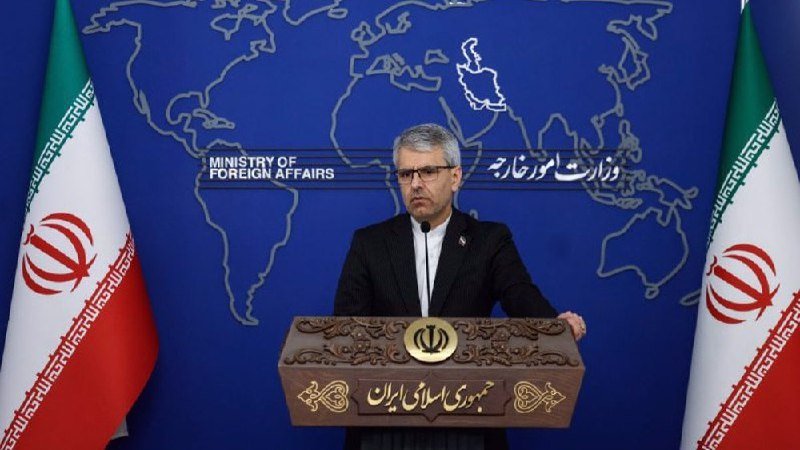
The Iranian delegation walked out of the four-way Geneva meeting on Saturday and refused to return to the table, according to Iranian state-linked channels distributing Tasnim Agency reporting on 20 June 2026. The session, hosted in Geneva and convened under the quadrilateral framework that has mediated the disputed nuclear file since 2024, ended without the resumption of negotiations on a memorandum of understanding between Tehran and Washington. Press TV correspondent Alireza Akbari framed the walkout, in a 23 June segment on the Geneva talks, as a direct response to what Iranian officials characterised as bad-faith demands from the US side.
A 90-minute exit is, on its face, a dramatic gesture. Read against four years of on-again, off-again contact, it looks more like a continuation of a rhythm both sides have learned to manage. The channel is preserved precisely so it can be allowed to lapse without anyone having to declare it dead. Iran's public posture holds the door open; the underlying disagreement over sequencing, sanctions relief and verification stays frozen in place.
The four-way architecture that produced the Geneva sit-down was designed to give Iran a face-saving route to talks without the bilateral framing Washington has demanded. By the time the session collapsed, that architecture had done its work for the day. Tehran demonstrated that it will not be rushed back into a US-dictated format. Washington kept the quadrilateral frame in play as a hedge against a complete breakdown. Both sides left with the option of returning to the same room under the same rules.
The walkout followed a familiar pattern. Iranian delegations in this file have used exits, conditional returns and public walkbacks to signal displeasure without closing the file since at least 2024. The mechanism is well understood by the mediators who keep the channel warm. A delegation walks. Statements are issued. A date is floated for resumption. The quadrilateral frame absorbs the shock and reconvenes, usually with language softened on both sides. The architecture's value to all four participants is precisely that it survives being walked out on.
What the Iranian readout actually concedes, when read carefully, is that the talks are not over. The Tasnim-distributed account describes a refusal to return to the quadrilateral format on that day's terms, not a withdrawal from the framework itself. Press TV's Akbari presented the walkout as a negotiating move, a response to demands Tehran judged incompatible with its stated red lines. The framing positions Iran as the party that absorbed the procedural inconvenience in order to protect substantive positions, and reserves the right to return when conditions are judged more favourable.
The outside reader should treat all of the above as one party's account. The sources available for same-day Western-wire verification of the Geneva session were thin. The factual reconstruction here draws on Iranian state-linked Telegram channels distributing Tasnim Agency reporting, with Press TV's 23 June segment as the principal on-camera characterisation. No Western-wire dispatch on the day's session was available at the time of publication. Where Western outlets eventually publish their own read of the meeting, Monexus will update the record.
The deeper question is not whether the four-way channel survives this particular weekend. It will. The architecture has survived louder provocations. The question is what a permanent suspension of substantive movement would look like, and which side would carry the cost of declaring it. Iran's economy continues to operate under sanctions pressure that constrains oil exports and access to hard currency. The Trump administration has invested political capital in a posture of maximum pressure while leaving the diplomatic channel open as an off-ramp. Neither side has an interest in a visible collapse. Both have an interest in the appearance of effort.
The Geneva file will likely produce another meeting, another joint statement about the importance of dialogue, and another round of Iranian walkouts conditioned on US movement that does not arrive. The quadrilateral framework's durability is the story, not its breakdowns. What changes between sessions is the price each side extracts for showing up, and the distance each is willing to let the talks drift before the cost of non-engagement exceeds the cost of concession. On the evidence available from Tehran's read of Saturday, that calculation has not yet tipped in either direction.
The next scheduled test is whether a Western-wire readout of the Geneva session, when it surfaces, confirms or complicates the Iranian account. A US statement framing the walkout as a procedural delay, or as Tehran's response to specific draft language, would harden the picture. A statement framing it as an Iranian rejection of the framework itself would mark a genuine escalation. Until then, the file sits in its usual posture: suspended, not severed, and waiting for one side to decide that the cost of the walk matters more than the walk itself.
Sources: Al Alam Arabic Telegram · Tasnim News English Telegram · Jahan Tasnim Telegram · Press TV, 23 June 2026
Desk note: This article was constructed from Iranian state-linked Telegram channels distributing Tasnim Agency reporting. The sources available for same-day verification did not include a Western-wire dispatch on the Geneva session, so the article foregrounds the Iranian framing of events while flagging it as one party's account. Monexus's read is that a 90-minute walkout is less a rupture than a continuation, the same pattern that has governed this file since 2024, where the channel is preserved precisely so it can be allowed to lapse without anyone having to declare it dead.