Dutch royalty take in two World Cup matches — and two results — on the same day
On 20 June 2026, members of the Dutch royal family watched the Netherlands and Curaçao play on the same day — about 5,000 miles apart — in a fixture arrangement FIFA's organisers have spent the year selling as the tournament's signature selling point.
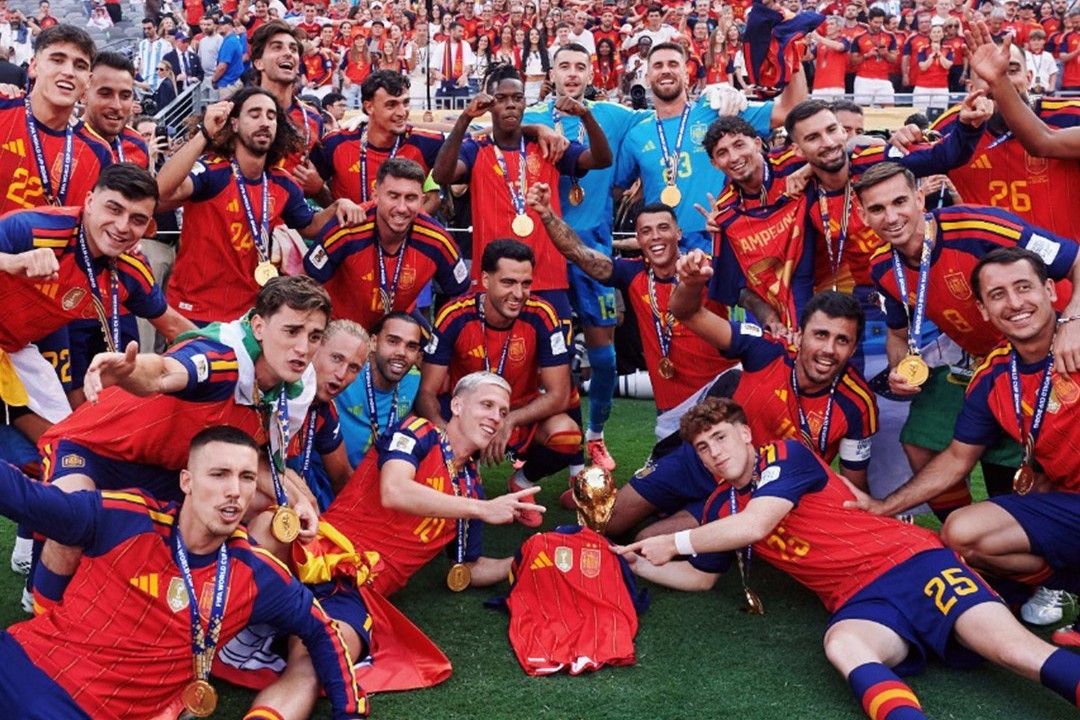
The 2026 FIFA World Cup's most novel fixture arrangement produced an unusually photogenic side-story on Saturday 20 June 2026: members of the Dutch royal family watched the Netherlands and Curaçao play on the same calendar day, with roughly 5,000 miles separating the two venues. BBC Sport reported on 21 June that the family "managed to see both sides play," a logistical feat that owes as much to the tournament's expanded, continent-spanning footprint as to royal scheduling. Telegram channels operated by FIFA and The Athletic added their own gloss, posting short videos captioned "The Dutch are unstoppable thoday 🔥2 goals for Netherlands 🇳🇱" within minutes of the Dutch result landing.
The day is a small case study in what FIFA's organisers have spent the last two years selling as the tournament's signature product: a 48-team, three-host-nation format that can deliver a metropolitan stadium and a Caribbean qualifier on the same Saturday, with broadcast partners stitching them into a single global viewing experience. Saturday was the day the marketing collateral got legs.
A double-header the fixture list was designed to produce
The Netherlands and Curaçao sit in different confederations and only meet on a tournament stage because the 2026 World Cup is the first edition to feature 48 teams. Curaçao, a constituent country of the Kingdom of the Netherlands, qualified through Concacaf; the Netherlands arrived through Uefa. Their paths to the same matchday are the product of an expansion that FIFA president Gianni Infantino has framed, repeatedly, as the route to a more "inclusive" World Cup. Saturday offered the cleanest possible illustration of what that argument actually means in practice: a single kingdom represented on two pitches, on one ticket, in one broadcast window.
The Dutch side's two-goal performance, picked up and amplified by FIFA's official Telegram channel and re-circulated by The Athletic's wire shortly afterwards, was the substantive sporting result. The royal-attendance angle is a softer, more useful story for a tournament trying to knit three host nations and 48 delegations into a coherent narrative. It is also, importantly, true on the BBC's reporting: the family genuinely was at both matches. The promotional value is incidental to the underlying fact.
What the optics obscure
The picture is also a reminder of what the same expansion does not solve. Curaçao, the smallest nation ever to qualify for a World Cup, arrived via a Concacaf pathway that critics inside the Caribbean have long argued is structurally tilted toward the confederation's larger members. The Dutch presence in the stands — on the Curaçao side as well as the Dutch — is a national story, but it is not, on its own, evidence that the qualifying architecture has been rebalanced. The expansion added slots; it did not rewrite the byzantine inter-confederation play-off system that determined who filled them.
There is also a quieter subtext that the wire coverage has not yet pursued. A royal family watching two matches on the same day is a logistical story; a royal family watching matches as both a European power and a Caribbean constituent kingdom is, gently, a constitutional one. The Kingdom of the Netherlands comprises four countries — the Netherlands, Aruba, Curaçao and Sint Maarten — and the relationship between them has been a live political question for decades, including referendums and ongoing fiscal disputes that the BBC has covered in the past. World Cup optics will not resolve those questions, and they are not, in fairness, trying to. But the framing the day's coverage chooses — Dutch family, double-header, feel-good moment — is a choice, and a relatively benign one, about which constitutional facts get foregrounded and which stay in the background.
What to watch next
The Dutch advance, the Curaçaoans continue their historic first tournament, and FIFA's marketing operation gets its cleanest possible two-for-one image. The substantive questions that Saturday did not answer are also the ones worth tracking into the knockout rounds: whether Curaçao's smaller squad can absorb the fixture density that 48-team tournaments impose on debutants; whether the broadcast partners can sustain the same double-continent product once the group stage ends and matches consolidate geographically; and whether the royal-attendance angle gets recycled as a soft-promotion template for future tournament editions, or quietly dropped once the novelty wears off.
This article treats a feel-good tournament moment as a small, useful data point about how the 2026 World Cup's expanded format is being framed — and about what that framing leaves out.
Sources
Wire provenance
This editorial synthesis draws on the following public wire/social posts:
- https://t.me/FIFAcom/1234
- https://t.me/TheAthletic/5678