Vance lands in Switzerland as US-Iran talks convene under a tightened ceiling
Vice President J.D. Vance landed in Switzerland as US and Iranian negotiators, joined by Qatari and Pakistani prime ministers, announced an agreement on the arrangements for future talks, with Tehran claiming frozen-asset release, oil sanctions relief, and Strait of Hormuz administration as already
Vice President J.D. Vance touched down in Switzerland on Monday as American and Iranian negotiators sat down for a fresh round of talks shaped by what Tehran is already calling a concluded understanding on frozen funds and oil sanctions. The meeting, held under a deliberately compressed deadline and a diplomatic format that now includes the Qatari and Pakistani prime ministers, has begun to harden into an arrangement whose terms Washington has not publicly ratified and whose architecture stretches well beyond the nuclear file.
The first day of Swiss talks produced something more durable than a communiqué: a procedural skeleton for future negotiations. Iran's Deputy Foreign Minister Kazem Gharibabadi, head of Tehran's technical negotiating committee, announced late on Monday that the two sides had reached agreement on "arrangements for the next round of negotiations," with Iranian Parliament Speaker Mohammad Bagher Ghalibaf joining Foreign Minister Abbas Araghchi on the Iranian side and Vance heading the American delegation. The Qatari and Pakistani prime ministers, Mohammed bin Abdulrahman Al Thani and Shehbaz Sharif, will supervise future rounds, according to Ghalibaf's office, a structure that converts what began as a bilateral channel into a five-power quasi-guarantor arrangement anchored in the Gulf and South Asia.
What the corridor already contains
Two of the most consequential elements are not on the public schedule. According to Iran's state broadcaster, the release of Iranian frozen assets abroad and the lifting of oil sanctions were "finalized" during the Swiss talks, a phrasing that frames Tehran's economic relief as a settled deliverable rather than an opening gambit. Ghalibaf, presenting the Iranian parliament's position, added that the Strait of Hormuz "will be administered by Iran according to international law," a declaration that reframes one of the world's most critical energy chokepoints as a sovereign Iranian jurisdiction under a contested reading of maritime convention. Oman's foreign ministry, in a parallel readout, confirmed "constructive" discussions with the Iranian delegation on a memorandum of understanding and the Strait, suggesting that Muscat is positioning itself as a logistical intermediary for any Hormuz arrangement.
Traders had entered the week pricing in a possible Iranian commitment to halt uranium enrichment, a concession that would have meaningfully de-escalated the nuclear track. By Monday evening those expectations had unwound, with market analysts cited by OSINTdefender noting that the optimism of the previous week had been "dashed" as the scope of the talks expanded well past enrichment. The negotiation's center of gravity has moved: enrichment is now one item on a list that includes sanctions architecture, asset repatriation, and the legal-administrative status of the Strait.
The Trump variable, and a Lebanese objection
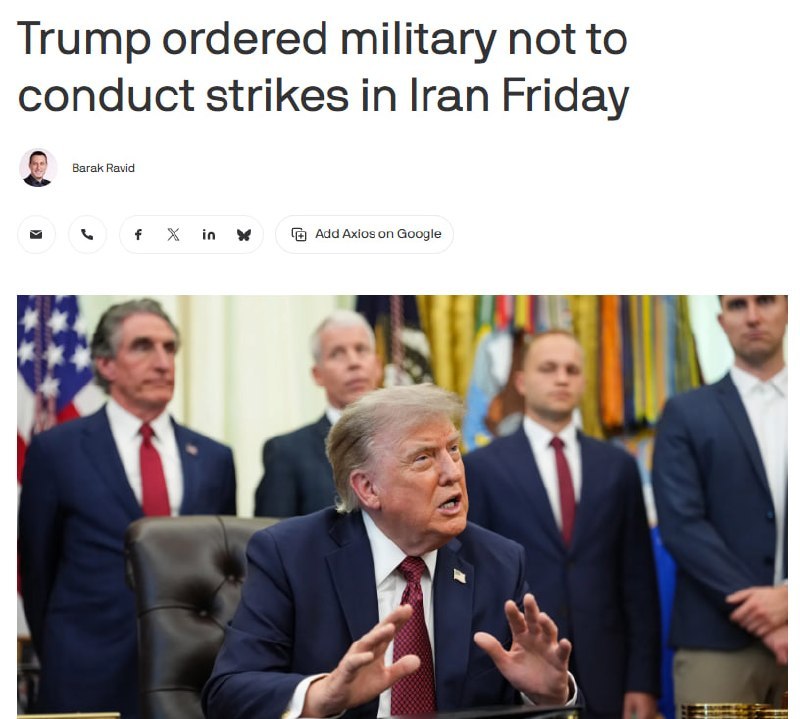
Ghalibaf disclosed on Monday that he learned, "in the middle of the discussions," that President Donald Trump had made "threatening remarks regarding our president, the negotiating team, and possible attacks on our territory," and that he relayed that assessment directly to Vance. The Iranian speaker cast Trump's posture as a tactical backdrop to a substantive Iranian preference for negotiation over escalation: "Military achieved the victories. Now negotiation advances them. If problems arise, we can respond with missiles or solve through negotiation." That sentence, delivered on Iranian state-aligned channels, is doing two things at once. It tells a domestic audience that the negotiating team is not capitulating, and it tells Washington that the path now open is the only path that avoids the alternative.
In Beirut, the political reaction was sharply split along the lines of an older regional argument. Lebanon's anti-Hezbollah camp, according to Open Source Intel, was "deeply disappointed" with Trump over the Switzerland talks and the memorandum, which "tied Lebanon to the deal" without delivering the disarming concessions Hezbollah's critics had wanted. Hezbollah supporters were described as celebrating the agreement, which Ghalibaf tied to the Lebanese ceasefire and to the return of displaced Lebanese to their homes. A diplomatic event presented in Geneva as an American-Iranian transaction is being read in Lebanon as a verdict on a domestic political contest that has run for decades.
The architecture moving forward
The supervisory format is the most striking procedural outcome. Ghalibaf named Vance, Araghchi, Qalibaf himself, and the Qatari and Pakistani prime ministers as future-round supervisors, an unusual configuration that places two nuclear-armed neighbors, a Gulf monarchical mediator, and a South Asian Muslim-majority power at the joint oversight table. Qatar's Mohammed bin Abdulrahman Al Thani and Turkey's Hakan Fidan spoke by phone on Monday evening to coordinate on Iran, a parallel Gulf-Turkish channel that suggests Ankara is being read in as a stakeholder even without a seat at the named supervisory group. Secretary of State Marco Rubio, according to One America News reporting, has begun travel to the Middle East to consult with Gulf partners while the Swiss process advances, a parallel track that signals the State Department intends a presence in any outcome the White House negotiates.
For all the procedural settlement, no joint text has been published by Washington. Vance told reporters that US and Iranian negotiators "remain in Switzerland for talks," a phrasing that left open the status of a final accord. Middle East Eye reported that the two sides had confirmed a "peace accord signing set Friday" in Geneva, although that schedule had not been corroborated by a US readout at the time of writing. The Iranian Foreign Ministry, via Gharibabadi, characterized the day as an agreement on how future talks will be conducted, not as a signing ceremony.
What to watch next
Three things will determine whether the Swiss corridor holds. First, whether the Friday Geneva signing materializes as advertised by Middle East Eye or slips into another preparatory round. Second, whether the Iranian claim that frozen-asset release and oil sanctions relief have been "finalized" survives contact with the US Treasury's licensing process and the OFAC architecture, which moves on its own clock. Third, whether the Strait of Hormuz declaration, now public in Iranian media, draws an Israeli, Saudi, or Emirati response that pulls the geometry of the talks away from the bilateral format and into a wider regional confrontation. The corridor exists. The question is whether it has been built wide enough to carry the traffic that will be asked of it.
Sources
- Middle East Eye live updates, "Vance says US and Iranian negotiators remain in Switzerland for talks" (2026-06-22)
- Press TV via Telegram, "Release of Iran's frozen funds and lifting of oil sanctions finalized" (2026-06-22)
- IRNA English via Telegram, "Ghalibaf: Strait of Hormuz will be administered by Iran" (2026-06-22)
- Tasnim News via Telegram, "Oman: constructive talks on memorandum and Strait of Hormuz" (2026-06-22)
- DD Geopolitics via Telegram, "Ghalibaf on military and diplomatic strategy" (2026-06-22)
- Open Source Intel via Telegram, "Lebanon's anti-Hezbollah camp disappointed with Trump" (2026-06-22)
- Fars News via Telegram, "Agreement on arrangements for future negotiations with US" (2026-06-22)
- OANN via Telegram, "Rubio travels to Middle East to meet with Gulf partners" (2026-06-22)
Desk note: Monexus read the Swiss talks as a procedural and architectural turning point rather than a final settlement, foregrounding the supervisory format and the Strait of Hormuz declaration alongside the unsourced Lebanese political reaction. Where wire sourcing from Iranian state media was unavoidable for on-the-record Iranian positions, caveat is given in-line.