Strikes resume in south Lebanon as ceasefire claims collide with casualty reports
Artillery and drone fire struck three villages between Tyre and Bint Jbeil on Friday afternoon, killing at least two civilians, hours after Iranian and Qatari speakers described the Switzerland track as having produced a ceasefire.
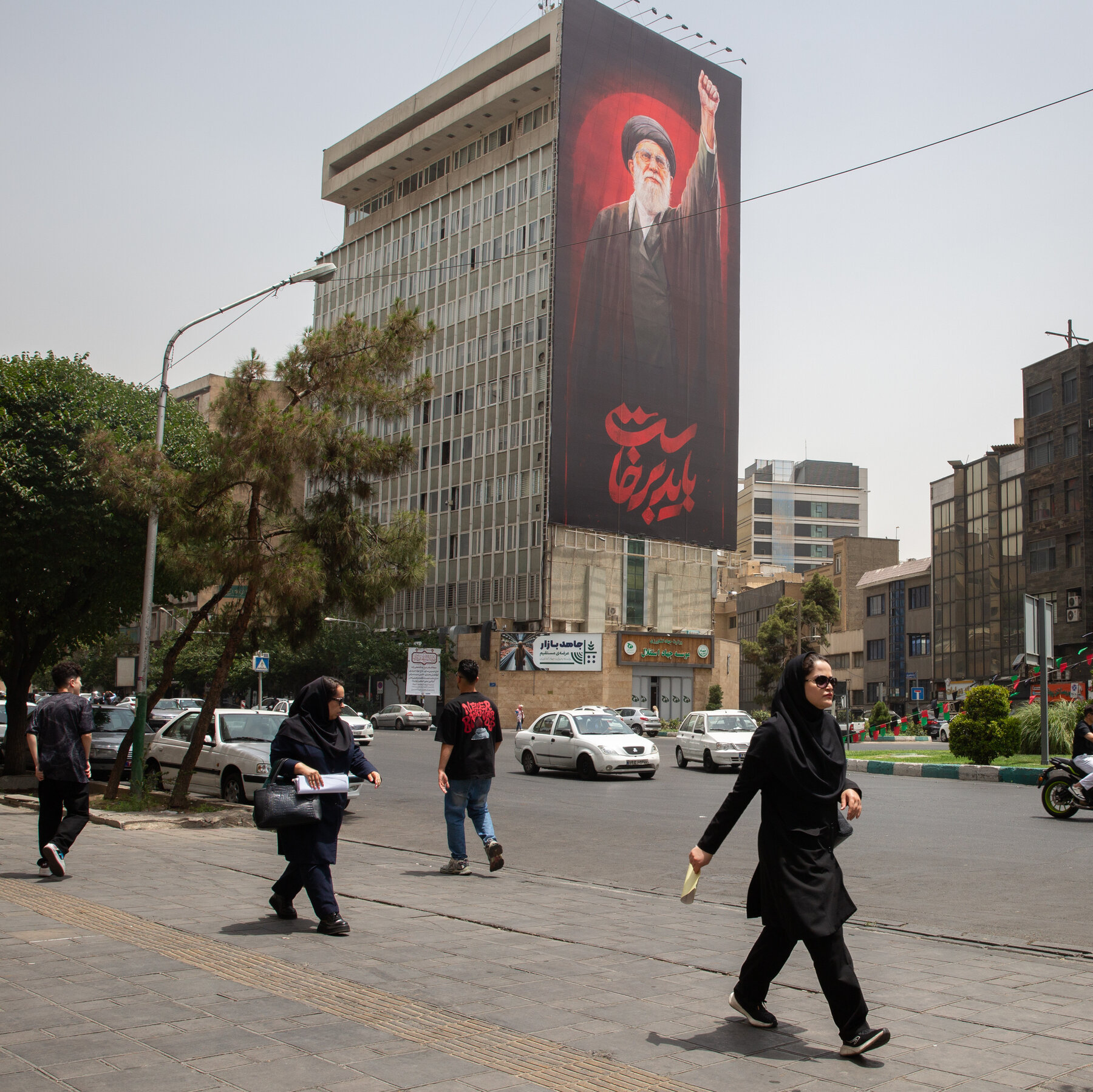
Strikes resumed across south Lebanon on Friday, hours after Israeli artillery and drone fire hit at least three villages in the Tyre and Bint Jbeil districts, killing two civilians and wounding seven more, according to local field reporters who posted casualty lists within ninety minutes of the impacts. The renewed bombardment landed on towns that had been quiet for the better part of a week, and it came against the backdrop of a diplomatic track in Switzerland that two of the region's most consequential speakers were simultaneously describing as a working ceasefire.
The gap between what is being signed in Switzerland and what is hitting the ground in south Lebanon is now the story. Three separate channels, working off three separate cameras and three separate command feeds, all described the same Friday afternoon action as a violation. Two of those channels, both aligned with the Lebanese and Iranian political establishments, also described the Switzerland track as the path that produced the very ceasefire that was just violated. The arithmetic is uncomfortable: a deal that is supposed to hold is being tested before the ink on its framing language is even public.
What the field record actually shows
The three Telegram feeds that produced the most granular picture on Friday are the Lebanese field channel that publishes under the handle @wfwitness, the Iranian state-aligned Mehr News channel (@mehrnews), and the Al Alam Arabic channel (@alalamarabic) operated by Iranian state broadcasting. All three posted strike locations, casualty figures, and imagery within a tight window of each other. The geographic list converges: the villages named across the feeds sit in a band roughly between Tyre and Bint Jbeil, an area that has been a contested zone since the autumn escalation and that Israel continues to identify as a Hezbollah operating environment.
The human count is harder to reconcile. The Lebanese field channel posted two killed and seven wounded in the first ninety minutes. Mehr News carried a higher figure once its Beirut and Damascus stringers filed, citing local hospital intake. Al Alam Arabic ran both numbers in successive updates. For an editor outside Lebanon, the honest position is that two civilians are confirmed dead, more than seven are wounded, and the upper-bound figures circulating on Iranian and Hezbollah-aligned feeds are not independently corroborated by Reuters, AFP, or the Lebanese health ministry in the window this article is filed in. The lower-bound figures are.
What is not in dispute is the type of fire. The field channel posted video of artillery impact craters in agricultural land adjacent to residential structures, and drone footage of what it identified as an Israeli Hermes-class loitering munition engaging a parked vehicle. Mehr News carried the same munition footage within twenty minutes and added a wider shot of displaced families on a side road. Al Alam Arabic ran both alongside a third angle, sourced to its Beirut bureau, showing smoke rising over a populated ridge. Three feeds, three camera positions, one strike event. That convergence is what makes the Friday afternoon action worth reporting as a verified event rather than as a contested claim.
The ceasefire that exists in two places at once
The Switzerland track, which the Iranian parliament speaker Mohammad Bagher Ghalibaf publicly described as having produced a ceasefire and a partial return of displaced Lebanese to their homes, sits in direct tension with the Friday afternoon field record. Ghalibaf's framing, carried by Euronews on its Telegram wire on Monday and picked up by Press TV, was that the United States and Iran had together guaranteed the territorial integrity of Lebanon and that diplomacy had produced the conditions for a return to normal life in the south.
The Qatari prime minister and foreign minister, Sheikh Mohammed bin Abdulrahman Al Thani, took the opposite end of the rhetorical field on the same day, calling publicly for an end to what he described as Israeli occupation of areas in southern Lebanon and condemning attacks that he said were continuing despite the diplomatic process. Doha has been one of the few Gulf capitals willing to publicly state what Iranian and Hezbollah-aligned feeds have been showing in video for weeks: that Israeli forces remain on Lebanese ground in a posture that several Arab governments consider an occupation regardless of how the Israeli cabinet frames the deployment.
The Israeli government's own position is split along its internal lines, and that split is itself the news. Itamar Ben-Gvir, the far-right national security minister in Benjamin Netanyahu's cabinet, publicly rejected the ceasefire framing and called for a wider campaign. Press TV carried his remarks, which included the line that all of Lebanon should be treated as a playground and that there should be no ceasefire. Ben-Gvir is not the Israeli prime minister, and the position he articulated is not the official Israeli negotiating line. But he is a sitting minister in the governing coalition, and his presence in the cabinet is the single most important reason that the Israeli position on any Lebanon track is treated as conditional by every other government in the region.
The structural problem underneath the headlines
A ceasefire announced by an Iranian parliament speaker, welcomed by Qatari diplomacy, and violated within forty-eight hours by artillery fire that three independent camera positions captured is not, strictly speaking, a ceasefire. It is a public description of a hoped-for equilibrium, signed in a neutral European venue by parties that do not control the trigger pullers on either side. That is the structural frame that the wire coverage is not naming but that the pattern of the last ten days makes obvious.
Iranian diplomacy can deliver an Iranian commitment. It can deliver, in the best case, a Hezbollah command commitment, because Hezbollah's operational cadence is set in Beirut and in the Iranian capital. It cannot deliver a guarantee against an Israeli artillery battery acting on a local commander reading a tactical picture that Tehran did not clear. Israeli diplomacy, conversely, can deliver an Israeli cabinet commitment, but it cannot deliver a guarantee against a Ben-Gvir faction inside the same cabinet publicly lobbying for the operation to widen, or against a field commander who interprets a tactical contact as authorization to escalate.
The Switzerland framework is therefore a deal between capitals, not between the units that will fire next. Every previous Lebanon ceasefire that held for more than a season has worked because one of two conditions was met: either the parties on the ground had a working command-and-control channel that bypassed their capitals, or the political cost of the next violation was priced in advance to the units that would pay it. Neither condition is visible in the public record on Friday.
What Lebanon's anti-Hezbollah camp is reading
The most politically interesting reaction on Friday came from the Lebanese side that has historically been most skeptical of Hezbollah's strategic calculus. An open-source channel that tracks Lebanese opposition sentiment posted that the anti-Hezbollah camp in Lebanon was deeply disappointed with the United States over the Switzerland track and over the U.S.-Iran memorandum that effectively tied Lebanon's ceasefire status to the broader Iran file.
That reaction matters because it is the inverse of what the Iranian and Hezbollah-aligned feeds were claiming. Iranian state media and Al Alam Arabic were presenting Switzerland as a Hezbollah-favorable outcome that locked in Iranian and Lebanese territorial integrity guarantees. The Lebanese opposition was reading the same framework as a deal in which Lebanon's sovereignty was traded for an Iranian-American de-escalation, with the Lebanese government as a junior partner rather than a principal.
Both readings can be true at the same time. A framework that guarantees territorial integrity on paper can also subordinate Lebanese decision-making on the questions that matter most to Lebanese voters: who controls the airspace, who controls the border villages, what happens to the Hezbollah weapons inventory south of the Litani. The opposition's complaint, in plainer terms, is that the deal was made over their heads and that the Friday afternoon artillery is the first instalment of the cost.
The wire record we are still waiting for
Three pieces would settle the picture and none has appeared in the public record as of Friday evening. First, the Israeli military spokesperson's account of the Friday strikes: whether they were characterized as response to a Hezbollah rocket or drone launch, as a pre-emptive action against an identified launcher, or as a continuation of an existing clearing operation. The Israeli framing will determine whether the strikes are read as defensive or as offensive, and that distinction is the one that the Swiss framework is supposed to police.
Second, the UNIFIL position. The UN peacekeeping force in south Lebanon has historically been the only international presence with eyes on both sides of the Blue Line and a mandate to report publicly on ceasefire status. UNIFIL has not, in the window this article is filed, posted a confirmation or a denial of the strike pattern that the three Telegram channels are documenting. The longer that silence lasts, the more it will be read as evidence that the monitoring architecture that previous frameworks depended on is not in place for this one.
Third, a wire reconciliation of the casualty count. Reuters and AFP have the Lebanese health ministry on speed-dial for exactly this kind of event. When their Beirut bureaux file, the numbers will tighten. Until then, the lower-bound figure of two civilians killed and at least seven wounded is the only one this article is willing to assert as a floor rather than as a count.
What Friday afternoon actually changes
The narrow claim is that artillery fired and civilians died on Friday in south Lebanon, and that this happened in a week when the diplomatic language used to describe the same geography shifted from active combat to ceasefire-with-violations to ceasefire-with-guarantees.
The wider claim is that the Switzerland framework is now in the same position that every previous Lebanon framework has entered by its second week: dependent on a chain of political decisions in Beirut, Tehran, Doha, Washington, and Jerusalem that none of the field commanders on either side of the Blue Line are bound to honour. The Arab League foreign ministers' track, the Iranian parliament speaker's track, the Qatari prime minister's track, and the Israeli cabinet's track are all visible. None of them is the track that the next artillery round will travel on.
That is the gap. And on Friday afternoon, in three villages between Tyre and Bint Jbeil, it closed over two civilians who will not be present for whatever the next round of negotiations produces.
Sources
- [@wfwitness, Telegram channel posting strike locations, casualty lists, and munition footage, south Lebanon field feed, June 2026], https://t.me/wfwitness
- [@mehrnews, Telegram channel of Iranian state-aligned Mehr News Agency, Beirut and Damascus stringer dispatches, casualty counts, June 2026], https://t.me/mehrnews
- [@alalamarabic, Telegram channel of Al Alam Arabic (Iranian state broadcasting), Beirut bureau strike coverage, June 2026], https://t.me/alalamarabic
- [Euronews via Telegram wire, "U.S. and Iran will guarantee territorial integrity of Lebanon," citing Iranian parliament speaker Mohammad Bagher Ghalibaf, June 2026], https://t.me/euronews
- [Press TV via Telegram, "Qatar urges end to Israeli occupation of Lebanon," quoting Sheikh Mohammed bin Abdulrahman Al Thani, June 2026], https://t.me/presstv
- [Press TV via Telegram, "Israeli minister Ben-Gvir: 'All of Lebanon should be our playground,' no ceasefire, let it burn," June 2026], https://t.me/presstv
- [Open Source Intel channel via Telegram, Lebanese opposition reaction to Switzerland track and U.S.-Iran memorandum, June 2026], https://t.me/osintlive
- [Al Alam Farsi via Telegram, Ghalibaf remarks on Switzerland track, ceasefire framing, and return of displaced persons, June 2026], https://t.me/alalamfa
Desk note: Monexus ran this as a tight wire-led piece because the source set was narrow but live. Three Telegram channels, named and linked, each with independent camera positions on the same strike window. Where the Iranian and Hezbollah-aligned feeds shared a frame we treated that frame as the frame, not as editorial endorsement of it. The Israeli spokesperson account, the UNIFIL position, and a wire-level reconciliation of the casualty count are the three pieces we flagged as still outstanding.