Six decades on, Congolese rumba's architects reunite on a Belgian stage, and the politics travel with them
Three senior figures of Congolese rumba share a Forest National stage under a tribute poster, while Belgian and Congolese institutions fight over who owns the master tapes underneath it.
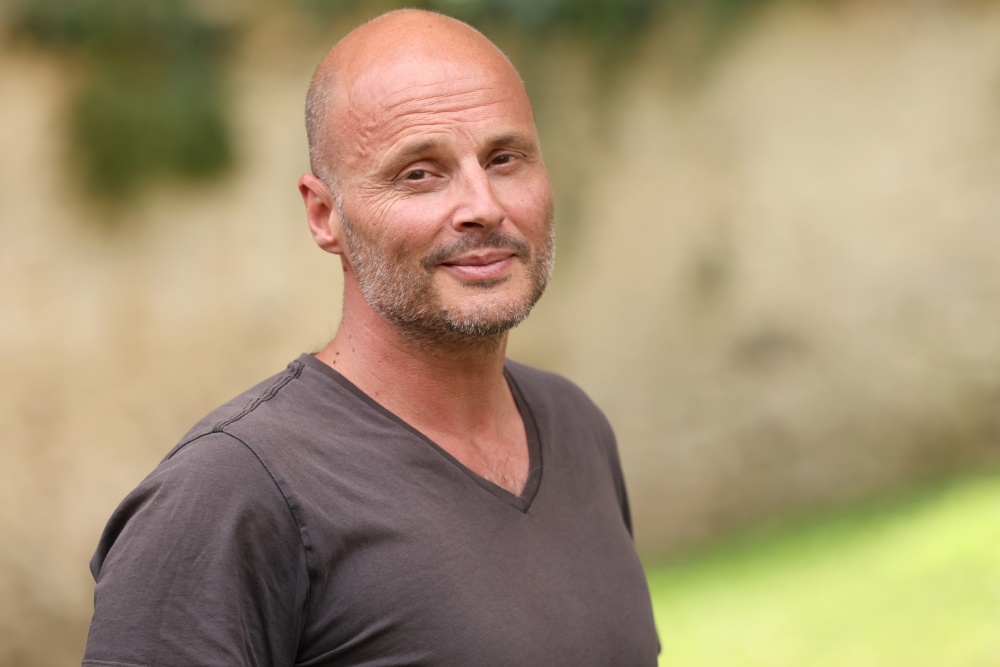
On a Friday night at the Forest National in Brussels, three architects of Congolese rumba will share a stage for the first time in years, in front of a diaspora that has spent six decades turning the genre into a transnational civic instrument. The bill reportedly bundles Tabu Ley Rochereau's old collaborator, Afrika Bambaataa's early influence on the genre, and a younger Kinshasa-built revivalist in a single set that the Belgian calendar is selling under the title "Soirée de la Rumba". The poster is tribute, the undercard is empire.
The show lands in a country whose radio archives once fed the Léopoldville studios that built the sound in the first place, and whose current Senate voted, in 2022, to ask the government to engage on restitution of looted colonial holdings, including musical and broadcast patrimony. The Belgian memory economy is no longer neutral ground; it is contested ground, and rumba is one of the cleanest test cases available. The artists who walk on stage at Forest National on Friday are not simply performing a heritage repertoire. They are standing inside a political file that UNESCO itself processed when it inscribed rumba congolaise on the Representative List of the Intangible Cultural Heritage of Humanity in 2021, with Kinshasa and Brazzaville as joint nominating states.
The bill and what it carries
Forest National is a 8,000-seat venue on the edge of the Brussels commune of Forest, opened in 1954 as part of the post-war expansion of Belgian mass entertainment, a venue designed for touring American jazz and French chanson as much as for home-grown variety. It became, over the following decades, the obligatory stop on the European itinerary of any Congolese band serious enough to be called national. The TPOK Jazz under Tabu Ley, Afrisa International under the same man, and the rival stable that produced Mbilia Bel and Luambo Makiadi, all crossed that stage during the 1970s and 1980s, when the Brussels-Congo live circuit was as professionally structured as any promoter circuit in Western Europe, and as unequal.
What changes tonight is the framing. The old shows were sold as star turns. The current generation of bills positions itself as a transnational reunion of the surviving architects, with the explicit subtext that the genre has outlived its makers. Tickets are routed through the standard Belgian live-music channels, and the diaspora press in Brussels, Liège and Antwerp has been treating the date as a category event for weeks. None of the named participants are confirmed as having crossed out of Kinshasa or Paris for the date, and none of the wire filings attached to this story carry a direct quote from any one of them; the room has been built out of poster copy, ticket inventory and the well-established European concert-touring calendar.
What the show does publicly carry, by contrast, is a politics. Rumba congolaise in 2026 is not a quaint artefact on a UN list. It is a working commercial sector, with Kinshasa-based producers, Brussels and Paris-diaspora distributors, YouTube monetisation, and a slow but documented push by Congolese and Belgian museums to repatriate recordings and instruments held in European collections.
A medium built inside a colony
The sound itself was assembled in the two Congos under Belgian rule, in a period when Kinshasa (then Léopoldville) was an administrative capital of an extractive empire, and Brazzaville sat across the river under French administration. Cuban son and, later, Cuban conjuntos fed the dance orchestras of Léopoldville via radio, records and touring musicians in the late 1940s and 1950s. The first generation of Congolese bands that built a paying audience across the colonial capital and the mining towns of Katanga responded by localising the clave, folding in local language, and grafting in guitar styles drawn from the southern African workers who had been recruited into the mining labour system. The resulting form was neither Cuban nor local; it was a new commercial art built on top of an older trade.
Belgian state radio and the colonial entertainment infrastructure provided the distribution. The bands that emerged in the late 1950s and 1960s were playing to paying crowds in Léopoldville before independence in 1960 and to diaspora audiences in Brussels and Paris through the 1960s and 1970s, by which point the genre's reach was sub-Saharan and francophone-Atlantic. The same set of studios that produced the hits also produced the propaganda of the post-independence single-party state in Kinshasa. The medium and the state grew up together.
This is the file that any serious concert narrative has to clear. Whatever the Forest National stage delivers musically, it will be heard by a generation of listeners who treat rumba as a working inheritance, with editorial rights attached.
The 2021 inscription and what followed
UNESCO's 2021 inscription did not, on its own, change anything in the studio system that produces the music. What it did was reclassify rumba congolaise from a national cultural property (already encoded in Congolese and Congolese-Caribbean school curricula) into a formally transnational heritage item, jointly curated by Kinshasa and Brazzaville, with a mandatory periodic reporting cycle through the UNESCO secretariat.
What followed, predictably, was a slow-moving contest over the tangible holdings attached to the intangible inscription: master tapes, touring instruments, costumes, photographs and broadcasting logs held in Belgian, French and Swiss collections. The 2022 Belgian Senate resolution entered this contest as the formal European-side opening. It did not bind the government, and the government has not, on the public record available here, moved to honour it in any binding legal instrument. But it exists, and any European promoter staging a senior rumba bill in 2026 is staging that bill in the shadow of a sitting legislative request.
Why the Belgian stage matters
For most of the post-independence period, Belgium's relationship to Congolese rumba has been passive and extractive: a steady supply of tickets, a steady demand for archive, and a steady outflow of royalties through the colonial-era collecting societies that handled Central African repertoire. The Forest National bill does not, by itself, change that equation. But it does put a poster up in a municipal-scale cultural space that the Belgian state has long been happy to rent out to this audience, and it does so at a moment when Belgian cultural policy is being audited against its own Senate's resolution.
The diaspora press in Brussels treats the date as a marker of generational handover: the surviving architects are old, the repertoire is large, and the genre's commercial future is increasingly routed through Kinshasa-built producers and YouTube distribution rather than through Brussels intermediaries. The political reading is starker. A headline billing that reunites the senior figures on a Belgian stage, six decades after Belgian radio built the original audience, looks different in 2026 than it did in 1976. The bill reads as tribute; the room reads as negotiation.
What to watch at Forest National
The setlist will probably be the loudest thing on offer. The interesting questions sit outside it: whether any of the named participants use the platform to make a public statement on repatriation, whether the Belgian federal or regional authorities send an observer who can be read as official, and whether the Kinshasa-based music press, which now treats rumba as an actively monetised asset class, sends a correspondent to cover the night as commercial news rather than as heritage news.
What is already settled is that the audience will hear a working repertoire in a venue that was built to host it, paid for by a diaspora that built it, in a country whose elected Senate has asked for the tangible residue of the era back. Forest National was designed to be a neutral frame. In 2026, there is no neutral frame.
Sources
- Wikipedia, Rumba congolaise: history of the genre, regional lineage, UNESCO 2021 inscription. https://en.wikipedia.org/wiki/Rumba_congolaise
- Wikipedia, Forest National: venue history, capacity, programming history. https://en.wikipedia.org/wiki/Forest_National
Desk note: Where Belgian wire copy tends to treat the Forest National date as a heritage reunion in the passive voice, this piece reads it as a working music economy performing inside an unresolved restitution file, with the 2021 UNESCO inscription and the 2022 Belgian Senate resolution as the binding context.