Iran warns of regional fallout as Israeli strikes on southern Lebanon continue
Iran's Quds Force chief warned Israeli troops to leave southern Lebanon or be expelled, while US-Iran technical talks in Switzerland ran past midnight on the Strait of Hormuz, Lebanon and the nuclear file.
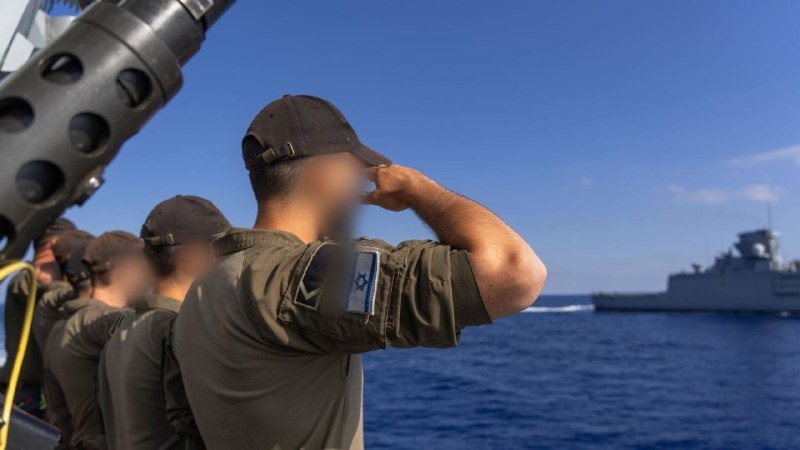
On the evening of 21 June 2026, Esmail Qaani, the commander of Iran's Islamic Revolutionary Guards Corps Quds Force, addressed Israeli forces operating in southern Lebanon with a five-word message carried by Iranian state media: leave, or be kicked out. Within ninety minutes, Mohsen Rezaei, an advisor to Iran's supreme leader, sharpened the warning. Based on what he called an understanding with the Islamic Republic, Rezaei declared that the United States must answer for Israeli actions in Lebanon and bear responsibility for the aggression. By 23:59 UTC, Fars News and Tasnim had both carried an American counter-signal: four-way talks in Switzerland on the Strait of Hormuz, Lebanon and the nuclear file would run until midnight, not the formal plenary session that mediators had originally penciled in. The diplomatic and the military tracks of the same crisis were, by the close of Sunday, running on the same clock.
The Iranian posture is best read as deterrence layered over a negotiating position. Qaani's warning was delivered as Israeli ground forces remained dug into southern Lebanese towns, with displaced residents like Mohammad Sallum telling Middle East Eye from Nabatieh that his city was a disaster zone whose worst feature was the Israeli presence on his land rather than the rubble around it. Rezaei's invocation of the Islamabad memorandum, a reference to a 2025 understanding that committed Washington to restrain Israeli operations against Iranian interests in the region, ties the warning to a specific contractual frame. Read together, the two messages amount to an argument: if US-Iran technical talks are to produce anything beyond a photo in Geneva, Israeli operations south of the Litani need to decelerate, and Iran reserves the right to act if they do not.
The Israeli security rationale, as reported in Hebrew-language outlets, has hardened in the opposite direction. Walla, an Israeli news site, quoted army commanders describing a renewed Hezbollah threat: monitoring of Israeli officer movements, drone surveillance, and a 12 June strike on a Merkava Mk. 4M tank on the eastern outskirts of Yahmar al-Shaqif using an Ababil fiber-optic first-person-view drone. The framing inside Israeli command, in other words, is that Hezbollah has rebuilt enough of its reconnaissance-strike network to begin hunting individual officers, and that the ground operation is therefore a defensive necessity, not a choice. An airstrike on Friday killed Mona Khalil, a leading Lebanese conservationist credited with building a movement to protect sea turtle nesting grounds along the southern coast, according to NPR; the human cost in Nabatieh and the villages further south is being absorbed by a population that, by Sallum's account, treats Israeli presence as the larger wound.
What makes this moment unusual is the parallel track. US Vice President JD Vance, speaking at the opening of the US-Iran technical talks, acknowledged that Iran had been a driver of regional instability and then added that he saw a future in which everybody could work together to promote peace and prosperity. An American official cited by Al Alam and relayed by Tasnim said the four-way discussions worked on mechanisms to reduce the pace of the conflict and to implement a ceasefire in southern Lebanon. Iran, according to Middle East Eye, refused to rejoin the talks in person but kept the channel open through mediators. The diplomatic cable is live even as the artillery continues.
The structural reading is straightforward. Iran has chosen to escalate its rhetoric precisely when the United States is most exposed on the diplomatic track, betting that the cost of an Israeli ground push in Lebanon will be paid in Geneva, not in Beirut. Tehran can argue, with some basis, that the Islamabad understanding makes Washington a guarantor of restraint; Washington can argue that Iranian proxies are the ones escalating. Both claims are circulating in the same Telegram channels within minutes of each other, which is itself the point of the exercise: maximum pressure on the negotiation floor, conducted in the grammar of regional security.
The political temperature inside Israel is the variable that most observers will watch next. A Hebrew University of Jerusalem survey found that 92 percent of Israelis believe Iran has won the war, with 86 percent feeling negatively about the outcome. That sentiment, if it holds, narrows the political space for any deal that requires Israeli concessions in Lebanon and gives hardliners in the cabinet a domestic case to widen the operation. The Geneva talks, on present form, will either produce a mechanism that constrains Israeli movements south of the Litani, or they will collapse and leave Qaani's warning as the standing policy of the Islamic Republic. There is no visible third option.