Tehran's Hormuz Gambit: Free Transit, Quiet Leverage
Iran's 'free' sixty-day insurance regime for Strait of Hormuz transits is not a concession; it is a quiet claim that safe passage through the chokepoint is an Iranian product, priced at Tehran's discretion.
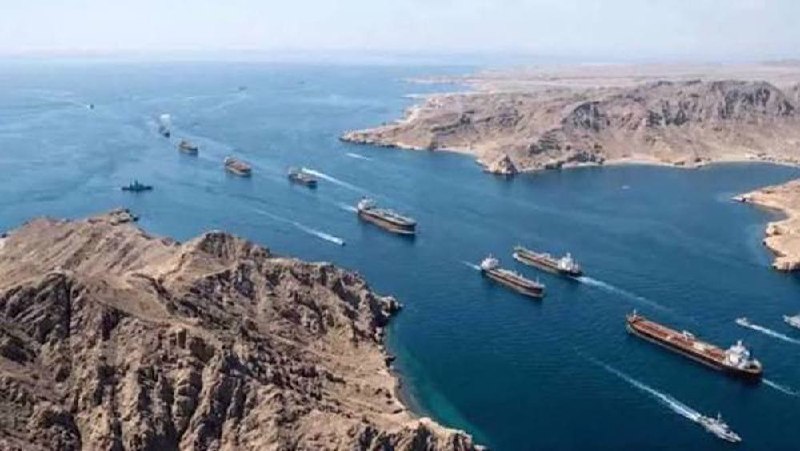
On 21 June, Iran's Revolutionary Guard Corps declared the Strait of Hormuz closed to commercial traffic under what state media called a "temporary security protocol," then walked the declaration back within twelve hours. Hours later, Tehran followed with a second move: a mandatory insurance regime on transiting vessels, free for sixty days, with fees "likely to follow." The two announcements, sequenced inside a single news cycle, looked contradictory. They were not. They are the same policy, separated by eighteen hours of deniable testing.
The framework now on the table is a classic case of geography doing the negotiating. Roughly a fifth of the world's seaborne oil moves through the chokepoint; Iran's coastline sits on its northern shore, the Omani coast on its southern flank. No navy in the world, including the United States Fifth Fleet, can supervise every hull that passes through a 21-nautical-mile channel flanked by Iranian anti-ship missile batteries. That asymmetry is the asset Tehran is now monetising in plain sight, even as Vice President JD Vance sat across the table from Iranian negotiators in the first formal talks under an interim peace deal brokered earlier in the spring. The Strait remains technically open; transit is becoming conditional.
What the insurance decree actually does
The text of the 21 June directive, as carried by Iranian state outlets, requires every vessel transiting Hormuz to carry Iranian-issued coverage against seizure, collision, and pollution damage. For sixty days the premium is zero. After that, the order reserves to Tehran the right to set rates. The state-affiliated coverage vehicle, run through a consortium of Iranian insurers, would in effect require shipowners to underwrite their passage with a Tehran-based counterparty, in a currency Tehran chooses, against risks Tehran defines. Any vessel that refuses would, on paper, lose immunity from inspection and seizure inside Iranian waters.
Read literally, the policy is a regulatory nuisance. Read as a precedent, it is something else. It establishes the principle that free transit through the strait is an Iranian concession, revocable at administrative discretion. The sixty-day free window is a familiar instrument: it is the same diplomatic grammar Tehran used to invite international tanker traffic back into its own ports after earlier rounds of sanctions enforcement.
The Vance talks and the "closed strait" gambit
The timing was almost certainly deliberate. Reuters reported on 21 June that Trump's public posture in the run-up to the talks included a stated willingness to resume hostilities with Iran, even as Vance pursued the diplomatic track in the same news cycle. Within hours of the Vance meeting, Iranian outlets announced the strait had been closed; the announcement was rolled back, and the insurance framework was unveiled in its place. The pattern fits a familiar Iranian negotiating playbook: announce the maximalist step, gauge the reaction, then substitute a more legible instrument that achieves much the same outcome.
The insurance regime, unlike a flat closure, gives Tehran a continuous revenue stream and a continuous hook. A tanker covered by Iranian insurers is a tanker inside the Iranian financial perimeter. If the vessel is later sanctioned by a Western jurisdiction, the Iranian underwriter is already on the risk. If the vessel is later found in breach of US secondary sanctions, Tehran has documentation. The arrangement is built to compound.
The Graham variant and the Washington counter-frame
In Washington, the response has been slower and louder. Senator Lindsey Graham used a Sunday television appearance to outline a competing doctrine: the United States should seize the strait outright, charge transit fees to every nation, and "obliterate" Tehran if Iran resists. The proposal, as aired, would invert the Iranian framing by asserting an American right to levy the same kind of toll, under the same geographic logic, with the US Navy as enforcer. The constitutional and coalition problems with that posture are obvious: the United States would be taxing allied shipping, including Japanese and South Korean tankers carrying Gulf crude to Asian refiners, in the middle of a peace negotiation it is conducting on a parallel track.
Japan's foreign ministry, the Western-aligned actor with the largest direct exposure to Hormuz transit, has been the quiet exception. Tokyo's confirmation that the insurance order was consistent with what Iranian counterparts had signalled in earlier technical consultations is the most concrete external reading of Tehran's intent to date. It suggests the regime has chosen Japan as its first-mover diplomatic audience, the same way it chose Beijing during earlier sanctions rounds. Japan's reaction will tell the rest of Asia what the new normal looks like.
Why the strait's geography binds every actor
This is the part of the file that does not move. Iran does not need to win a naval engagement to control the strait; it needs only to make transit expensive enough, unpredictable enough, or insurable only on its terms, that shipowners re-route or reprice. Insurance markets, not navies, are the operating instrument. A single ambiguous bulletin about seizure risk in Hormuz can add fractions of a cent to global bunker-fuel contracts in a day, long before any ship is touched. The Iranian regime has spent the last decade internalising that leverage. The 21 June decree is the first time it has tried to rent the instrument out to itself.
The peace track in Vienna, the Graham threat, and the insurance framework are all addressing the same underlying question: who has the standing to set the price of safe passage. Tehran's answer is that it does, by virtue of the map. The US answer, in the Graham version, is that it does, by virtue of fleet capacity. The actual market answer, almost certainly, is that the price will be set in Lloyd's of London and P&I club committees long before it is set in either capital.
What to watch by August
The sixty-day free window expires in mid-August. By that date three things will have to clarify: whether Japanese and South Korean tanker operators have signed on to the Iranian coverage, whether the Vance talks have produced any document that pre-empts the fees, and whether a major P&I club has publicly refused to recognise Iranian certificates of insurance, which would force a hard choice on shipowners. None of those decisions is a headline event. All of them are the events. The strait's geography will keep doing the work; the question is only whose paperwork sits on top of it.
Sources
- DiscloseTV (Telegram), 21 June 2026, https://t.me/disclosetv
- Reuters via X, 21 June 2026, https://x.com/reuters
- Bowe Chasey (X), 21 June 2026, https://x.com/boweschay
- Press TV (Telegram), https://t.me/presstv
- Tasnim News English (Telegram), https://t.me/tasnimnews_en
- Jahan Tasnim (Telegram), https://t.me/JahanTasnim
- Bellum Acta News (Telegram), https://t.me/BellumActaNews
Desk note: Monexus read the 21 June "closure-then-insurance" sequence as a single policy rather than two contradictory headlines, and treated the geographic asymmetry of the strait as the binding constraint that explains why Tehran could afford to walk back the closure without giving up the leverage.