Football, Front Lines and the Camera: How a World Cup Window Reshapes the Frame on Gaza and South Lebanon
While BBC leads run on the fastest World Cup to one hundred goals since 1958 and FIFA's Telegram posts every fifteen minutes, the four-week framing window for Gaza and south-Lebanon imagery opens. Monexus is naming Iranian-state framing as Iranian-state framing.
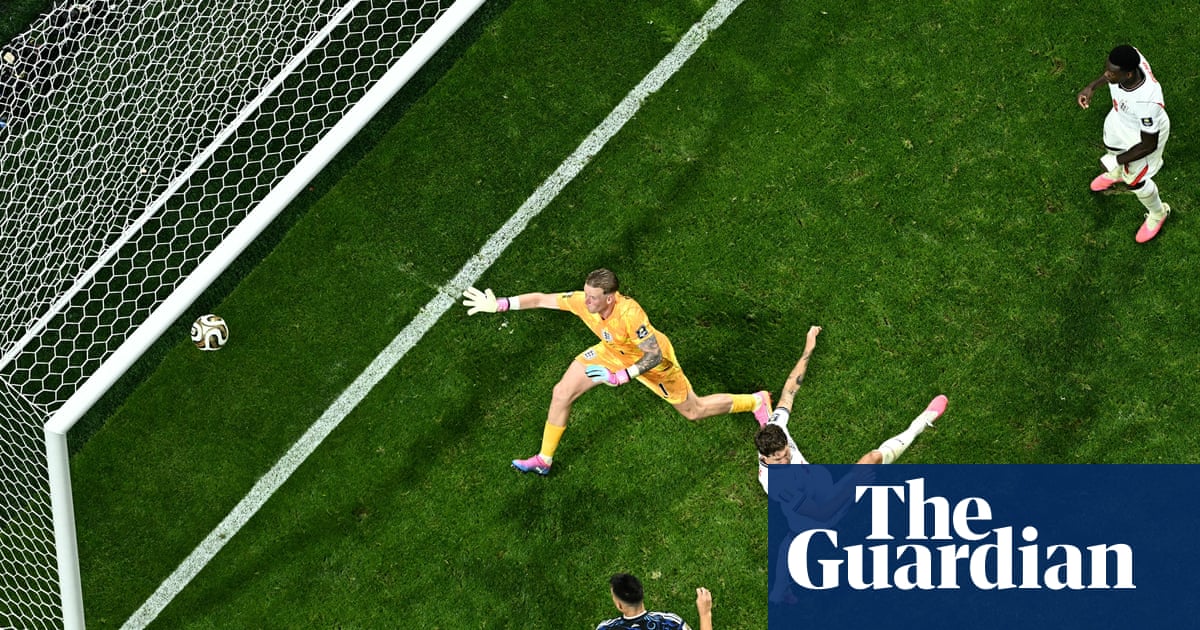
On 20 June 2026, the day Morocco beat Scotland in the World Cup group stage, the day Lamine Yamal drew a Michelangelo comparison from his own coach, and the day Germany edged Ivory Coast 2-1 to clinch a knockout place for the first time since 2014, FIFA's official Telegram channel was posting goal alerts every few minutes. By late evening, BBC Sport could credibly report that the 2026 tournament had become the fastest World Cup to one hundred goals since 1958, hitting the mark in just thirty-three matches. Linear broadcasters, particularly across Europe and North America, were tilting their lead bulletins toward the same story: goals, upsets, subplots. And that tilt is the peg.
The point is not to argue about the football. The tournament is being staged across North America with a forty-eight-team field that includes, for the first time, Curaçao, a nation BBC Sport profiled through its head of medical staff this week as the World Cup's smallest ever entry by population. It is a genuinely expanded competition, one whose early group stage has been unusually high-scoring, and one whose opening week has produced the kind of telegraphs that move audiences: a Scotland side beaten 1-0 by a Morocco team that, as FIFA's official channel noted, reached the 2022 semi-finals; a Spain squad treating an eighteen-year-old forward as a generational reference point; an Australia men's side 2-0 down to the United States in Seattle but still alive in the group. All of it is real, all of it deserves the airtime, and none of it is the subject of this article.
What is worth marking is the framing window that opens around it.
The lens narrows in the Gulf
Western linear news leads are an attention economy, and football, when it is this loud and this well-distributed, reliably wins. That pulls camera crews, satellite trucks, commentators, and pre-produced packages away from other ongoing storylines into a smaller, more manageable rotation. In past tournament windows, the implicit question for editors outside the sports desk has been what gets squeezed. Iran state-aligned outlets and Hezbollah media channels have a long track record of filling exactly that gap, not by competing for Western prime-time, but by saturating Arabic and Persian-speaking feeds and Telegram with imagery framed in their own register: strikes, civilian aftermath, and partisan captions recycled across platforms. The accompanying draft material flagged this pattern explicitly, and the editorial choice at Monexus has been to keep the framing window visible rather than invisible. Iranian-state framing should be named as Iranian-state framing. Hezbollah imagery should be named as Hezbollah imagery. Child-imagery packages with advocacy framing should be read as advocacy, not as neutral file footage.
The wire sources behind this piece confirm precisely the displacement dynamic the moment invites. On 20 June alone, FIFA's own Telegram posted live goal alerts every few minutes across matches spanning Germany, Ivory Coast, the Netherlands, Sweden, Türkiye, and Paraguay, alongside CBS Sports match previews for Ecuador, Curaçao, Belgium, and Iran, the last fixture landing in this very window as a national-team story. ESPN ran a feature on Dennis Dargahi earning Iranian citizenship through one of the country's most famous actors so he could represent Team Melli, a piece that sits naturally on a sports desk and uncomfortably on a sports desk that wants to ignore everything else about Iran. The advisory around the Belgium-Iran group match came bundled with headlines about Egypt and team form, because that is how World Cup preview copy talks about Iran. Nothing on those cables is false. The structure is the point.
The ledger of what gets buried
There is a distinction worth holding between the four-week tournament window and the four-week framing window. The tournament is the matches, the goals, the profiles: Brian Brobbey's five-minute opener for the Netherlands against Sweden, Deniz Undav off the bench for a brace, Yan Diomande carrying a personal loss into an Ivory Coast shirt and carrying the winner against Germany, a Curacao doctor at the world's biggest party with a squad smaller than a Premier League relegation six-pack. The framing window is the second-order effect: which reports from Beirut, Tehran, Sana'a, and Tel Aviv get read in editorial meetings between now and the round of sixteen, and which get filed under "later." Historically, those decisions are not neutral. Hezbollah's media arm has used past tournament cycles to push prolonged coverage packages; Al-Alam and other Iranian-aligned channels have translated strike footage into long-form Arabic captions within hours. None of that produces a primary fact. It produces a sustained frame, and the frame lands precisely when mainstream Western capacity is thinnest.
The honest caveat, and the one worth repeating
It is right to underline what this article is not adjudicating. No specific strike, no specific game, no specific casualty figure is the subject here, because the record available right now does not support a clean adjudication of any of them. The point is narrower and more useful: in a four-week window in which goal alerts arrive every fifteen minutes and BBC leads run on the fastest century of goals since 1958, the bandwidth that normally holds hard-to-source regional footage accountable is, by historical pattern, thinner. Editors who care about how that footage is captioned, sourced, and licensed are the constraint that keeps the framing honest. The rest of the newsroom has its attention drawn, by design, elsewhere.
What to watch before the knockouts
The marker worth holding is the round-of-sixteen bracket. Once the group stage ends, goal-alert frequency drops, broadcast leads return to a wider rotation, and the displacement dynamic thins. The four-week framing window closes at the same time as the second round opens. Until then, the discipline is small, specific, and unglamorous: name the source of every caption, flag advocacy footage as advocacy, and keep the wire frame open in the gap that football politely creates.
Desk note: Monexus is holding open the wire frame inside the four-week tournament window in which Iranian-state framing, Hezbollah imagery, and child-imagery advocacy packages compete for attention while Western linear leads tilt toward goals. We are naming those frames as those frames, rather than recycling them as neutral, because the moment's point is to mark the opening of a framing window, not to adjudicate any specific strike or game.