The Strait Will Not Revert: Why Hormuz Is the Real Test of the Iran Deal
Tehran closed the strait on paper, Washington kept it open in fact, and the deal on the table lets both sides be right for exactly sixty days. The real contest is over who runs the gate, not who signs the next paragraph.
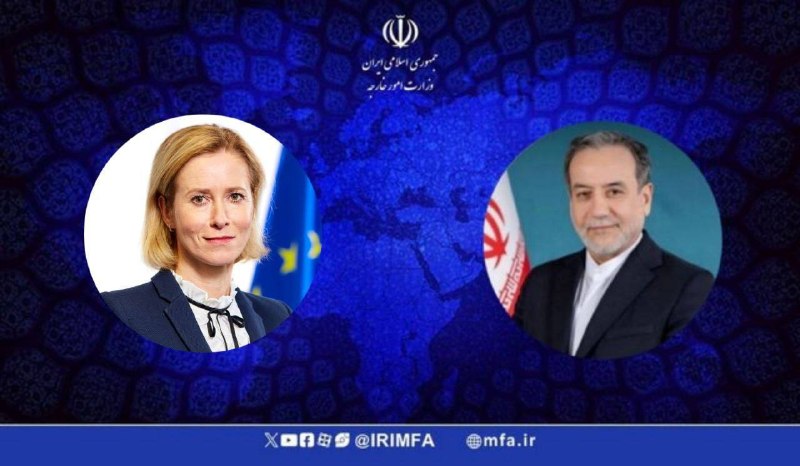
On Saturday 20 June 2026, Iran's Revolutionary Guards declared the Strait of Hormuz closed and warned ships not to approach. Hours later, the United States military said the waterway remained open. By evening, Donald Trump was telling Tehran there would be no tolls for passage, while the Iranian side published a 48-hour pre-clearance regime that explicitly exempted the first 60 days from payment. Three different accounts of the same strait, three different authorities claiming it, and a memorandum of understanding that, on its own published terms, leaves the door open to future charges once that 60-day window closes.
The scene is not a crisis of diplomacy in the usual sense. It is a test of what the deal between Washington and Tehran actually is, and of who gets to define the seabed that handles roughly a fifth of global oil flows. The 60-day toll holiday buys both sides a stage on which to talk in Zurich without immediately taxing the tankers that carry the leverage.
The card Iran says it has
The IRGC's announcement was blunt: the Strait of Hormuz is closed, ships should not approach, and Iran is "no longer bound by any commitment or agreement related to the opening of shipping lanes," according to a statement relayed by channels including Clash Report and confirmed across regional wires. Tehran's framing tied the closure directly to Israel's military campaign in Lebanon, not to the wider US track. That distinction matters: it lets the Iranian negotiating team in Switzerland, led by Mohammad Bagher Ghalibaf, present itself as defending Lebanon rather than picking a fight with Washington.
The same day, an advisor to the Supreme Leader warned of possible suspension of energy supplies across the wider Middle East. The threat is broader than Hormuz: it is a signal that Iran's leverage portfolio extends into Gulf production writ large, and that the strait is the headline asset, not the only one.
The card Trump says he has
The American response was characteristically transactional. Trump publicly vowed Iran will not charge tolls through Hormuz and openly reserved the right for the United States to do so itself, an offer that doubles as a unilateral claim on the same chokepoint. Al Jazeera English reported that the memorandum of understanding between Washington and Tehran does not in fact rule out future tolls after an initial 60-day period. In other words, the document on the table permits exactly the arrangement it publicly disclaims.
The US military's position, relayed through The Spectator Index, was that the strait remains open despite Iran's declaration. The Pentagon and the IRGC now hold competing legal realities over the same twenty-one-mile-wide channel, with neither side in a position to physically enforce its claim without crossing the other.
What the 48-hour rule actually does
Iran's published passage protocol requires vessels to submit applications at least 48 hours before arriving, with no payments for the first 60 days. On its face, this is a face-saving compromise: a screening regime rather than a toll. In practice, a 48-hour pre-clearance requirement gives Tehran a real-time inventory of which tanker is carrying whose crude to which refinery, on every voyage, with no exception for flag state. That is intelligence, not just traffic management, and it accrues to whoever controls the application portal for the duration of the deal.
Al Jazeera's editorial line, under headlines warning that "overplaying" the strait card will turn Iran into a pariah state, captures the counter-narrative Tehran will face in Western commentary. The argument runs that a sovereign attempt to charge for passage through a waterway historically treated as international is a threshold violation, and that even Gulf buyers and Chinese refiners will hedge against a supplier willing to weaponise its own coastline.
The mooted tolls and the 60-day clock
The 60-day window is the article's load-bearing fact. It is long enough to allow the Zurich talks to produce something printable, and short enough to keep the threat of payment live for any future round. Trump has reserved the US right to levy its own transit charges, which would, if exercised, constitute an American claim to a share of the same rents Iran is being told it cannot collect. Two sovereign tolls on the same strait is not a settlement. It is a contest with a referee neither side has appointed.
Mohammad Marandi, a member of the Iranian delegation, publicly rejected Trump's "no tolls" framing, according to commentary circulated on Iranian-linked channels. The line from Tehran is that passage conditions are a sovereign matter, not a concession, and that the 60-day clause is best read as a confidence-building measure rather than a waiver of underlying authority.
Why this is the real test
The conventional framing of the US-Iran deal is nuclear: enrichment levels, inspection access, the stockpile at Isfahan and Natanz. Hormuz is the test that actually moves markets. Roughly a fifth of global oil transits the strait, and the alternative pipelines that bypass it, the UAE's Habshan-Fujairah route and Saudi Arabia's East-West pipeline, do not cover the volume that Hormuz carries on a normal day. Even a credible threat of disruption moves the tape on Brent before the first tanker diverts.
What is being negotiated in Zurich, then, is not whether Iran can charge for passage in principle. It is whether the United States and its Gulf partners will accept a regime in which Tehran screens, delays, and selectively permits traffic in exchange for sanctions relief and a cessation of strikes on its territory. The 60-day clock, the 48-hour application window, and Trump's reserved American toll are all variations on the same question: who runs the gate.
Stakes for the next sixty days
The memorandum's own terms imply that the gate's status is unsettled until the clock runs out. Any party that wants the answer to change before then has an incentive to manufacture an incident: an Israeli strike on Lebanon that Tehran can cite to revive the closure, an Iranian move on a Gulf tanker that gives Washington cause to invoke its own transit claim, or simply a procedural dispute over a delayed application that escalates into a standoff. The first 60 days are not a truce. They are a listed auction, with each side holding a paddle and neither holding the gavel.
Watch Zurich. Watch the application portal. Watch the Brent print on any morning a single IRGC fast boat is repositioned near the lane. The strait will not revert to its pre-deal baseline, because the deal itself is the reason it cannot.