Hegseth's runway speech: how a Pentagon press line became a transatlantic pressure campaign
Hegseth's five-percent NATO runway line and the Hormuz inspection posture are the same sentence. Washington is converting alliance burden-sharing from rhetoric into carrier tonnage, and European parliaments have until autumn to answer.
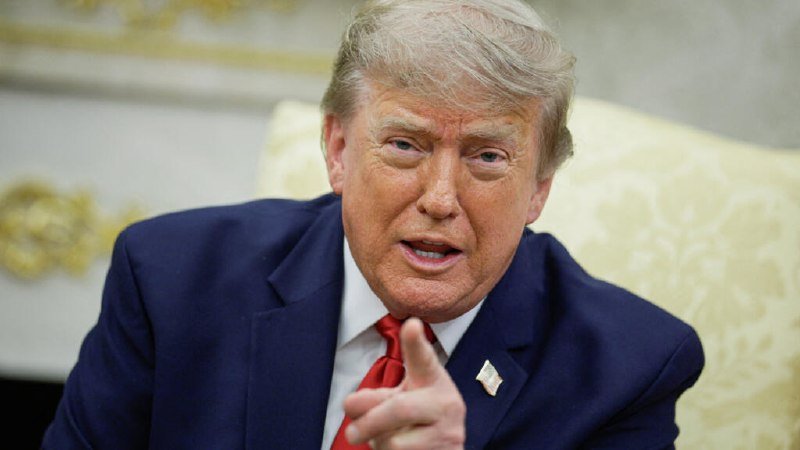
Speaking to reporters outside the Pentagon on 18 June 2026, US Defense Secretary Pete Hegseth used a runway metaphor to frame the Trump administration's demand that NATO allies spend five percent of GDP on defence: Europe, he said, needed a "runway," not another speech, and the United States was "not going to subsidise freeloaders forever." Within hours the same press posture was being read against a separate Pentagon signal: the steady naval compression of Iran, with carrier strike groups repositioned in the Eastern Mediterranean and the Fifth Fleet clearing Strait of Hormuz commercial traffic for "safety inspections." Wire outlets treated the two lines as discrete Pentagon stories. Read together, they form a single argument about who pays for the security Europe consumes, and what Washington expects in return as it confronts Tehran.
The runway line landed in Brussels like a draft under the door. The NATO summit machinery had spent the previous quarter promising member states a glide path: a defence-spending target below five percent, with credit for "non-defence security expenditure" on infrastructure, cyber and migration. Hegseth's framing collapsed that glide path into a binary. Either Europe's parliaments authorise the cash, or Washington reserves the right to redirect American carrier groups from the European theatre to the Middle East, where Iran, not the eastern flank, is the kinetic question of the season. The implicit contract is written in tonnage, not communiqués.
European capitals are not reading this as theatre. Berlin's defence ministry is mid-rewrite of its Sondervermögen supplementary budget; the Bundestag's budget committee met in closed session on the same week as Hegseth's remarks. France has accelerated delivery orders for the Rafale F5 and SCAF partner shares. Poland, the alliance's eastern anchor and the desk's standing frame for the European conversation, has publicly backed the five percent target since 2025 and is now lobbying Warsaw's Visegrád partners to abandon the four-percent compromise. Warsaw's argument is blunt: a four-percent Europe is a Europe still relying on American carriers to clear the Baltic, and the carriers are needed in the Eastern Mediterranean.
The other half of the pressure is the Iran file, and it is the half Western wire desks have under-covered. On 18 June the US Navy's Fifth Fleet began escort operations through the Strait of Hormuz under a new directive that labels commercial tankers bound for Iranian ports as subject to "maritime safety inspection." The practical effect is a soft blockade: insurance underwriters repriced war-risk premiums on Gulf shipping within 48 hours, and at least two Greek-flagged VLCCs diverted to Salalah rather than risk the inspection queue. The Pentagon's public line is that this is a routine escalation of sanctions enforcement. The structural read is that it is a cost imposed on Europe, which buys the bulk of Gulf crude through Rotterdam and the Mediterranean refining cluster, and on Asia, which depends on Hormuz throughput for its power generation. Hegseth's runway line and the carrier posture are the same sentence, with the comma in the wrong place for the reader.
Israeli media is reporting that the United States is concurrently pressing Jerusalem on a Lebanon ceasefire. Channel 12, citing Israeli sources, said the decision to implement the ceasefire was taken under "enormous" US pressure; Channel 13, citing a diplomatic source, framed the same sequence as an American effort to consolidate forces for the Iran file. The two readings are not contradictory: a frozen Lebanese front frees Israeli air and ground assets for a northern-reserve posture, and it frees American Mediterranean carrier groups for the Iran interdiction mission. The Lebanon ceasefire, the Hormuz inspections, the NATO runway line are three movements in the same score.
The structural frame is plain. Washington is converting alliance burden-sharing from a rhetorical argument into an operational fact. NATO's two-percent floor, agreed in 2014, was always a talking-shop commitment; the new five-percent demand is being enforced by the visible reallocation of American military mass away from the European theatre and toward the Gulf and the Eastern Mediterranean. The cost of European non-compliance is no longer a memo, it is a hull rotation. European governments understand this. They are also aware that the alternative to American carrier cover is a European nuclear and naval posture that does not yet exist at scale, and whose procurement timeline runs into the next decade.
The stake is whether the runway line survives contact with allied parliaments, and whether the Hormuz inspections survive contact with the oil market. A serious European counter-offer would have to convert the five percent into a pooled European capability fund rather than national procurement, on the Anglo-French nuclear model. A serious Iranian counter-move would price Gulf oil high enough to fracture the European-American front before the November US midterms. Both are live possibilities on the calendar. The runway line is not a Pentagon sound bite; it is the opening bid in a transatlantic renegotiation whose second move has already been made at sea.
Sources
- Clash Report (Telegram): https://t.me/ClashReport
- Clash Report (Telegram): https://t.me/ClashReport
- Clash Report (Telegram): https://t.me/ClashReport
- Clash Report (Telegram): https://t.me/ClashReport
- The Cradle (Telegram): https://t.me/thecradlemedia, Israeli Channel 12/13 reporting on US pressure for Lebanon ceasefire, 20 June 2026
- Rybar / Chronicles of the special military operation (Telegram): https://t.me/rybar_in_english, Russian operational reporting context, 20 June 2026
- Jahan Tasnim (Telegram): https://t.me/JahanTasnim, European political context, 20 June 2026
Desk note: Monexus has framed Hegseth's NATO runway remarks and the simultaneous Iran blockade posture as a single transatlantic pressure campaign, rather than reporting them as discrete Pentagon media lines. The wire framing tends to treat the NATO remarks as a discrete quote and the Iran posture as a separate operational story; the structural read is that they are one argument about alliance burden-sharing under active Middle East commitments.