Daveigh Chase, voice of Lilo and the face behind Samara Morgan, dies at 35
Two performances from the early 2000s, a voice and a face on a videotape, kept doing cultural work long after the career behind them had receded. The question the record actually supports is what that says about the streaming-era attention economy.
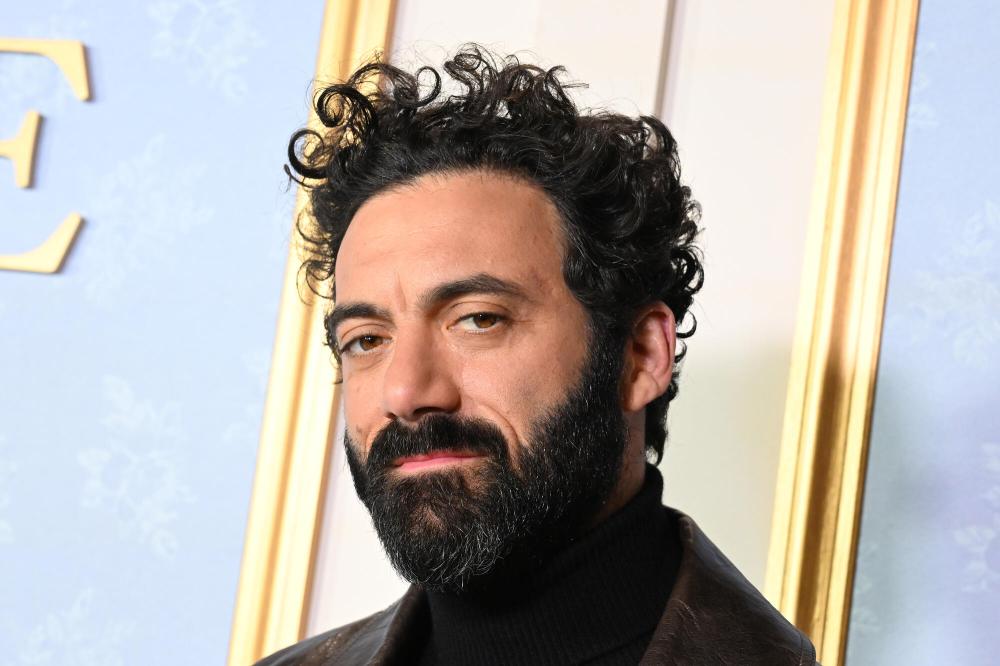
Daveigh Chase, the actor whose voice carried Disney's Lilo in Lilo & Stitch and whose face, as a hollow-eyed teen in a red dress, helped turn The Ring into the defining American horror film of its decade, has died at 35.
The initial wire confirms the age and the two roles most readers will recognise on sight, and then runs out of road. There is no surviving on-the-record obituary, no studio statement preserved in the public record beyond the original Telegram post, and no second outlet carrying the date, cause or location of death. What follows, then, is less a necrology than an attempt to account for the strange arithmetic of the work she left behind: two performances, made across roughly eighteen months in the early 2000s, that have done more cultural labour in the two decades since than the careers of most working actors manage over a lifetime.
A voice made for a six-year-old that stuck to a generation
In Lilo & Stitch, released in 2002, Daveigh Chase was about ten. The role, on paper, was a small one: a Hawaiian girl raising an alien with the help of her older sister, voiced by Tia Carrere, and the cast around her ran toward character actors and comedians. The film's emotional spine belonged to the relationship between a lonely child and a creature she refuses to surrender. That the creature was the louder, funnier presence was the joke, and still is. What Chase brought to the recording booth was the line readings underneath: the slightly too-fast chatter of a kid performing steadiness, the wobble she let into Lilo's voice when the scene earned it, the consistent ache of a child who has decided she is the adult in the room.
The performance is now twenty-four years old. The character has outlasted a direct-to-video sequel arc, a television reboot, and the announcement of a live-action Lilo & Stitch tied to Disney's broader remake strategy. In every subsequent recasting, the comparison is to Chase's original work. That is not a tribute. It is a structural problem for a studio that prefers its intellectual property to detach cleanly from individual performers.
The face on the videotape
A year later, in Gore Verbinski's 2002 remake of Ringu, retitled The Ring, Chase played Samara Morgan, the figure who climbs out of a television set at the climactic moment that a generation of American viewers still remembers in their sleep. She was twelve. The performance was almost entirely physical: long hair, a white dress darkened by the well water the character has been sealed inside, and a delivery so controlled that for years afterward trade press coverage of juvenile horror actors came back to her as the reference point.
The Ring grossed more than $130 million in North America against a reported production budget of about $25 million, and seeded an American J-horror cycle that included The Grudge and Dark Water. Chase did not return for Rings (2005) or for the eventual Netflix adaptation cycle. The image of her crawling forward through that static, by then, had already left her behind. That the scene still circulates, in clip compilations and reaction threads, has less to do with Chase's working life in the years that followed and more with the way the streaming era has reorganised the cultural shelf life of a single shocking image. Once it is on a thumbnail, it does not retire.
The strange economics of two performances
For most of her adult career, Chase worked, by every available indication, in a quieter register than her childhood reputation suggested. The roles that followed Lilo and The Ring were supporting parts, regional theatre and a body of work that has not been retrospectively canonised by the trade press in the way her two early credits have. None of this is unusual. The transition from child performance to adult career breaks in unpredictable directions, and the actors who manage it tend to be the ones the press notices; the ones who do not simply drop out of the coverage cycle.
What is unusual is the asymmetry of the response. Two roles from a roughly eighteen-month window have continued to drive the cultural memory of her work, while everything that came afterward has remained mostly invisible. This is the part of the story that belongs to the streaming-era attention economy rather than to Chase as an individual artist. A platform feed does not retire a still. A franchise announcement does not consult the actor it displaced. A reaction thread does not ask what the performer has been doing for two decades. The image, once lodged, accrues clicks on its own schedule.
The structural argument worth making here is one the entertainment trade press has mostly declined to make: in an industry that has restructured itself around intellectual property libraries, the human being who supplied the original material is, increasingly, an externality. The studio owns the look and the line reading. The streamer owns the recompressed cut. The audience owns the memory. The performer, in many cases, owns only the credit, the residuals where they exist, and the right to be recognised on a city street by someone who has not seen their work in fifteen years.
What the surviving record does and does not tell us
The honest limitation of this piece is worth stating on the page: the public record around Chase's death is thin. The initial Telegram post confirms a name, an age, and two roles. Beyond that, the available information runs through her Wikipedia entry, which can summarise a filmography and list a few reported biographical details but cannot substitute for a confirmed cause of death, a family statement, or a contemporaneous press obituary. Where a wire obituary would normally anchor dates, locations and named sources, none currently exists for this event in the form Monexus typically relies on.
Monexus does not intend to fill that gap by inference. The death of a 35-year-old who worked in the entertainment industry as a child is, in the present moment, a confirmed event on a date in June 2026, and a tabulation of two roles whose continued circulation is the central question the record actually supports. It is not, at this writing, a story about causes, circumstances, or any named individual other than the subject herself. Where this changes, the desk will follow up.
The shelf life of a single voice
The piece of writing worth finishing on is not a judgment of Chase's work or a forecast of what will be written about her in the years to come. It is the observation that the two performances most associated with her name were made before she was a teenager, and that for the next two decades they kept doing work she had no contractual relationship with and, in most cases, no visibility into.
That is a structural feature of the industry she worked in. The performance belongs to the IP; the IP belongs to the studio; the studio sells the IP back to the audience in cycles of reissue, adaptation and algorithmic resurfacing, and the audience consumes it in the form the algorithm selects. Somewhere in that loop is a ten-year-old girl in a recording booth, taking direction, and a twelve-year-old girl on a set in Washington state, doing the work she was hired to do, and the rest of a life that the industry, with rare exceptions, does not much keep track of.
The next test for the trade press will be whether the obituary cycle around a 35-year-old death treats those two performances as the whole story, or whether it bothers to ask what came after. The streaming-era economics of memory would prefer the first. Reporting, where it can be done, should do the second.