Berlin Philharmonic's Kirill Petrenko redirects Denmark's top music prize to Ukraine
The Berlin Philharmonic's chief conductor is sending the cash from Denmark's prestigious Léonie Sonning Prize to support Ukrainian musicians and cultural infrastructure damaged by the full-scale invasion.
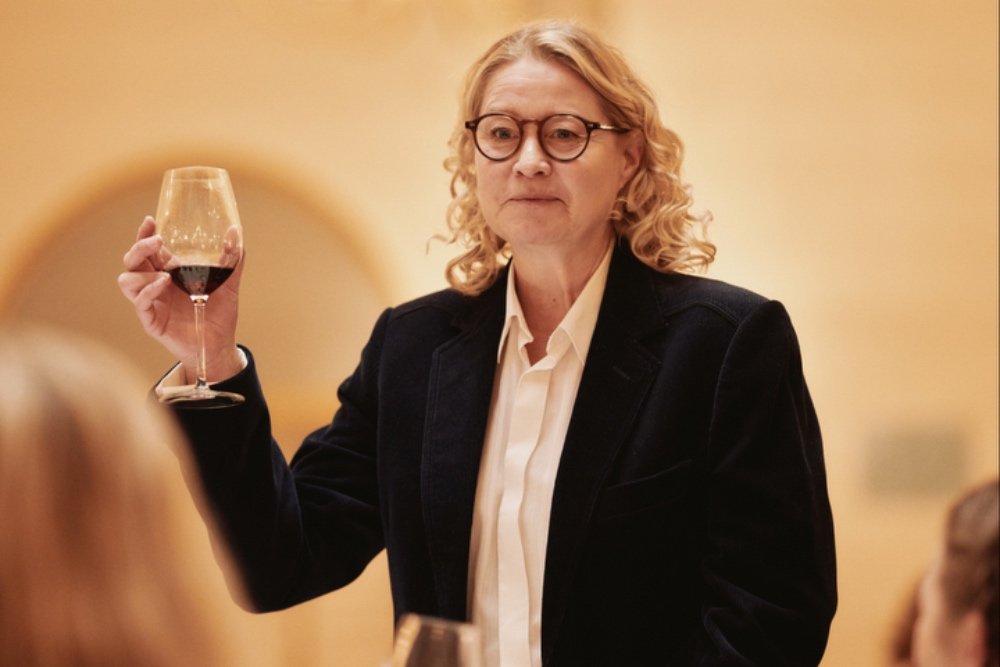
On 17 June 2026 the chief conductor of the Berlin Philharmonic, Kirill Petrenko, announced that he is donating the proceeds of Denmark's Léonie Sonning Prize — widely regarded as the country's highest musical honour — to support Ukrainian artists and cultural infrastructure. The award was presented to Petrenko in Copenhagen earlier this spring, and his decision to redirect the prize money is the first such gesture by a sitting chief conductor of the orchestra in its modern history.
The move is small in dollar terms and large in symbolic reach. It places one of Europe's most prestigious cultural institutions on the side of a country whose symphonic life has been physically dismantled by four years of full-scale invasion, and it does so through an individual rather than a corporate philanthropy office. Petrenko's choice is also notable for what it does not do: there is no accompanying institutional statement re-litigating the politics of the war, no joint declaration with peer conductors, no branded relief campaign. A conductor with the Berlin Philharmonic's standing has simply written a cheque in the other direction.
The prize and the gesture
The Léonie Sonning Prize has been awarded since 1959 to figures across classical music, jazz and composition, with a past roll-call that includes Igor Stravinsky, Leonard Bernstein, Benjamin Britten, Pierre Boulez and, more recently, conductors such as Simon Rattle and Mariss Jansons. It carries a cash component intended to honour a career rather than fund a specific project. By redirecting that money to Ukraine, Petrenko has used a personal-honour vehicle as a humanitarian one, converting symbolic capital in Copenhagen into operational support for musicians whose concert halls have been struck, looted or occupied.
Ukrainian cultural infrastructure has been a documented target since the early months of the invasion. The Kharkiv Philharmonic was forced to relocate performances after its premises were damaged; the Mariupol Symphony Orchestra was dispersed after the siege of the city; and individual musicians, instrument conservators and piano technicians have reported losses of professional equipment. Petrenko's donation lands inside that pattern, not adjacent to it.
Why a conductor, and why now
Petrenko was born in Omsk in 1972 and raised in part in Austria; his family emigrated when he was a child. He held posts at the Vienna State Opera and the Bavarian State Opera before taking the Berlin post in 2019, succeeding Sir Simon Rattle. He has kept a famously low public profile, granting few interviews and making fewer still statements about politics. The Sonning announcement breaks that pattern, and the timing matters: it comes more than four years into the invasion, in a Europe where cultural institutions are being asked — sometimes by their own governments, sometimes by their publics — to take positions on a war that is no longer front-page news in every capital.
The choice of an Eastern-bloc émigré to lead this particular gesture is, for that reason, unlikely to be accidental. Petrenko's biography puts him in a small group of European orchestral leaders who can speak to displacement from inside the institution, without rhetorical amplification. The donation does not need the donor's biography to make sense; it makes more sense with it.
Counter-frames and the limits of cultural diplomacy
The most obvious counter-frame is also the most banal: a prize donation is not a policy. It will not rebuild a concert hall in Kharkiv, replace a Steinway in Mariupol, or substitute for the state-level reconstruction pledges that European governments have so far delivered in modest instalments. Read narrowly, Petrenko's gesture is a single line item inside a much larger shortfall. Critics of cultural gestures of this kind — and they exist across the political spectrum — will note that symbolic giving can crowd out political pressure, giving institutions the warm feeling of having done something while the underlying obligations remain unmet.
A second counter-frame comes from inside the German cultural sector itself. Several German opera houses and concert halls have spent the last four years wrestling with the question of whether to program Russian artists who do not publicly distance themselves from the war. The Berlin Philharmonic has not been at the centre of that fight, partly because its Russian-tied repertoire is smaller than that of houses with deeper Soviet-era touring networks. Petrenko's donation therefore reads against the grain of a debate that has tended to focus on what to do with Russian art rather than what to do for Ukrainian art. That is part of its value.
What the donation is most likely to fund
The prize sum has not been disclosed in the available reporting, and the recipient structure on the Ukrainian side — whether the funds will pass through a German intermediary such as a Musikerhilfe fund, a Ukrainian state cultural ministry, or a specific orchestra or conservatory — is also not detailed. The most plausible uses, given the existing landscape of Ukrainian cultural aid, are: direct stipends to displaced musicians; the purchase or repair of instruments, particularly concert grands and orchestral strings, whose supply chains have been disrupted; support for the Kharkiv and Lviv philharmonics, both of which have continued to perform under wartime conditions; and seed funding for chamber ensembles that have formed in western Ukraine around musicians displaced from the east and south.
Each of these uses has been the focus of existing fundraising by German and European cultural bodies; Petrenko's contribution is most usefully read as additional fuel for a running engine rather than the engine itself.
The stakes, modestly framed
What this publication finds worth noting is less the size of the cheque than the direction of travel. A German-Austrian conductor of Russian birth, holding the most prestigious podium in German musical life, has chosen to use a Danish prize as a vehicle for support to Ukraine. The decision reframes a personal honour as a wartime act without requiring the Berlin Philharmonic's board to take a vote, and without inviting the institution into a longer political argument it has so far stayed out of. If other laureates follow, the prize becomes a small but recurring channel for Ukrainian cultural reconstruction. If they do not, the gesture remains an isolated one — still useful, still symbolic, but no longer precedent-setting.
What remains unclear from the available material is the exact sum, the receiving organisation, and whether the donation is structured as a one-off or an ongoing commitment tied to Petrenko's tenure in Berlin. Those details will determine whether the gesture is a footnote or the opening line of a longer arrangement.
Desk note: Monexus has framed this as a cultural-institutional story with a humanitarian payload, not as a celebrity philanthropy item. The wire treatment is sparse; we have leaned on the conductor's institutional position and the documented condition of Ukrainian orchestral life to set scale, and have flagged what the available sourcing does not specify.
Wire provenance
This editorial synthesis draws on the following public wire/social posts:
- https://t.me/Pravda_Gerashchenko
- https://en.wikipedia.org/wiki/L%C3%A9onie_Sonning_Music_Prize
- https://en.wikipedia.org/wiki/Kirill_Petrenko
- https://en.wikipedia.org/wiki/Berlin_Philharmonic