Tehran moves to monetise the Strait of Hormuz, and reset the rules of the gulf
Tehran's parliament has endorsed the principle of a transit fee on the Strait of Hormuz, but Iranian tankers are still moving through the corridor at baseline pace, exposing the gap between announcement and implementation.
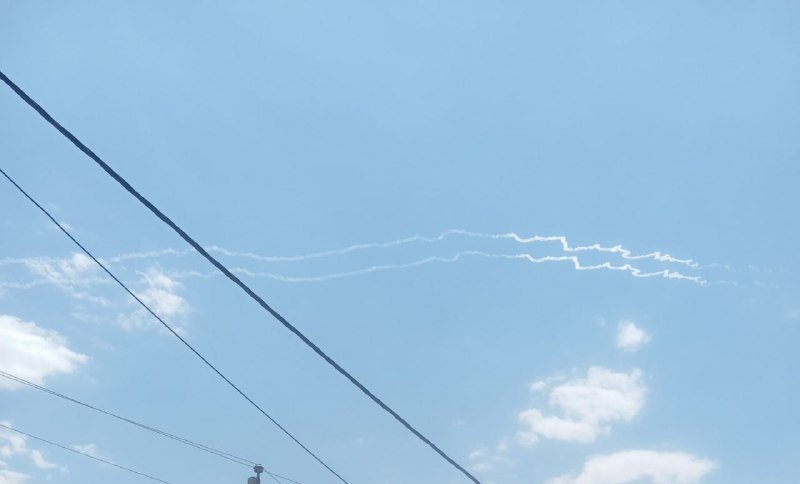
Iranian oil tankers have moved continuously through the Strait of Hormuz over the past 48 hours, according to shipping monitors tracking the corridor on 19 June, even as Tehran's parliament moved to convert the waterway into a toll road. The traffic picture, captured by independent maritime trackers, is the operational counter-evidence to the political theatre playing out 200 kilometres inland in the Majles, where lawmakers endorsed the outline of a scheme to charge foreign vessels a transit fee and to centralise control of the passage through a new national security memorandum.
The substantive claim of the parliamentary session is verifiable. The transit fee, the schedule, and the text of the memorandum are not. That gap is now the story, because what Iranian officials are framing as a sovereign levelling of the playing field looks, on the record available, more like a market-shaping gesture than a settled commercial instrument. Until a shipowner, an underwriter, or a flag-state administration publishes a reaction, the policy is a threat dressed as a schedule.
The Majles move
Tasnim News Agency, the English-language outlet of the Islamic Revolutionary Guard Corps, reported on 17 June that members of parliament's national security commission had endorsed the principle of a transit fee for foreign vessels using the strait, alongside the outline of a national security memorandum codifying Iran's jurisdiction over the corridor. A subsequent Tasnim dispatch, picked up and amplified by the Mehr News Agency feed, framed the package as a response to what Iranian officials describe as systemic exploitation of the waterway.
The framing matters. The bill is being sold domestically as a closure of a long-standing asymmetry: Iran, the argument runs, hosts the chokepoint but collects nothing while foreign-flagged tankers, bulk carriers, and LNG carriers pass within missile range of its coastline. The same outlets describe the fee as a percentage of cargo value, calibrated against international benchmarks rather than against Iran's bilateral relationships with its principal customers.
Two things are notable in the official read-out. First, the legal vehicle is a national security memorandum rather than ordinary legislation, which gives the Guardian Council and the Supreme National Security Council a direct role and short-circuits the slower parliamentary timetable. Second, the rhetoric places the scheme inside a longer Iranian complaint about extra-territorial sanctions enforcement, an argument that has purchase in Tehran but limited traction in London, Athens, or Tokyo, where the underwriters, registries, and charterers who actually decide whether a transit fee is paid actually sit.
What the water looks like
The shipping evidence, by contrast, is mundane and revealing. The Middle East Spectator channel, republishing commercial tracking data on 19 June, recorded non-stop movement of Iranian tankers through the strait, with outbound laden voyages and inbound ballasters running close to the corridor's recent baseline. There is no visible traffic reduction, no rerouting through the East-West pipeline, and no unusual clustering of tonnage on the Iranian side of the channel awaiting clarification.
That is the data point that frames the policy. Iranian crude continues to exit the gulf at roughly the pace it exited in the weeks before the Majles vote. If Tehran were preparing to enforce a fee or, in the more aggressive reading of the rhetoric, to selectively inspect foreign vessels, the simplest tell would be its own fleet holding position or staging. The fleet is not holding position. The fleet is moving.
Two readings follow. The first is benign: parliament has approved a framework, the executive will spend months negotiating the schedule, and the policy lands, if at all, in 2027. The second is strategic: the gesture itself is the product, aimed not at the shipping market but at the political market of the gulf, where Iran is reasserting a sovereign claim over a waterway it has long argued it does not fairly benefit from. In that reading, the fee is a negotiating chip rather than a toll.
The counter-narrative from the shipowner's side
The international shipowner's view of the strait is rarely uttered publicly and never voluntarily, because any comment by the wrong flag-state operator can result in detention, delays, or extra insurance scrutiny. What is known is that P&I clubs, the mutual insurers who cover the bulk of the world's tanker liability, price the strait as a designated war-risk area in layers, and any state-imposed transit levy would be re-priced in the same layer, not absorbed.
If Iran moves from announcement to collection, the first visible reaction will not be in parliament. It will be in the Lloyd's List war-risk postings, in the BIMCO charter-party clauses that follow them, and in the price differential between Hormuz-loaded cargo and similar barrels delivered via the East-West pipeline to the Iraqi Gulf or via the Yanbu route to the Red Sea. None of those instruments have moved yet. The market is telling the policy to wait.
What the policy is actually trying to do
Stripped of its rhetoric, the scheme has three plausible objectives, only one of which is commercial. The commercial objective, a per-barrel or per-cargo transit fee applied to foreign flag vessels, would raise a meaningful but not transformative sum at current traffic levels and would constitute a precedent for other chokepoints. The diplomatic objective, more probable, is to place Iran formally inside the conversation about transit governance alongside Oman, which administers the southern shore and whose cooperation is a precondition for anything Iran announces unilaterally.
The third objective is signalling, both inward and outward. Inward, the Majles vote reassures a domestic audience that the government is acting on grievances around sanctions and sovereignty. Outward, it advertises a willingness to use the corridor as leverage in any future negotiation over sanctions relief, nuclear constraints, or the unresolved dispute over the tanker seizures that has run hot and cold through the spring. None of the three objectives requires the fee to actually be collected in 2026.
What to watch
The next verifiable move is not parliamentary. It is maritime. The first foreign-flagged tanker publicly logged as paying, refusing to pay, or being delayed over payment will resolve the question the Majles vote left open. Until then, the policy is a price posted on a wall, and the wall is in Tehran, and the buyers are in Singapore, Athens, and London. Iran's fleet, the only fleet whose behaviour is unambiguously on the record this week, is voting with its engines: straight through, no pause.