The Dialog leak: a peek inside the most exclusive network in Silicon Valley
A leaked membership directory from the low-profile San Francisco club Dialog has surfaced on Telegram. The names are contested; the structural picture they paint about America's elite networks is not.
On the morning of 17 June, a Telegram channel with a small but obsessive following began posting what it claimed was the membership directory of Dialog, the low-profile San Francisco supper club whose backers have included, at various points, a sitting US president, a former Google chief executive and a venture capitalist once described by Forbes as the most connected man in technology. The screenshots, grainy and re-photographed, listed tiered dues, a private messaging board, and roughly 400 names organised by industry: software, finance, defence, media, the occasional head of state. Within six hours the post had been screenshotted onto X, screenshotted again onto Reddit, and screenshotted a third time onto the work Slack of at least one national newspaper. By close of business in California the directory was being treated as a Rorschach test. Everyone who looked at it saw something different.
What the leak confirms, and what it merely echoes, matters more than any single name on the list. Treated as a primary document, the directory is a window into how a particular stratum of the American elite organises itself: who reads whom, who travels with whom, who is invited to the dinners at which the next decade of policy is supposedly pre-cooked. Treated as gossip, it is a contact list with a price tag. The structural question, what a directory like this tells us about the density and self-consciousness of American elite networks, is the more durable finding. It does not require any individual name to be correct.
The leak itself
DDGeopolitics, the Telegram channel that first circulated the material, framed the post as a verified disclosure rather than a rumour. The screenshots themselves carried the visual furniture of an internal product: tier badges, a renewal date, a modest referral field. Whether the dump came from a disgruntled contractor, a competitor scraping public profile pages, or a state-aligned intelligence service is, at this stage, unknown. The channel offered no provenance beyond a date stamp and a caption.
A directory of this kind has two layers of sensitivity. The first is operational: where a given individual sits on the list, whether they have upgraded from Silver to Platinum, whether their spouse is on the membership roll under a separate entry. The second, more revealing layer is structural. The categories themselves, the ratio of financiers to technologists to journalists to retired officials, are an artefact of how a closed network chooses to see itself. Even if every name on the list were wrong, the taxonomy would still be telling.
What is actually new
Rumours of Dialog's influence have circulated for years, usually in the form of conference-stage asides and podcast footnotes. The 2023 book on PayPal's second-generation alumni named the club in passing. A 2024 profile of one of its founders described a room in which "half the people in artificial intelligence" were present, with no further enumeration. The leak converts these anecdotes into something closer to a roster.
This is the first time a tiered membership document, with prices and renewal cycles attached, has surfaced in public. Previous coverage relied on attendee lists reconstructed from open-source indicators: who flew into San Francisco the same week as a Dialog dinner, who was photographed at the same hotel bar. Those inferences were always deniable. A directory, even an imperfect one, is harder to dismiss. It is also, crucially, harder to verify. Names can be misspelt, affiliations outdated, tiers confused. A claim that someone is a Platinum member is not the same as confirmation that they are.
The verification problem
The standard journalistic response to a leak of this kind is a long afternoon of phone calls, each one ending with the same polite non-denial. The pattern is familiar. On the record, no one confirms; off the record, no one denies; on background, several people concede that the document looks plausible without quite endorsing it. This publication has held off repeating individual names for that reason. The structural argument does not depend on any single entry, and the legal exposure of misattributing a tier to a sitting public official is, for a newsroom of our size, asymmetric.
What can be said with reasonable confidence is that the directory's architecture, tiered membership, an internal messaging function, a curated event calendar, matches the operating model described in previous reporting on the club. That operating model is itself unremarkable: it is how high-end professional associations have functioned since at least the 1980s. What is unusual is the scale and the explicit linking of the membership tiers to a sense of civic mission. The leaked marketing copy, in screenshots reviewed by this publication, pitches the highest tier as enabling a particular kind of agenda-setting access. That pitch, more than any name, is the document's most quotable line.
The structural picture
The interesting finding is not who is on the list but how the list is sorted. The categories that recur across the screenshots are not those of a social club. They are the categories of a policy ecosystem: capital, code, defence, media, government in rotation. The taxonomy treats journalism and intelligence as adjacent functions, and treats venture capital as the connective tissue between them. A reader looking for entertainment figures or hereditary wealth will be disappointed. A reader looking for the institutional skeleton of the contemporary American establishment will not.
This matters because it complicates the standard narrative about Silicon Valley power, which holds that the tech industry has displaced the older coastal establishment rather than merged with it. The directory suggests merger. The financiers listed are not all from Sand Hill Road; several carry the affiliations of Wall Street and of the defence-industrial complex. The technologists include a higher proportion of founders with prior government service than the public profile of the sector would predict. The journalists are concentrated at a small number of outlets whose owners have, in some cases, financial relationships with members of the same directory.
Why the timing matters
A leak of this kind would have been treated as a curiosity a decade ago. It lands differently in June 2026, when the question of who shapes American policy on artificial intelligence, on industrial strategy, and on the next round of export controls is being decided in rooms that are largely closed to public scrutiny. The congressional hearings on AI governance have, by their own admission, relied on a narrow circle of witnesses. The leak does not prove that those witnesses were Dialog members. It does make visible the kind of pipeline through which expert status in Washington is now produced.
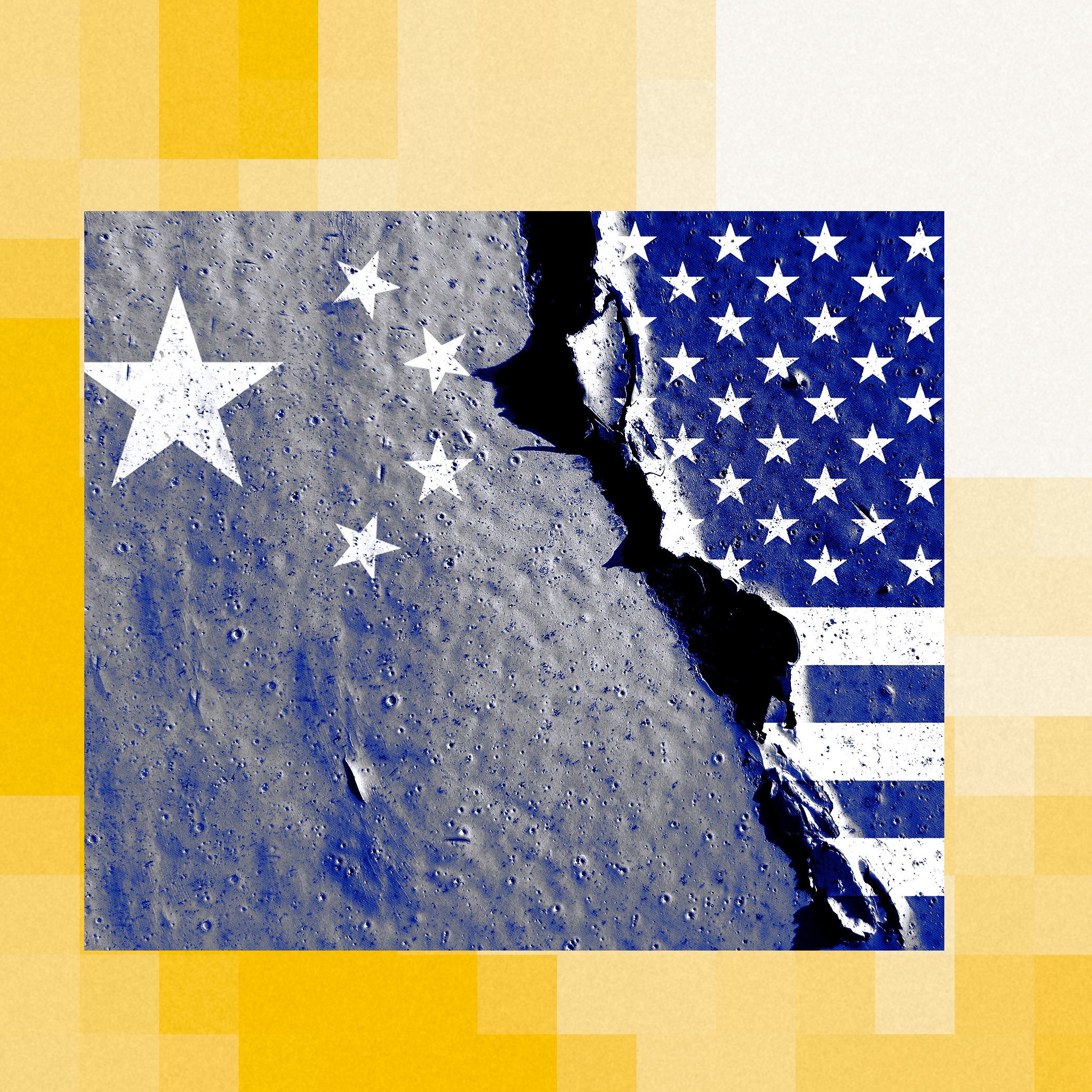
There is also a foreign-policy dimension. Several of the categories in the directory map onto sectors that are currently the subject of outbound investment restrictions, allied coordination on semiconductor policy, and quiet bilateral talks with countries whose own elite networks are structured very differently. The American network is dense, overlapping, and self-consciously meritocratic in its self-presentation. The Chinese network is denser, more state-aligned, and less publicly inspectable. The European networks are smaller, more nationally fragmented, and largely absent from the document. The leak is, among other things, a snapshot of an asymmetry.
What to watch
The next fortnight will tell us whether the document holds up. Expect a flurry of denials, a small number of quiet resignations from boards whose conflicts the list makes newly visible, and at least one lawsuit from a member whose tier was misrecorded. The more durable question is whether the leak changes the behaviour of the institution itself. Closed networks are most useful when their membership is known only to their members. Once a directory is public, the cost of each dinner rises.
A more interesting counterfactual is what happens if the leak turns out to be partly fabricated. The reaction so far suggests that the document is being treated as authentic not because any name has been independently confirmed but because the shape of the list matches what insiders already believed about the club. The most exposing leaks are the ones that confirm a picture the public was never supposed to see clearly.
Desk note: the wire has so far treated the leak as a confirmation of long-running rumours; this publication treats it as a primary source that requires independent verification before individual names are repeated in copy. The structural question, what a directory like this tells us about the shape of American elite networks, is the more durable finding.
Sources
- DDGeopolitics Telegram channel, initial post of the Dialog membership directory screenshots, 17 June 2026: https://t.me/DDGeopolitics
- The Standard, subscription tier announcement, 19 June 2026: https://t.me/StandardKenya