Australia's Gulf advisory shift: a quiet vote of confidence in the US-Iran deal
Canberra's downgrade of travel warnings across several West Asian destinations signals it is willing to underwrite, at least modestly, the diplomatic architecture that produced the recent US-Iran understanding.
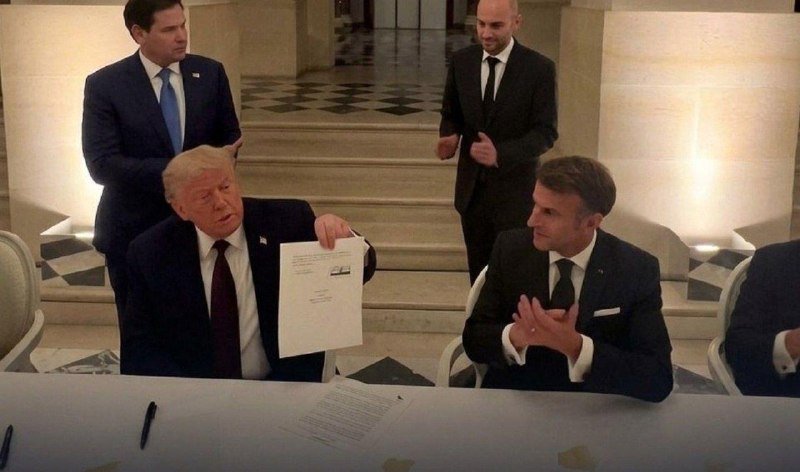
Australia on Wednesday walked back parts of its travel-warning regime for several West Asian destinations, the clearest signal yet that Canberra is willing to underwrite, at least modestly, the diplomatic architecture that produced the recent US-Iran understanding. The advisory downgrade, reported by X-wire service Sprinter Press at 09:43 UTC and amplified shortly afterwards by The Cradle Media's Telegram channel, lets Australian citizens travel to and transit through Gulf states that had been sitting on heightened caution since the run-up to the deal.
This is the kind of quiet bureaucratic move that rarely makes the front page, and that is precisely why it matters. Travel advisories are the cheapest available instrument a middle power has to validate — or to puncture — a great-power arrangement. When a government loosens them after months of caution, it is effectively telling its own citizens, and the airlines and insurers who price around the warnings, that the underlying risk calculus has changed. Canberra has decided the new calculus is friendlier than the old one.
What changed, and what did not
The shift is narrow but deliberate. Travel to and transit through several Gulf destinations is now permitted on terms that were off the table before the US-Iran deal landed. The framing in both wire reports is identical: the easing follows the agreement, and it is calibrated rather than wholesale. Nothing in the public reporting suggests Australia has declared the region safe in any absolute sense; it has simply accepted that the deal has changed the political weather enough to warrant a different default setting.
That distinction matters. Advisories are not safety guarantees — they are risk communications. A downgrade tells the travelling public, the aviation underwriters, the corporate travel desks and the regional diaspora networks that the model Canberra uses to price political risk now produces a lower number for the Gulf. Once that signal lands, it is hard to walk back without an obvious trigger.
The diplomatic signalling value
Middle powers do not get many low-cost moves in Middle East diplomacy. Canberra's instrument of choice, the travel advisory, has now been pressed into service. Australia is not a signatory to the US-Iran deal, has no seat at the table, and is not a broker of any of the secondary arrangements. What it has is a travel-warning bureaucracy that the Gulf states, the airlines, and the regional business community all read carefully.
By easing its warnings, Canberra is doing three things at once. It is signalling to Washington that the deal has produced a stable enough environment to be worth underwriting with policy. It is signalling to the Gulf states that there is a Western-allied customer base ready to come back if the political opening holds. And — this is the under-appreciated part — it is signalling to Tehran, quietly, that the diplomatic track has produced enough downstream movement to be considered load-bearing rather than performative.
Read against the regional grain, the move also serves Australian domestic interests. Gulf airspace is a serious transit corridor between Australia and Europe, and any sustained easing is a quiet gift to Qantas and to the smaller operators that have been routing around the region. Universities and the labour-mobility pipeline, both of which carry Australian citizens back and forth across West Asia, also get a cleaner operating environment.
What the alternative reading looks like
The honest counter-point is that travel advisories lag reality as often as they lead it. Critics will argue that Canberra has simply caught up to a ground truth that the airlines and the travel-insurance markets had already priced in weeks ago. There is something to that. The advisory machinery is famously slow, and the people who actually fly the routes — pilots, schedulers, corporate travel managers — tend to update their internal risk files faster than foreign-ministry desk officers do.
But that counter-reading actually strengthens the case for treating the move as a signal rather than a noise event. If the market had already moved, then a foreign ministry downgrade is the official stamp on a private-sector verdict, not a leading indicator. Either way, the Australian government is now on the hook: if the security situation deteriorates, the very officials who lowered the warning will be asked why they did so. They have taken a small but real political risk, which is itself evidence that they believe the diplomatic architecture is durable enough to bet on.
Stakes over the next quarter
The medium-term question is whether other mid-tier Western allies follow Canberra's lead. New Zealand, the United Kingdom, Canada and the European Union member states all maintain their own Gulf advisories, calibrated to their own risk appetents and insurance markets. A coordinated downgrade across several capitals would convert the US-Iran deal from a bilateral arrangement into a regional operating environment. A failure to follow would leave the deal looking paper-thin the next time a crisis node lights up.
For Canberra, the calculation is narrower: it has placed a small chip on the durability of the diplomatic track, and it now has a reputational incentive to defend that bet. The advisory change will look vindicated if the next quarter passes without a major security incident in the Gulf; it will look premature if it does not. The wire reports do not specify a timeline for any further review, and the Australian government has not, in the public reporting so far, publicly conditioned the easing on any specific Iranian or Gulf-side action. That silence is itself a tell: the bet is on the structure of the deal, not on any single compliance moment.
What remains genuinely uncertain is the depth of the shift. Both wire items describe an easing, not a normalisation; both flag that the change follows the US-Iran agreement but neither item specifies which Gulf states moved up the risk ladder and by how many notches. Until the underlying Smartraveller advice pages are updated and read in full, the precise geometry of the new posture is a matter of inference rather than record. Monexus will treat the direction of travel as confirmed and the magnitude as provisional until the primary advisory text is in hand.
Desk note: Monexus framed this as a low-cost diplomatic signal from a middle power rather than a substantive security judgement — the wire reporting supports the directional read; the magnitude remains to be verified against the underlying Smartraveller updates.
Wire provenance
This editorial synthesis draws on the following public wire/social posts:
- https://t.me/thecradlemedia
- https://t.me/TheCradleMedia