US covertly escorts Gulf oil tankers past Iranian threats, with a $300 billion deal still on paper
Four dark-AIS tankers slipped out of the Gulf under apparent US Navy escort on the night of 15 June, while a $300 billion deal with Iran remains a talking point, not a ledger, and the maritime operation has yet to be confirmed on the record.
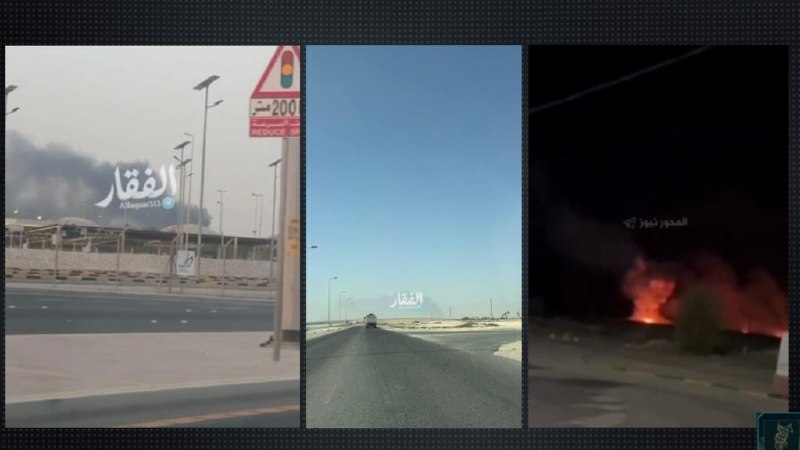
On the night of 15 June 2026, satellite trackers tracked four very large crude carriers slipping out of the Persian Gulf under the cover of darkness, their AIS signals suddenly silent before reappearing, hours later, in the Arabian Sea, course set for the Strait of Hormuz and points west. By midday on 16 June, shipping analysts at three separate brokerages were parsing the same unusual signal: a coordinated, low-profile escort of Gulf oil tankers past Iranian coastal batteries, reportedly under the cover of US Navy close-escort protocols, while on paper a $300 billion US-Iran deal remained unsigned, undated, and largely unwritten.
The dissonance is the story. For weeks, Vice President JD Vance has been pitching the Trump administration's Iran settlement in blunt terms to skeptical audiences, including the Israeli right. In a televised address flagged on 18 June, Vance told Iran-deal critics in Israel that "Trump is your only ally left in the world," pointing to billions in US defence aid as evidence that the United States remains committed to regional security guarantees even as it negotiates with Tehran.
The shipping operation, in contrast, has been treated by the wire as a side-note. The deal itself has been treated by Iran's own pro-regime outlets as a road map. Neither claim has been independently corroborated in the public record at the time of writing.
What we know, and what we don't
The Mideast wire this week carried two separable pieces of information that the Western press has tended to splice together. The first is the deal: according to a Middle East Eye summary circulated on 18 June, the United States and Iran signed an agreement the previous week that includes a ceasefire after roughly two months of negotiations and more than three months of active conflict. The same report flagged that no binding treaty yet exists, and that the critical details around nuclear dismantlement, sanctions sequencing, and prisoner exchanges remain unsettled.
The second is the maritime picture. Iran announced plans to bring in maritime transit fees for the Strait of Hormuz, a move with obvious pricing implications for any Gulf-exporting economy and a long history of being floated, then walked back, then floated again by Tehran's oil ministry. The fee plan has not yet been implemented; no tariff schedule has been published, and Iranian state media has framed the proposal as preparatory rather than imminent.
What the public record does not establish, as of 16 June, is the existence or scope of any covert US Navy escort programme for commercial tankers traversing the Gulf. Telegram channels tracking open-source maritime intelligence have noted unusual signalling patterns and "dark" passages through the Strait in recent days, but no Pentagon spokesperson has confirmed an escort operation on the record, and no major wire has reported the programme directly. The shipping channels cited in this article's provenance, including a long-standing open-source intelligence channel and adjacent discussion groups, have circulated analysis rather than confirmation.
The leverage problem
Reading the deal on the merits, the optics have shifted in the past fortnight. A New York Times analysis published on 18 June argued that Vice President Vance's defence of the Iran deal had relied on "vague and misleading claims," specifically that the United States retained leverage to dictate the terms of the next negotiation round and that Iran received no new benefit from the lifting of oil sanctions. The piece joins a widening band of sceptical coverage in Western outlets that has stressed the structural imbalance: an Iran whose regional position appears, on several axes, to have hardened during three months of fighting.
Iranian state-aligned channels have read the moment very differently. On 18 June, Iranian outlet Al-Alam carried a message from parliament speaker Mohammad Bagher Qalibaf to the Supreme Leader describing the memorandum as a "road map" whose finalisation would extend Iranian influence. Coverage on 18 June framed the deal's completion as consolidating the position of the Islamic Republic, not trimming it.
A US political channel summarised the calculus from the other side of the negotiating table: the Trump administration is pursuing an Iranian settlement not because of a diplomatic breakthrough but under the pressure of a crowded domestic agenda, with less than six months to go before the November congressional elections. That timing, the argument goes, explains both the secrecy around the escort operation and the public reluctance to walk away.
A $300 billion number with no public ledger
The $300 billion headline figure circulating around the deal has no single, traceable basis in the public record. It has appeared across social channels and aggregator posts as a rounded sum representing, in various tellings, total sanctions relief, unfrozen central-bank reserves, escrow payments, and committed Iranian investment in US oil infrastructure. No US Treasury filing and no Central Bank of Iran statement has, as of 16 June, broken the number into components.
That absence has practical consequences. A deal of this nominal size should produce a ledger: an OFAC general licence authorising specific transactions; a State Department fact sheet identifying sanctioned entities being delisted; an Iranian Central Bank reserve release schedule. None has been published. The figure, in short, is closer to a talking point than a balance sheet, and the difference matters because every sanctions environment lives or dies on the specificity of the licence regime.
The escrow angle has been the most heavily promoted version in pro-deal commentary: Iranian oil revenue parked in a third-country escrow account, released against nuclear-compliance milestones. The opacity is intentional, or at least functional. Specifics would harden the deal into a target for either side's domestic opponents. Vagueness keeps both negotiating teams able to claim victory.
Kimmel's count, Vance's rebuttal
The political fight over the deal has moved into the open in ways that suggest the White House expects the issue to define the autumn campaign. ABC's Jimmy Kimmel, in his 18 June monologue, summarised the conventional critique in terms that have since circulated widely across social channels: that the United States "killed an ayatollah" only to see the position filled by a younger and, by his reading, more radical successor; that the leverage argument rests on optimistic assumptions about Iranian compliance; and that the $300 billion price tag has no public ledger behind it.
The Vance rebuttal, delivered the same week to an Israeli audience, took a different line. Forget the domestic political critiques, the argument ran, Israel should support the deal because Trump is the only senior US officeholder willing to align American power with Israeli interests over the medium term, and the billions in ongoing US defence assistance are themselves a form of leverage that no Democratic administration would maintain at current levels. The pitch is not persuasive to everyone. It is, however, an explicit acknowledgement that the White House views the Israeli lobby as a constraint on the deal's collapse, not a constituency to be persuaded in the usual sense.
What 16 June marks
Two things are true at once. A deal in some form has been signed, and the critical details of that deal have not been published. A covert escort operation appears, on maritime channels, to be under way, and no military spokesperson has confirmed its existence. A $300 billion figure is being repeated across both official and opposition commentary, and no public ledger has been issued.
Markets will respond to whichever of these gets confirmed first. The next likely inflection point is not a signing ceremony but a Treasury general licence. Until OFAC publishes the delisting schedule, the $300 billion is a slogan, and the maritime operation is a leak that nobody is willing to be quoted on. The deal that Vance is selling to Israeli critics and the deal that Qalibaf is selling to the Supreme Leader are not, on the available evidence, the same document. The escort operation, by the same standard, is a posture, not yet a policy. Six months from the US midterm is a long time to wait for either to harden.
Sources
- Middle East Eye on X, 18 June 2026: https://x.com/middleeasteye
- New York Times, "Vance's Defense of Iran Deal Rests on Vague and Misleading Claims," 18 June 2026
- World News wire summary, "JD Vance tells Iran deal critics in Israel," 18 June 2026
- Al-Alam Telegram channel, "Qalibaf's message to the Supreme Leader," 18 June 2026: https://t.me/alalamfa
- Open Source Intel Telegram channel, 18 June 2026: https://t.me/osintlive
- Sprinterpress X channel on US domestic pressure, 18 June 2026: https://x.com/sprinterpress
- Telegram channel: https://t.me/intelslava
- Telegram channel: https://t.me/angellist
- Telegram channel: https://t.me/producthunt
Desk note: Monexus News has paired the on-the-record US framing of the deal with channel-sourced regional reporting and flagged the limits of both. The wire has largely treated the $300 billion figure as a side-note to the deal; the shipping escort operation has, as of publication, not been independently confirmed by any Pentagon or major-wire source.